Who is this choice relevant to?

Evening listener with a roommate

Wants to listen to spoken documentaries privately and cares about how well the headphones block sound, volume and comfort during longer listening sessions. The Consumers’ Association highlights fit and comfort as factors to consider when choosing headphones.

Listener using a radio or TV as a source

Needs to check which audio output is available first. A base station with a suitable connection may be useful if Bluetooth isn’t suitable; Philips describes this for the SHD6000BK/12.

Listener who wants to remain approachable

Wants to follow a documentary without shutting out ambient noise or a roommate completely. The Consumers’ Association assesses speech separately when testing headphones.

What should you look for when choosing?

What to consider What to look for Which consumers?
Private listening Check the fit and try them at the volume you’d actually use. If possible, ask whether any sound can be heard in the quiet room. If I want to follow my documentary without my roommate having to listen too, sound isolation comes first. Around 36% of consumers say private listening is their main concern when buying.
Speech clarity Compare a spoken clip at a modest volume, ideally with ordinary room sounds in the background. The Consumers’ Association tests speech reproduction separately. If you want to hear dialogue clearly without turning up the volume, focus on intelligibility. For around 29% of consumers, speech clarity is their main concern when buying.
Comfort during long listening sessions or in bed The Consumers’ Association says over-ear headphones are often comfortable for long sessions. Try them yourself to see how the headband and ear cups feel in your usual listening position. If I’m listening for a long time or lying on my side, I want to know whether the ear cups and headband feel comfortable. Around 21% of consumers put wearing comfort first.
Connection and battery life Check the output on your radio or TV and how the headphones connect. Compare battery life with the features you want to use. If I want to keep using my existing radio or TV, the connection needs to match the available output first. Around 14% of consumers say source compatibility and battery life are their main concerns when buying.

Common buying mistakes

  • Assuming ANC will completely silence voices in the room

    The Consumers’ Association says ANC is particularly effective against low-frequency hum. That doesn’t mean it will block conversations in the room.

    Check the fit and listen to spoken clips at a safe, modest volume. Don’t choose headphones based on ANC alone.

  • Choosing Bluetooth headphones without checking the source

    Bluetooth headphones and headphones with a base station use different connections. The output on your radio or TV will help determine which option may be suitable.

    Check which outputs your source has and whether they match the headphones or base station. Also check which cables are included with that version.

  • Assuming battery life or comfort guarantees they’ll work in bed

    Battery life can vary depending on the settings. The Consumers’ Association says over-ear headphones are often comfortable for long sessions, but that doesn’t prove an ear cup will feel comfortable against a pillow.

    Compare battery life using the settings you plan to use, and try the headphones in your usual listening position.

  • Treating an older Fairbuds XL and the updated version as the same model

    Fairphone says the edition introduced in December 2025 has different drivers and ear cushions from the original model.

    Check which edition you’re looking at and whether replacement parts are compatible with it.

Brands to compare

Sony

The WH-CH720N is a closed-back Bluetooth over-ear model to compare for listening from a compatible phone or tablet.

  • Sony Netherlands lists a weight of around 192 g and a maximum playback time of 35 hours with NC on or 50 hours with NC off.
  • These specifications don’t tell you how much sound will be audible in a shared bedroom or how comfortable the ear cups will feel against a pillow.

Philips

The SHD6000BK/12 is a wireless headset with a base station, for a source with a suitable physical audio output.

  • Philips Netherlands lists a pre-paired 2.4 GHz connection, volume controls on the ear cup and up to 30 hours of use.
  • The base station needs to be connected to the source using a suitable 3.5 mm or optical connection. It doesn’t pair with a phone like standard Bluetooth headphones.

Fairphone

The updated Fairbuds XL is worth comparing if replaceable parts are important to you as well as wireless listening.

  • Fairphone lists Bluetooth, ANC and a replaceable battery.
  • Fairphone says the edition released in December 2025 has different drivers and ear cushions from the original model. Check the version and parts compatibility; this doesn’t prove better speech reproduction or less sound leakage.

JBL

The Live 780NC is an over-ear model to consider if you’re looking for adjustable listening features; the Live 680NC is on-ear.

  • In an announcement dated 12 May 2026, JBL lists ANC and personalisation for these models.
  • The noise reduction described by JBL isn’t an independent measurement of how well the headphones block voices in a room. On-ear and over-ear models also distribute pressure differently.

Sennheiser

The MOMENTUM 4 Wireless is an over-ear model to compare if you’re looking for adjustable sound and a transparency mode.

  • Sennheiser lists adjustable sound, ANC, a transparency mode and up to 60 hours of playback.
  • These manufacturer specifications don’t prove that the model is more comfortable in bed or that your roommate will hear less sound than with other models.

Joybuy products for wireless listening

These headphones are options to compare for listening to documentaries from a suitable wireless source. Check the connection, speech reproduction and fit for your own situation.

Sennheiser MOMENTUM 4 Wireless, white

Sennheiser MOMENTUM 4 Wireless – white

An over-ear option to compare for longer listening sessions; comfort against a pillow will depend on the individual.

Sennheiser lists ANC, adjustable sound and a transparency mode. The stated maximum playback time is 60 hours.

View at Joybuy
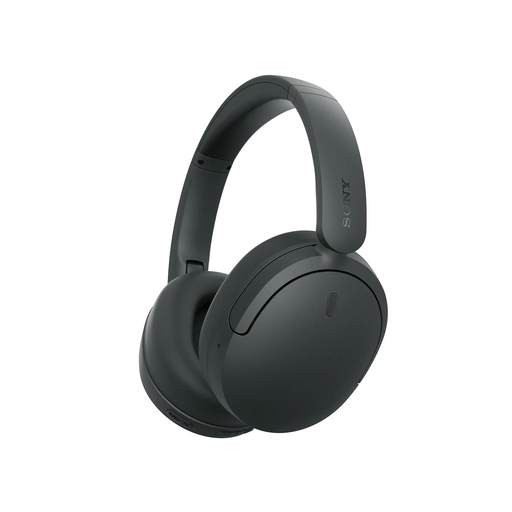
Sony WH-CH730, black

Sony WH-CH730 – black

An option to compare if you want to be able to hear ambient noise while listening to a documentary.

Check that the connection is compatible with your listening source and that spoken audio remains clear at a modest volume.

View at Joybuy
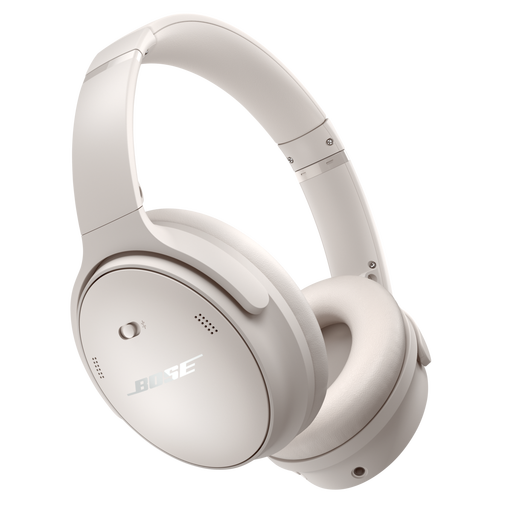
Bose QuietComfort Wireless, white

Bose QuietComfort Wireless Bluetooth Noise Cancelling Headphones – white

Wireless Bluetooth headphones with noise cancellation to compare for private listening.

Check whether the fit and speech reproduction suit your bedroom and listening volume.

View at Joybuy

Sony WH-CH720N, blue

Sony WH-CH720N – blue

A closed-back Bluetooth over-ear option for a compatible source. Try the fit for yourself, including when listening lying down.

Sony Netherlands lists a weight of around 192 g and up to 35 hours of playback with NC on, or 50 hours with NC off.

View at Joybuy

Bose QuietComfort Ultra Headphones (2nd Gen), black

Bose QuietComfort Ultra Headphones (2nd Gen) – black

A wireless over-ear option to compare if you’re looking for noise cancellation.

Check the fit, connection and speech intelligibility before deciding whether this version suits your listening space.

View at Joybuy

Frequently asked questions

Can any wireless headphones connect directly to my radio?

No. First check which output and wireless features your radio has. Philips says the Philips SHD6000BK/12 uses its own base station, which connects to a suitable source via 3.5 mm or optical; the Sony WH-CH720N is a Bluetooth model. This doesn’t confirm that either will work with every radio.

Do I need to switch on ANC to avoid hearing voices in the bedroom?

No. ANC doesn’t guarantee that voices will disappear. The Consumers’ Association says ANC is particularly effective against low-frequency hum. Also compare the fit and listen to speech at a modest volume; an ambient sound mode may help if you want to remain approachable.

How can I listen for a long time without putting my hearing at unnecessary risk?

The World Health Organization recommends keeping the volume low, taking regular breaks and using well-fitting headphones. Volume, listening time and how often you’re exposed to loud sounds all play a part.

What can I do if the fit or battery life is disappointing?

For eligible online purchases from a business, the Dutch Government says you generally have 14 days to change your mind; check the terms of your purchase. A product must also meet what you can reasonably expect from it. In the Netherlands, there is no set statutory warranty period that applies to all products.

Which product safety rule applies to wireless headphones in the Netherlands?

Wireless headphones placed on the market in the Netherlands as radio equipment must meet the applicable European conformity requirements, including the required CE marking. The Dutch Authority for Digital Infrastructure lists headphones as an example of this type of equipment. Check the marking on the specific product; it isn’t a recommendation about sound quality.
