
Listeners with a sleeping room-mate
If you want to follow spoken-word content at a modest volume without waking the other person, consider the fit and how much sound can be heard outside the headphones.


For listening to poetry in a shared bedroom, a comfortable fit is a sensible place to start. Closed-back over-ear headphones may suit you if you want to hear less room noise. ANC doesn’t guarantee that voices will disappear, so don’t choose it automatically. Consider fit, awareness of your surroundings and noise reduction in the context of where you’ll be listening.
If you want to follow spoken-word content at a modest volume without waking the other person, consider the fit and how much sound can be heard outside the headphones.
If sounds in the room distract you, compare how a close-fitting design and any ANC work for you. The Consumentenbond says ANC is mainly relevant for reducing low, constant sounds.
If you want to be able to respond to your room-mate from time to time, consider a transparency mode or a more open listening style.
Start with what matters most during your listening session: clear speech at a modest volume, comfort, fewer distractions or staying in touch with your room-mate.
| What to consider | What should you look for? | Who is this most important for? |
|---|---|---|
| Speech clarity and volume | Try a spoken-word recording on your usual device at a modest volume. Well-fitting, closed-back headphones can help reduce the need to turn the volume up. | I want to follow the spoken word clearly without turning up the volume; around 36% of consumers prioritise speech clarity and volume. |
| Comfort | Wear the headphones long enough to assess any pressure from the headband or ear pads. The Consumentenbond notes that over-ear pads are often comfortable, while on-ear pads can put more pressure on your ears. | If I want to listen in peace without pressure distracting me, fit matters a lot; around 29% of consumers put comfort first. |
| Reducing room noise | Compare how well the headphones seal with ANC on and off. According to the Consumentenbond’s buying advice, ANC mainly targets low, constant sounds; don’t expect it to make voices disappear completely. | I lose focus because of sounds in the room and want more peace and quiet; around 21% of consumers prioritise reducing room noise. |
| Staying available | Check whether the model has a transparency mode, or compare it with a more open design. Also check whether the spoken word remains clear in that mode. | I want to be able to hear my room-mate without constantly taking off my headphones; around 14% of consumers put staying available first. |
The Consumentenbond’s buying advice focuses mainly on low, constant sounds when discussing ANC. That doesn’t mean it will completely block out a room-mate talking.
Assess the fit and noise reduction in your own listening environment; don’t choose ANC based on the label alone.
Manufacturers may quote battery life for different settings. For example, Sony gives different maximum figures for the WH-CH720N with ANC on and off, while JBL quotes a maximum for the Tune 770NC with Bluetooth on and ANC off.
Only compare quoted battery life when the stated settings are the same.
The Dutch government states that the Netherlands has no fixed statutory warranty period. What you can expect when a product is faulty depends on the circumstances and the product.
Keep your proof of purchase and contact the retailer if a product is faulty. Make sure you distinguish between your statutory rights and any additional manufacturer’s warranty.
The WH-CH720N is a wireless over-ear model with ANC and a transparency mode; the Sony app offers settings for features including this mode.
JBL describes the Tune 770NC as an over-ear model with ANC, a transparency feature and multipoint connectivity.
Philips describes the TAH6509BK/00 as a wireless over-ear model with adaptive noise cancelling and an awareness mode.
This selection includes wireless over-ear headphones for listening to poetry, where you’ll need to weigh reducing room noise against staying aware of your surroundings. Radio equipment placed on the market in the Netherlands must meet European requirements, including CE marking; check this for the specific item.
 No image available
Worth comparing if you want to hear less room noise while listening to a spoken-word recording. See how the fit works for you and whether voices still come through.
 No image available
A choice to consider when weighing less room noise against being able to hear your surroundings from time to time. See whether that balance works for your listening sessions.
 No image available
An option to consider if you want to listen wirelessly and sometimes start a conversation while wearing them. Check whether the controls suit the way you listen.
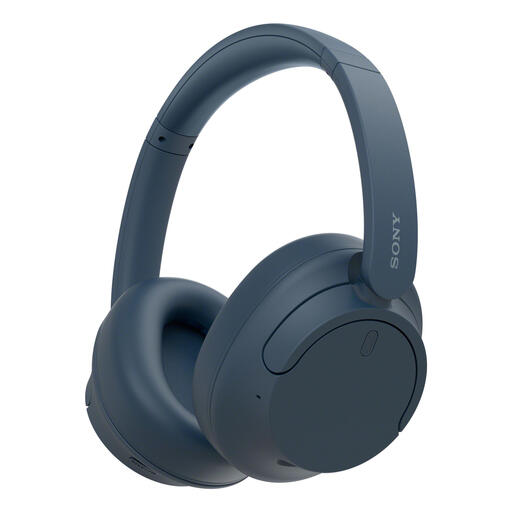 No image available
A choice to consider if you want to balance reducing room noise with hearing some of your surroundings. Try it for yourself to see whether spoken-word content remains clear at a modest volume.
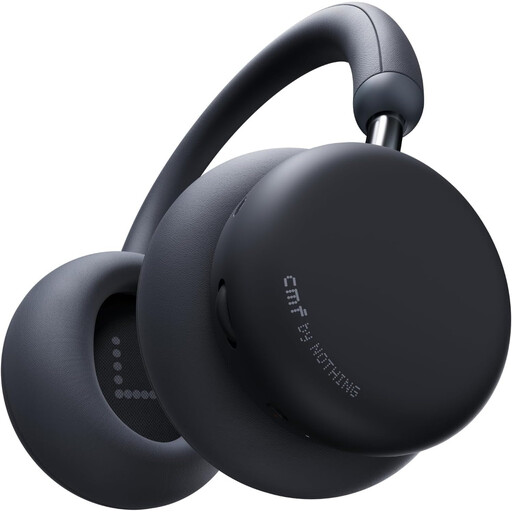 No image available
May suit you if you want to reduce room noise while staying aware of your surroundings. Compare the listening modes and check whether they work for your room.
Not necessarily. According to the Consumentenbond’s buying advice, ANC mainly targets low, constant sounds. For voices, also compare the fit and how much noise is reduced with ANC off; complete silence isn’t guaranteed.
Choose a model with a transparency mode if you need that feature, or compare it with a more open listening style. Controls vary by model; for the WH-CH720N, Sony describes settings for the transparency mode in the Sony app, among other features.
The World Health Organization recommends taking volume, listening time and exposure to loud sounds into account. Keep the volume modest and take breaks; ANC doesn’t replace these precautions.
In many cases, distance purchases come with a 14-day cooling-off period, subject to exceptions, according to the Dutch government. The Netherlands has no fixed statutory warranty period; what you can expect when a product is faulty depends on the circumstances and the product.
Radio equipment placed on the market in the Netherlands must meet European requirements, including CE marking, according to the Dutch Authority for Digital Infrastructure. Check the marking and product information for the specific item; a general brand or model page doesn’t prove this.