
Listeners who miss dialogue
Want to catch the intonation and quick jokes while there are other sounds at home? Compare spoken-word clips and noise reduction separately. The Consumers’ Association includes speech clips in its headphone tests.


Start by listening to a speech clip at your usual volume, then judge the fit for yourself when choosing headphones. A well-fitting pair of over-ear headphones with active noise cancellation (ANC) may suit you if you want to hear less household noise; easy-to-access ambient mode is useful if you regularly talk to other people at home. Also check whether your radio or other audio source can transmit Bluetooth audio to headphones.
Want to catch the intonation and quick jokes while there are other sounds at home? Compare spoken-word clips and noise reduction separately. The Consumers’ Association includes speech clips in its headphone tests.
Want to follow the comedy and respond to people at home without delay? Look for an easy-to-access ambient mode and simple controls. Sony lists an ambient mode for the WH-1000XM5.
If you listen for long periods, consider how the headphones fit around your ears and glasses, if you wear them, as well as the battery life at your chosen setting. The Consumers’ Association notes that on-ear models can put more pressure on your ears.
When listening to radio comedy in a noisy home, it’s worth weighing up speech clarity, noise reduction, how easy it is to stay in touch and wearing comfort separately.
Choose these if: household noise often makes you miss dialogue and you don’t need to respond all the time.
Bear in mind: ANC doesn’t always reduce changing voices predictably; consider the fit and warmth, too.
Choose these if: you usually want to listen, but regularly talk to someone at home.
Bear in mind: more background noise can make it harder to follow the radio voice; ambient mode won’t ensure you notice every important sound.
Choose these if: staying in touch with people at home matters more than maximum noise isolation, and you can understand the voices clearly at your normal listening volume.
Bear in mind: on-ear headphones can put more pressure on your ears, while a more open design lets in more household noise. Don’t automatically turn up the volume to compensate.
| What to consider | What to look for when buying | Who should pay particular attention? |
|---|---|---|
| Speech clarity | Listen to a spoken-word clip at a normal volume. An EQ or podcast mode gives you a way to adjust the sound; it doesn’t guarantee that every voice will sound clearer. | I want to follow fast dialogue and intonation despite background noise. Around 36% of consumers prioritise speech clarity. |
| Reducing household noise | Check how well the headphones fit around your ears and compare ANC on and off. Sony explains that ANC reduces changing speech less predictably than continuous noise. | I want to hear less household noise without constantly turning up the volume. Around 29% of consumers give noise reduction their highest priority. |
| Staying approachable | Try how quickly you can pause or switch on ambient mode, and check whether the sound let in overpowers the comedy too much. | I want to respond to people at home quickly without constantly taking off my headphones. Around 21% of consumers prioritise staying approachable. |
| Comfort during long sessions | Try on the headphones, wearing your glasses if necessary. Compare battery life using the same ANC setting; the Consumers’ Association notes that on-ear models can put more pressure on your ears. | I want to listen for longer without the fit becoming uncomfortable. Around 14% of consumers prioritise wearing comfort. |
Changing voices and sudden sounds around the home may still be audible, even with ANC.
Compare models using spoken audio and realistic background noise. Assess the fit and ANC separately.
A radio may use Bluetooth to receive audio from a phone without being able to transmit sound to headphones.
Check your radio’s manual specifically to see whether it supports Bluetooth audio output to headphones.
If your radio doesn’t support this output, you may need a different audio source or a suitable transmitter.
For the Sony WH-1000XM5, Sony lists different maximum listening times with ANC switched on and off.
Compare the stated battery life at the setting you’ll actually use; the maximum quoted by the manufacturer isn’t a guaranteed listening time.
The WH-1000XM5 is a closed-back over-ear model with ambient mode. It may suit you if you want to combine noise reduction with the option to switch between listening and talking to people at home.
Sennheiser lists a podcast mode, adjustable EQ, hybrid ANC and transparency mode for the ACCENTUM Wireless. These features may be useful if you want to adjust the sound of spoken audio yourself.
The Live range includes the over-ear Live 780NC and the on-ear Live 680NC. This makes fit and the level of noise isolation useful points to compare.
These models are wireless over-ear headphones with ANC; some also have ambient mode or adjustable sound features. Compare each model to see which features you really need.
 No image available
ANC and transparency mode are useful if you want to switch between noise reduction and hearing the sounds around you.
The description lists adjustable EQ and presets.
Stated playback time: up to 60 hours. Fast charging is also listed.
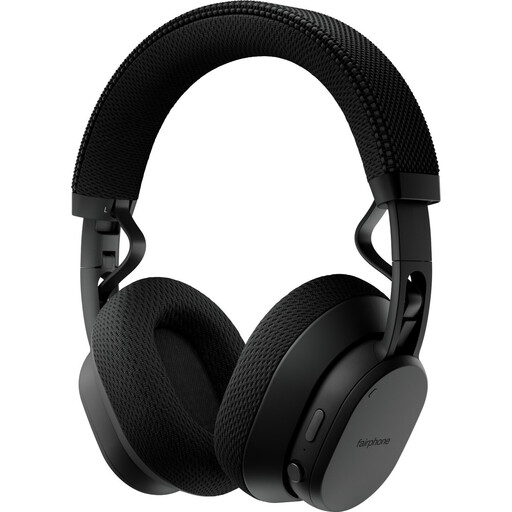 No image available
This closed-back over-ear model has ANC and an ambient mode which, according to the product description, can be selected using a separate button.
The stated battery life is up to 26 hours with ANC on. EQ settings are optionally available through the app.
The description lists replaceable parts and a replaceable battery.
 No image available
These closed-back over-ear headphones with active noise cancellation may suit you if you want to reduce household noise.
Bluetooth and a maximum battery life of 24 hours are listed. The product description also mentions an audio cable for listening without battery power.
 No image available
These wireless over-ear headphones with noise cancelling are worth comparing if you want to reduce household noise.
The description lists noise cancelling that can be adjusted in 20 steps through the app.
Stated battery life: up to 35 hours with noise cancelling on and up to 50 hours with it off.
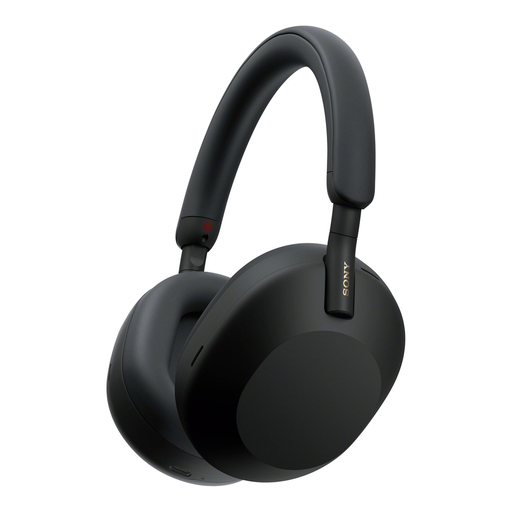 No image available
These closed-back over-ear headphones with ANC may suit you if you want to combine noise reduction with listening in a noisy environment.
Sony lists up to 30 hours with ANC on and 40 hours with ANC off.
Sony explains that ANC reduces changing speech less predictably than continuous low-frequency noise.
Only if the radio can transmit compatible audio to the headphones. Bluetooth on a radio doesn’t automatically mean it can send audio to headphones; check the manual for Bluetooth audio output. If you use a radio app on your phone, you can pair the headphones with your phone as the audio source.
Put the headphones into pairing mode and find them on the device playing the audio. If the connection drops, check whether the headphones are still connected to a device you used earlier. The exact buttons vary by model.
Not as your first step: check the fit and noise reduction first. VeiligheidNL recommends a good fit to reduce the need to turn up the volume in response to background noise.
For an online consumer purchase in the Netherlands, you generally have a 14-day cooling-off period after delivery, with some exceptions. If a product is faulty, you also have statutory rights against the seller; these aren’t automatically limited to the stated manufacturer’s warranty.