
Comparing pronunciation
You listen repeatedly to short Dutch speech samples and mainly want to judge whether they sound natural and distinct to you. The Consumentenbond includes speech clips in its headphone testing method.


Start with headphones that make it comfortable to listen to the same spoken examples, and pay attention to fit and how well they seal. Background noise may make ANC worth comparing, but the specifications alone won’t tell you how your lesson clips will sound. If you record yourself, test the microphone with your device and pronunciation app too.
You listen repeatedly to short Dutch speech samples and mainly want to judge whether they sound natural and distinct to you. The Consumentenbond includes speech clips in its headphone testing method.
You practise while there are other sounds in the house and want a comfortable fit and a good seal, without turning up the volume. VeiligheidNL points out that a good fit can help limit sound leakage.
You switch between a sample and your own recording. So check not only the sound you hear, but also whether your device and pronunciation app are using the intended microphone.
Start with the same spoken clips and a comfortable fit. Then consider whether ANC, sound settings and recording features suit the way you practise.
| What to consider | What to look for | Who it’s for |
|---|---|---|
| Spoken examples | Listen to the same clip at a similar, moderate volume. Try any sound settings with that clip. | I want to compare Dutch speech samples clearly. Around 36% of consumers say comparing speech is their main concern. |
| Background noise | Try the headphones on and listen in the room where you practise. Also test how well you can hear your surroundings. | I don’t want to keep turning up the volume to drown out sounds in the house while practising. Around 29% of consumers prioritise peace and quiet. |
| Comfort | Try the headband and ear cushions during a session of a length that’s typical for you, with glasses if you wear them. | I want to be able to practise repeatedly without the headphones becoming uncomfortable. Around 21% of consumers say fit is their main concern. |
| Your own recording | Make a test recording in your pronunciation app and play it back. Test switching between devices if you use both a phone and a laptop. | I want to alternate between a sample and my own voice. Around 14% of consumers say recording themselves is their main concern. |
The Consumentenbond assesses speech and noise cancellation separately. So an ANC specification won’t automatically tell you how your Dutch clips will sound.
Compare the same spoken clips at a moderate volume and try ANC in the room where you practise.
For the Tune 770NC, JBL quotes up to 70 hours with Bluetooth on and ANC off; its battery information also mentions 44 hours.
Compare battery-life figures only when the settings match. Manufacturer figures don’t guarantee how long the headphones will last in everyday use.
The Consumentenbond assesses microphone sound separately from connectivity and listening. Multipoint alone doesn’t tell you how a recording of your voice will sound.
Make a test recording in your pronunciation app and play it back before choosing.
The Tune 770NC is a wireless over-ear model with ANC, ambient sound modes, multipoint and adjustable EQ. It may be worth considering if you switch between devices or want to try different settings with speech clips.
According to Sennheiser, the ACCENTUM Wireless has hybrid ANC, a transparency mode, a Podcast mode and a 5-band equaliser to try with speech clips.
According to Sony, the WH-1000XM6 combines an over-ear design with ANC, an ambient sound mode and multipoint. That makes it worth considering if you practise on both a phone and a laptop.
The AirPods Max 2 is an over-ear option with ANC and a transparency mode to try with your Apple devices.
This selection includes wireless over-ear headphones with ANC or specified sound settings. Compare the features with your own speech clips and pronunciation app.
 No image available
Consider this model if you want to practise wirelessly and compare different sound settings using the same speech clips.
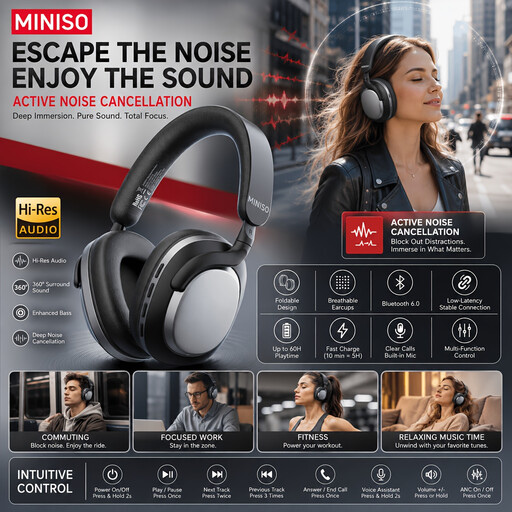
The product information lists adaptive ANC, a transparency mode, EQ, sound modes and multipoint. The title states a battery life of 60 hours.
 No image available
An over-ear model to consider if you want to listen wirelessly while there’s background noise.
The product name mentions noise cancelling and a battery life of 24 hours. Try the fit and test the effect of noise cancellation with your own clips.
 No image available
Consider this model if you want to try ANC and switch between two devices while practising.
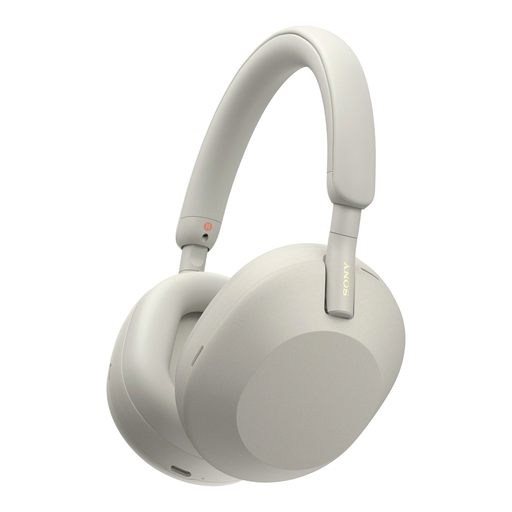
The product information lists a closed-back over-ear design, active noise cancellation and multipoint. If you want to record yourself, test the microphone and app separately.
 No image available
This model is worth considering if you want to try ANC and use your phone and laptop for practice.
The product information lists noise cancelling, multipoint for two devices and Speak-to-Chat. Check how it works with your pronunciation app.
 No image available
A wireless over-ear option to compare if you want to reduce background noise while practising.
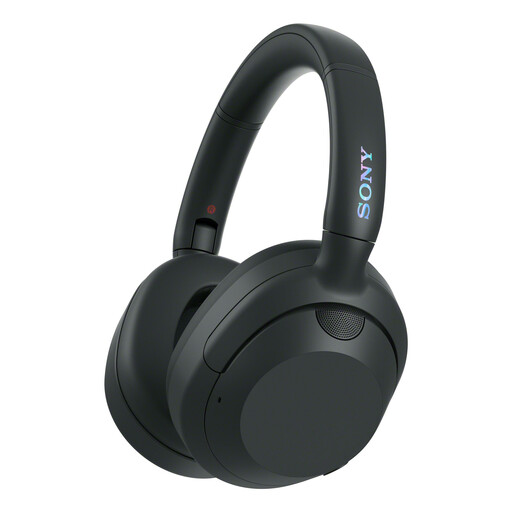
The product information lists active noise cancellation and multipoint. Try the fit and see how the sound works with your spoken examples.
No. Start by seeing how speech sounds to you and how well the headphones seal. ANC is mainly worth comparing if background noise bothers you; listen to your own clips to judge what works in your room.
Having a microphone doesn’t guarantee that it will work. Select the intended microphone on your phone or laptop, make a test recording in the pronunciation app and play it back.
Keep the volume moderate, take listening breaks and choose well-fitting headphones so you don’t need to drown out background noise. The World Health Organization gives an average of 80 dB for up to 40 hours a week as an example of a safe listening level; the higher the volume, the shorter the safe listening time.
According to the Dutch government, many online purchases from a business come with a 14-day cooling-off period. Check the seller’s information and the terms that apply to your purchase.
No. According to the Dutch government, there’s no fixed period for the legal guarantee in the Netherlands: you’re entitled to a product that meets what you could reasonably expect. If a product is faulty, the seller is your point of contact; normal wear and tear or damage you’ve caused yourself doesn’t automatically entitle you to a free repair.