
Comparing pronunciation in company
You replay an example and then want to hear quickly what someone next to you is saying. An easy-to-use ambient mode may matter more than simply having ANC.


Choose headphones based on how much of your surroundings you want to hear while practising: a switchable ambient mode gives you flexibility, while open-ear models leave your ears unobstructed. Try the same pronunciation clips with background conversations for yourself. The Consumentenbond assesses speech and noise cancellation separately, and reducing low engine noise doesn’t automatically tell you how clearly you’ll hear voices.
You replay an example and then want to hear quickly what someone next to you is saying. An easy-to-use ambient mode may matter more than simply having ANC.
You want to follow spoken examples despite the surrounding noise. See how much a more sealed fit helps in your own listening environment, without constantly turning up the volume.
You repeat short clips, so pay attention to fit, controls and battery life in the listening mode you use.
Choose this option: if you usually want to hear pronunciation examples on their own, but also want to follow a conversation in between.
Bear in mind: check how real background voices sound in both modes. An over-ear model also takes up more room in your bag.
Choose this option: if you want to keep hearing people around you at all times and the examples are clear enough in your space.
Bear in mind: open ears let distracting conversations in too. Don’t automatically turn up the volume to drown them out.
Choose this option: if a compact design is important and you can find ear tips that fit you.
Bear in mind: the seal and how easy it is to access any ambient mode matter more if you want to follow conversations.
| What to consider | What should you check? | Which consumers? |
|---|---|---|
| Speech reproduction | Listen to the same Dutch vowels and consonants at a similar, moderate volume. | I want to compare recorded pronunciation clearly, rather than judging the headphones on music alone. Around 33% of consumers put comparing pronunciation first. |
| Switching between listening and talking | Try how quickly you can switch on ambient mode and whether you can understand voices clearly in that mode. | If I want to respond quickly to someone next to me during a clip, switching modes easily is important. Around 27% of consumers prioritise moving between a clip and a live conversation. |
| Fit and battery life | Try the headphones on for a longer session and compare battery life only with the same ANC setting. | When listening repeatedly, I want the headphones to stay comfortable and not interrupt my session. This is the top priority for around 20% of consumers. |
| Blocking out background noise | Compare a speech clip with a conversation in the background, without turning up the volume. | When conversations are distracting, I want to assess how much background noise is reduced without listening at a higher volume. Around 20% of consumers prioritise this level of noise reduction. |
A pronunciation clip can still be difficult to follow even when low rumbling noise is reduced. Reducing engine noise doesn’t predict how clearly you’ll hear individual voices.
Assess recorded speech and live background speech separately, at the same moderate volume.
With a sealed model, you need to switch to a different mode; an open-ear model lets background conversations in even while the clip is playing.
Choose based on how often you genuinely need to respond to someone next to you while listening.
Manufacturers may quote different maximum battery life figures with ANC on and off, as Sony does for the WH-1000XM5.
Compare battery life only for the listening mode you plan to use.
According to Sony, the WH-1000XM5 is an over-ear model with ANC, an ambient sound mode and Quick Attention.
The QuietComfort Ultra Headphones (2nd Gen) have Quiet and Aware modes, as well as customisable modes, according to the manual.
According to Sennheiser, the ACCENTUM Wireless combines hybrid ANC with an optional transparency mode.
In a 2023 launch announcement, JBL described the LIVE 770NC as over-ear and the LIVE 670NC as on-ear, both with ANC and Smart Ambient.
According to Shokz, the OpenRun Pro 2 is an open-ear sports model with unobstructed ear canals and a combination of bone and air conduction.
This selection includes open-ear, over-ear and in-ear models. When comparing them, focus on how much of your surroundings you want to keep hearing while you practise.
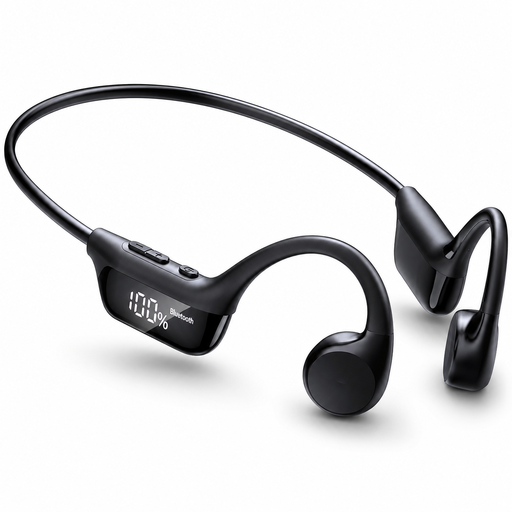 No image available
Suitable if you want to stay aware of your surroundings while practising; an open design also lets background conversations in.
Bluetooth 6.0; quoted battery life of 12 hours.
 No image available
May suit you if you want to switch between more noise isolation and hearing your surroundings while practising.
Over-ear; noise cancelling; 60-hour battery life; fast charging; 4 microphones; black.
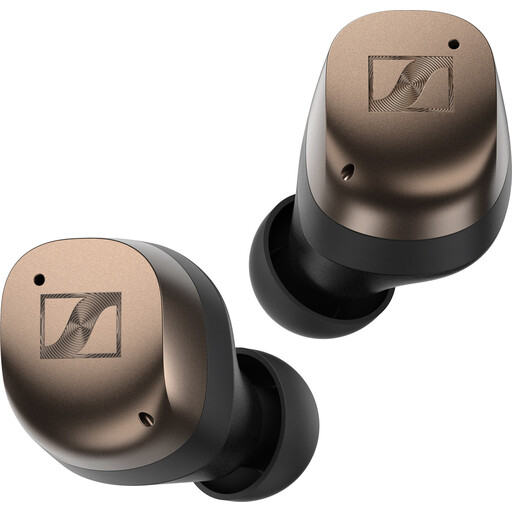 No image available
May suit you if you’re looking for compact earbuds and sometimes want to hear your surroundings while listening. Check that the fit is comfortable for you.
True wireless earbuds; Black Copper finish.
 No image available
May suit you if you’re looking for compact in-ear headphones with noise cancelling. Check whether the seal works for how often you want to hear conversations.
True wireless; in-ear; Active Noise Cancelling.
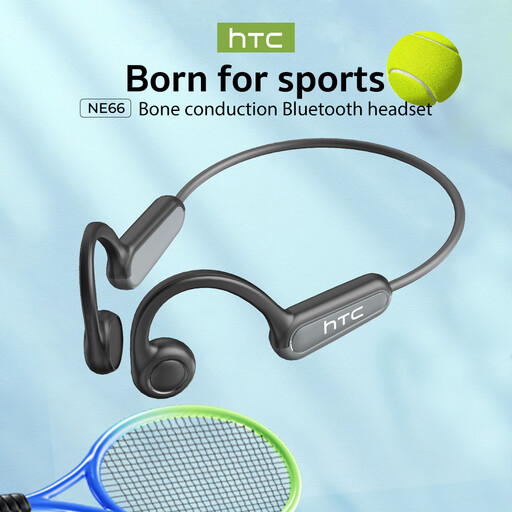 No image available
An open-ear design lets conversations around you through, which can be distracting when comparing pronunciation examples.
Bluetooth 5.4; translation feature for more than 135 languages.
Don’t assume it is without trying them out. The Consumentenbond assesses speech and noise cancellation separately and focuses mainly on reducing low engine noise. So try your clip with a conversation in the background.
Follow the instructions for pairing, play a familiar clip at a moderate volume and practise switching between listening modes. For the QuietComfort Ultra Headphones (2nd Gen), Bose explains how to switch modes using the button or app.
The World Health Organization recommends keeping the volume low, for example no higher than 60% of the maximum. Well-fitting noise-cancelling headphones may help reduce the temptation to turn up the volume in noisy places, but this isn’t guaranteed by any product.
According to ACM ConsuWijzer, when you buy a product online you generally have up to 14 days after delivery to change your mind, subject to applicable exceptions. If a product doesn’t meet reasonable expectations when used normally, you also have statutory guarantee rights and the seller must resolve the problem free of charge.
The Dutch government says you may listen to music hands-free while driving, but you must not hold a mobile device. It advises you to remain aware of surrounding sounds and keep the volume low; an ambient mode doesn’t guarantee road safety.