
Listener of spoken recordings
You want to follow theatre dialogue without constantly turning up the volume. The Consumers’ Association also uses speech recordings when assessing headphones.


Choose headphones that let you follow a familiar speech recording clearly at a comfortable volume. Then assess noise cancellation and comfort separately to see how they work for you. The Consumers’ Association treats speech reproduction and noise cancellation as separate assessment criteria. If you want to listen to audio from the aircraft’s entertainment screen, check your flight’s connections in advance and whether you need a cable or adapter for the exact model.
You want to follow theatre dialogue without constantly turning up the volume. The Consumers’ Association also uses speech recordings when assessing headphones.
You listen for hours at a time and quickly notice pressure from ear cushions, a headband or earbuds. The Consumers’ Association highlights fit and comfort as important considerations for extended listening.
You also want to hear audio from the seat’s entertainment system. KLM describes different connection options for each aircraft type, so check what’s available on your flight and which cable or adapter works with your headphones.
First decide which audio source you’ll be listening to. Then compare speech reproduction, comfort and battery life with the settings you plan to use.
| What to consider | What to look for when buying | Who should pay particular attention? |
|---|---|---|
| Understanding spoken words | Compare the same spoken passage at a comfortable volume, and assess speech reproduction and noise cancellation separately. | If I want to follow recorded theatre dialogue amid cabin noise, I prioritise clear voices over maximum noise cancellation. Around 31% of consumers prioritise speech reproduction. |
| Comfort during the flight | Try the model for an extended period, including with glasses if you wear them; for earbuds, check the fit in each ear. | When I listen for hours, I don’t want pressure or heat to make me keep taking my headphones off. Extended-wear comfort is the main concern for around 25% of consumers. |
| Connection to the audio source | Decide whether you’ll use your own device or the aircraft’s entertainment screen, and check which Bluetooth connection, cable or transmitter you’ll need for your flight and exact model. | If I want to listen to dialogue through the seat’s entertainment system, my headphones need to connect to that source. Around 19% of consumers put a suitable connection at the top of their list. |
| Battery life with noise cancellation | Check the stated battery life with ANC switched on for the exact model; don’t treat the maximum as guaranteed listening time. | I want my headphones to last long enough with the settings I use during the flight. Suitable battery life is the top priority for around 13% of consumers. |
| Being aware of your surroundings | Check how to pause playback or switch on an ambient mode, and always follow the crew’s instructions. | If I want to hear an announcement or someone speaking to me, I want to be able to pause quickly or let in more ambient sound. Around 12% of consumers prioritise this awareness of their surroundings. |
Bluetooth on your phone doesn’t tell you whether your flight’s entertainment system supports Bluetooth audio. KLM describes different facilities for each aircraft type.
Before you order, check the audio source on your flight and what’s included with the exact product version.
Depending on the connection, you may need to bring a suitable audio cable or transmitter.
The Consumers’ Association assesses speech reproduction and noise cancellation separately, so one feature doesn’t automatically tell you how well the other performs.
Listen to a familiar speech recording, then assess noise cancellation separately at a comfortable volume.
Sony states that the WH-1000XM6 offers up to 30 hours of music playback with NC on and up to 40 hours with NC off. You can’t compare these maximum figures directly unless the settings are the same.
Compare the figures for the exact model using the same ANC setting. Don’t assume the manufacturer’s maximum figure reflects how long the headphones will last on your flight.
An additional plan is separate from the statutory rights that may apply if a product is faulty. The Government of the Netherlands distinguishes between statutory guarantees and additional manufacturer’s warranties.
Before paying, read what extra cover the plan offers and compare it with your statutory rights.
The WH-1000XM6 is an over-ear model to consider if you’re comparing wired listening and stated battery life with noise cancellation.
The MOMENTUM 4 Wireless is worth considering if over-ear fit, transparency mode and stated playback time are important to you.
The Tour One M3 Smart Tx bundle is worth considering if you’re looking at an audio transmitter for a compatible source without Bluetooth.
The Space One is an over-ear model to consider if you’re comparing foldability and the manufacturer’s stated battery life with and without ANC.
This selection includes wireless over-ear and in-ear models for use with a compatible Bluetooth device; one model also supports passive wired use.
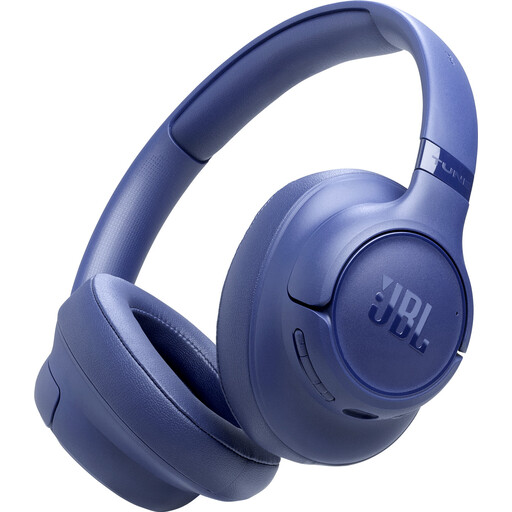 No image available
An over-ear option if you listen using a compatible Bluetooth device and want a foldable model.
The product description mentions Bluetooth, Vocal EQ, soft ear cushions and a padded headband. The stated maximum playback time is 76 hours; this figure isn’t specified for ANC use.
 No image available
This model is an option if you want to listen via Bluetooth, with wired listening as a backup for a compatible audio source.
Sennheiser states that it offers up to 60 hours of playback, adaptive ANC and a transparency mode. The product description mentions passive wired use with the supplied 3.5mm cable.
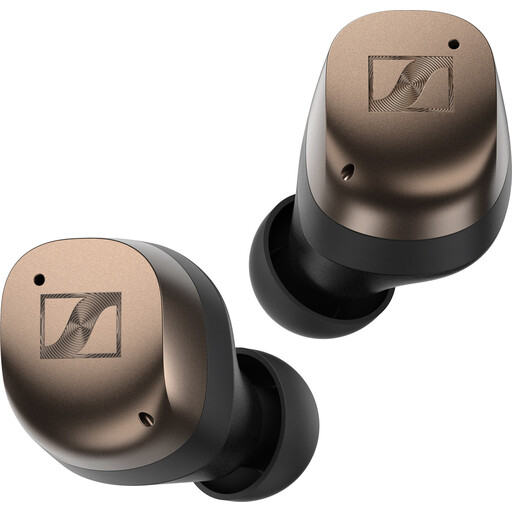 No image available
This in-ear option is suited to anyone who doesn’t want to wear a headband and uses a compatible Bluetooth source.
Sennheiser states that it has adaptive ANC, a transparency mode and several sizes of ear tips and fit fins. The product description mentions up to 30 hours of total playback time and fast charging.
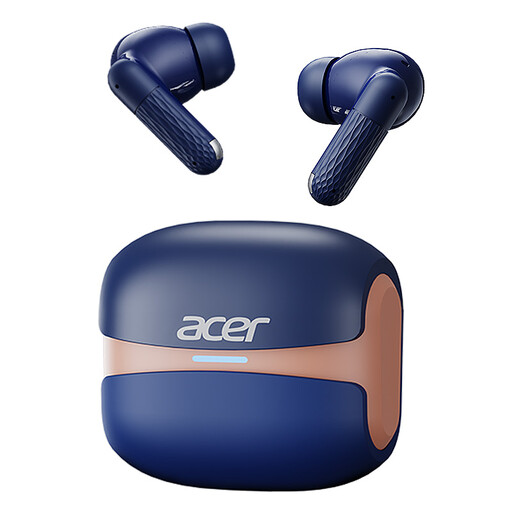 No image available
An in-ear option if you listen using a compatible Bluetooth device and don’t want to wear a headband.
The product name mentions Bluetooth 5.4 and a charging case with a Type-C connection.
 No image available
This in-ear option is worth considering if you’d rather not wear a headband and use a compatible Bluetooth device as your audio source.
The product name mentions active noise cancellation. For the playback time you can expect, check the information for the exact version and settings.
No. The entertainment system itself must support compatible Bluetooth audio, or you’ll need a suitable cable or transmitter. KLM describes a wired listening option in Economy and mentions an adapter for Bluetooth use; its information about the A350 states that this aircraft type supports Bluetooth audio. Check what’s available on your flight.
Follow the crew’s instructions on electronic devices and connections. EASA advises carrying devices with lithium batteries in your hand luggage and explains that airlines often require flight mode; this doesn’t mean Bluetooth is allowed on every flight. Keep the volume comfortably low and take listening breaks, as recommended by the World Health Organization.
Adjust the fit in advance and, if possible, try the headphones for an extended period, including with your glasses if you wear them. With earbuds, check the fit in each ear and take a listening break now and then. The Consumers’ Association considers fit and comfort when assessing headphones.
When you buy as a consumer in the Netherlands, the product must conform to the contract. According to the Government of the Netherlands, there’s no fixed statutory guarantee period in the Netherlands; the seller must resolve any fault they’re responsible for, while a manufacturer’s warranty may provide additional cover. For online purchases from a business, you’re also often entitled to a 14-day cooling-off period, subject to legal exceptions.