Which listening option is right for you?

Campers who want to practise in peace

If you mainly listen at your pitch, consider the fit and the balance between isolation and ANC to follow spoken lessons at a comfortable volume. The Consumers’ Association discusses fit and wearing comfort; the World Health Organization recommends well-fitting or noise-cancelling headphones to help reduce the need to turn up the volume in noisy environments.

Campers who want to stay approachable

If you want to stay in touch with people nearby while practising, compare open-ear headphones with a model that has an ambient sound mode. The Consumers’ Association explains that open-ear headphones let sound through; Shokz describes the OpenRun as open-ear.

Campers with limited packing space

If you want to travel light, weigh up the size and battery life per charge, and check the water resistance of the exact model if you’ll be using it outdoors. Sony Netherlands lists the battery life per setting and IPX4 rating for the WF-C510, among other details; Shokz lists an IP67 rating for the OpenRun and says it is not suitable for swimming.

What should you look for when practising a language at the campsite?

Over-ear with isolation, optionally ANC

Choose this option if: you mainly want to listen with focus at your pitch and have room in your luggage.

Bear in mind: they take up extra space in your bag, and ANC does not block every type of campsite noise equally well.

In-ear with ambient sound mode

Choose this option if: you want compact earbuds and the option to let in outside sounds when needed.

Bear in mind: fit varies from person to person; also check the protection rating of the exact version.

Open-ear

Choose this option if: staying approachable matters more to you than blocking out surrounding noise.

Bear in mind: the open design also lets distracting sounds in, and does not guarantee that you’ll notice every warning.

What to consider What to look for when buying Who is this important for?
Clear speech at low volume Try the fit and isolation with spoken content; check how to operate ANC. If you want to follow lessons at a comfortable, low volume, focus on isolation and clarity. Around 29% of consumers make this their top priority.
Hearing the sounds around you Compare an open design with the ambient sound mode on your chosen model. If you want to stay approachable while practising, consider how much you want to hear the people around you. Around 22% of consumers prioritise awareness of their surroundings.
Wearing comfort Try the fit you have in mind if possible; check which tip sizes are included with earbuds. If you want to practise for longer without the fit becoming uncomfortable, consider which shape feels best. Around 21% of consumers put wearing comfort first.
Battery life and charging Compare battery life in the listening mode you use; for earbuds, distinguish battery life per charge from the additional charges provided by the case. If you want to do several exercises between charges, compare battery life in the mode you’ll use. Around 14% of consumers make charging and battery life their top priority.
Luggage and moisture Compare the size and check the IP rating and usage restrictions for the exact model. If you’re packing light and listening outdoors, you’ll want to know what moisture protection applies to your chosen model. Around 14% of consumers make this their top priority.

Common mistakes when choosing

  • Assuming the maximum battery life applies to every listening mode

    Manufacturers sometimes list different maximum battery lives for different settings. For example, Sony states up to 35 hours with NC on and 50 hours with NC off for the WH-CH720N; JBL lists up to 70 hours with Bluetooth on and ANC off for the Tune 770NC.

    Only compare figures for the same relevant setting. For earbuds, also distinguish battery life per charge from the extra charges in the case.

    If you use ANC or an ambient sound mode, you may need to recharge sooner than the maximum battery life suggests.

  • Thinking open-ear, ambient sound mode and ANC are the same thing

    An open design lets sound through; an ambient sound mode is a feature you can switch on with certain models. ANC is designed to reduce noise.

    First decide whether you mainly want to practise in peace or stay approachable. Then compare the controls and see whether you can follow lessons at a comfortable, low volume.

  • Confusing water resistance with unlimited protection

    IP ratings and usage restrictions vary by model. Shokz lists an IP67 rating for the OpenRun, but also says this model is not suitable for swimming.

    Check the instructions for the exact version, and put your headphones away if conditions fall outside the stated guidance.

  • Thinking an extended warranty is a condition of your legal rights

    The Dutch government distinguishes between statutory rights, the manufacturer’s warranty and an additional warranty you pay for. Extra cover does not replace your rights if a product is faulty.

    Compare the terms of any extra cover with your existing rights before paying for it; the retailer is your point of contact if there’s a problem with a product.

Brands to consider

Sony

Sony offers both an over-ear model with ANC and compact WF-C510 earbuds with an ambient sound mode.

  • Sony lists up to 35 hours with NC on and 50 hours with NC off for the WH-CH720N.
  • For the WF-C510, Sony lists up to 8 hours per charge with ambient sound mode on and 11 hours with the mode off; Sony states that the model has an IPX4 rating.
  • These manufacturer figures are not based on listening sessions at a campsite. The WF-C510 specifications do not list ANC.

JBL

The Tune 770NC is a foldable over-ear option with ANC and features that let in surrounding sounds.

  • JBL lists Ambient Aware and TalkThru for this model.
  • JBL’s stated maximum of 70 hours applies with Bluetooth on and ANC off; don’t present this as battery life with ANC enabled.
  • The listed features don’t tell you how comfortable the model will be at a campsite or how clearly you’ll hear speech there.

Shokz

The OpenRun is an open-ear option for anyone who wants to keep hearing sounds around them while listening.

  • Shokz lists an IP67 rating for the OpenRun.
  • Shokz says the OpenRun is not suitable for swimming. Its open design does not block distracting sounds from your surroundings.
  • The product description does not say how clearly you’ll hear language exercises at a busy campsite.

Philips

The TAH6509BK/00 is another over-ear option, with noise cancellation and an awareness mode.

  • Philips lists a foldable design and up to 70 hours of playback for the TAH6509BK/00.
  • The stated maximum playback time does not tell you whether it applies with noise cancellation on; check the battery life for the mode you plan to use.

Products at Joybuy

This Joybuy selection includes compact in-ear earbuds, over-ear headphones with noise cancellation and open-ear models for listening at the campsite.
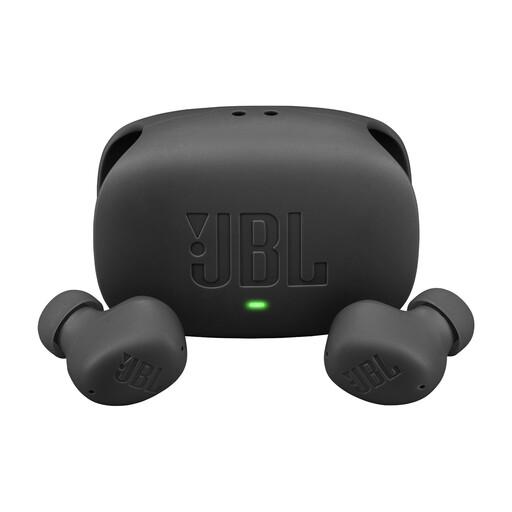
JBL Wave Buds 2 earbuds in black

JBL Wave Buds 2, black

Compact in-ear earbuds with ANC and Smart Ambient, so you can switch between listening modes.

The stated total playback time of 40 hours applies with ANC off; the earbuds themselves offer 10 hours of playback according to the product description. The earbuds have an IP54 rating and the case has an IPX2 rating.

View at Joybuy

Sennheiser MOMENTUM 4 Wireless over-ear headphones in black

Sennheiser MOMENTUM 4 Wireless, black

Over-ear headphones with adaptive ANC and Transparency Mode to let in sounds from your surroundings.

The product description lists up to 60 hours of playback and says the headphones are not water-resistant. Do not expose this model to moisture.

View at Joybuy
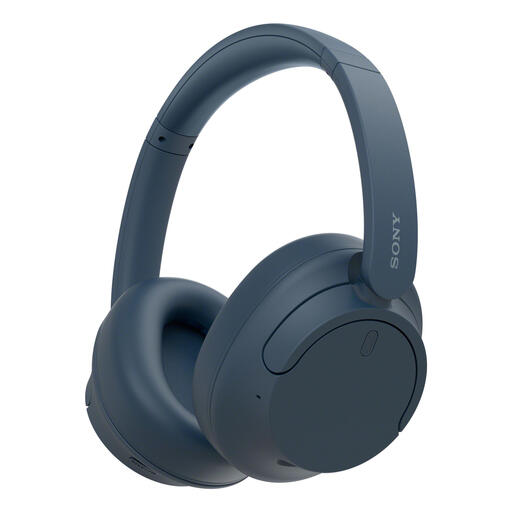
Sony WH-CH720N wireless over-ear headphones in blue

Sony WH-CH720N, blue

Over-ear headphones with ANC for anyone who wants to reduce surrounding noise while practising.

Sony lists up to 35 hours with ANC on and 50 hours with ANC off. The product description advises against exposing the headphones to water or moisture.

View at Joybuy
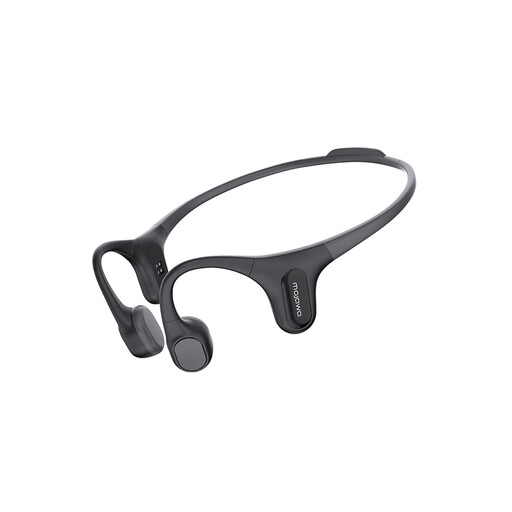
Mojawa RunPlus open-ear headphones

Mojawa RunPlus

An open-ear model with Bluetooth for anyone who wants to keep hearing sounds around them while listening.

The product name lists 32 GB of built-in storage and an IP68 rating. An open design does not block distracting sounds from your surroundings.

View at Joybuy
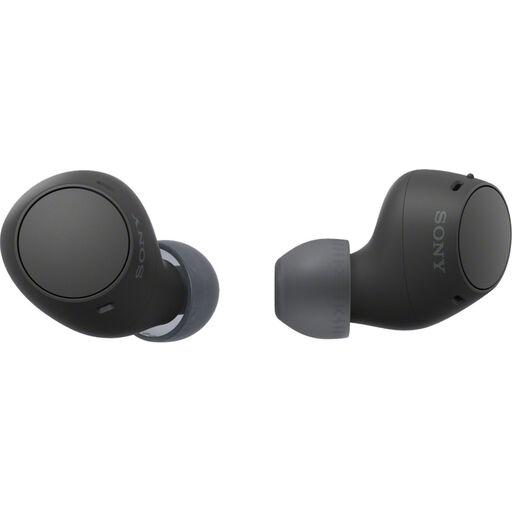
Sony WF-C510 wireless earbuds in black

Sony WF-C510, black

Compact in-ear earbuds with Ambient Sound Mode to let in sounds from your surroundings.

Sony lists up to 8 hours per charge with ambient sound mode on and 11 hours with the mode off. The earbuds have an IPX4 rating; the case is not water-resistant.

View at Joybuy

Frequently asked questions

Do you need ANC for language practice?

Not necessarily. If surrounding noise makes speech hard to hear, first compare the fit and isolation, then consider ANC. If you want to stay approachable, also compare an ambient sound mode or open-ear headphones; see whether you can follow lessons at a comfortable, low volume.

How do you compare the battery life of different models?

Compare battery life in the same listening mode. For earbuds, check battery life per charge separately from the extra charges provided by the case. Sony lists up to 35 hours with NC on and 50 hours with NC off for the WH-CH720N, so these figures do not apply to the same setting.

Can you wear earbuds in the rain?

Follow the instructions for the exact model. Sony lists an IPX4 rating for the WF-C510 earbuds, while the case is not water-resistant. Shokz lists an IP67 rating for the OpenRun but says it is not suitable for swimming; don’t treat an IP rating as general protection for every type of water exposure.

What cooling-off period applies to online purchases in the Netherlands?

According to the Dutch government, many distance purchases from a business come with a 14-day cooling-off period, although there are exceptions. This is separate from your rights if a product is faulty; the retailer is your point of contact if there’s a problem. Check the specific returns terms before using your earbuds.

What should you check before setting off for the campsite?

Check that your playback device supports Bluetooth audio, pair your headphones and test the controls and language exercises in advance. Bring a suitable way to charge them, and check whether the lesson material is available on your device without an internet connection; this depends on the lesson service or app, not the headphones.
