
Listening to speech recordings
You want to follow quieter replies and different voices too. So try a recording of your own rather than just listening to music; the Consumers’ Association includes speech clips when testing headphones.


Choose a well-fitting, closed-back pair of headphones and test them with a clip from an interview to see if you can follow both voices at a modest volume. Over-ear headphones can be comfortable for longer listening sessions; in-ear headphones are an alternative if you’d rather not wear a headband. Noise cancelling reduces the sound you hear, but it doesn’t prove that your flatmate won’t hear your recording.
You want to follow quieter replies and different voices too. So try a recording of your own rather than just listening to music; the Consumers’ Association includes speech clips when testing headphones.
You want to hear less room noise and listen at a modest volume. Noise cancelling doesn’t guarantee that someone sitting next to you won’t hear the recording.
You wear your headphones for longer periods, so consider the fit, pressure on your ears or head, and battery life in the listening mode you use. The Consumers’ Association notes that over-ear headphones are often comfortable during long listening sessions.
Choose these if: you listen at a laptop for long periods and find ear cushions around your ears comfortable.
Bear in mind: the ear cups are larger, and ANC won’t stop sound leaking through to your flatmate.
Choose these if: a headband or large ear cups would be inconvenient; try the different ear-tip sizes provided to find the right fit.
Bear in mind: in-ear comfort and listening time per charge, especially for long interviews.
Choose these if: you want to remain aware of your surroundings and hear your flatmate clearly.
Bear in mind: more outside noise gets in; don’t automatically turn up the volume to drown it out.
| Feature to consider | What to look for when buying | Who should prioritise this? |
|---|---|---|
| Speech clarity | Test a recording with both quiet and clear voices, and check the volume and pause controls. | If I want to follow both interviewees clearly, I’ll try a recording of my own. Around 36% of consumers prioritise speech intelligibility. |
| Shared space | Check the fit and, at your usual listening volume, separately test how much sound leaks out. | I want to listen without unnecessarily disturbing my flatmate, while also taking room noise into account. This is the top priority for around 29% of consumers. |
| Comfort | Try wearing them for long enough, perhaps with glasses on; for in-ear models, check the available ear-tip sizes. | When listening to long recordings, I don’t want pressure on my ears, head or ear canals to become uncomfortable. Around 21% of consumers prioritise lasting comfort. |
| Battery and controls | Compare battery life with ANC on if you use that mode, and try pausing and replaying a clip. | If I often pause or replay sections, reliable battery life and easy controls matter. These are the most important factors for around 14% of consumers. |
Noise cancelling is designed to reduce background noise for you, the listener. It doesn’t tell you how much sound from your recording leaks out.
Test sound leakage separately at your usual listening volume, ideally with your flatmate there.
The stated playback time can differ depending on whether ANC is on or off. So the manufacturer’s figure for one listening mode doesn’t necessarily tell you anything about the other.
Compare battery life for the mode you actually plan to use while listening.
An advertised sound mode or a brand’s comparison of voice reduction doesn’t prove how well you’ll be able to follow both voices in your own recording.
Assess speech reproduction and background-noise reduction separately, using representative audio.
The WH-CH720N is a closed-back wireless over-ear model worth considering if you want to compare ANC with an ambient sound mode.
The Tune 770NC is an over-ear option to compare if you want to switch between ANC and ambient sound.
The Space One is an over-ear alternative to compare for fit and controls, with adjustable transparency.
The ACCENTUM Wireless is an over-ear option to compare if Podcast mode and stated battery life matter to you.
This selection includes wireless over-ear headphones and in-ear earbuds to compare for replaying interview recordings.
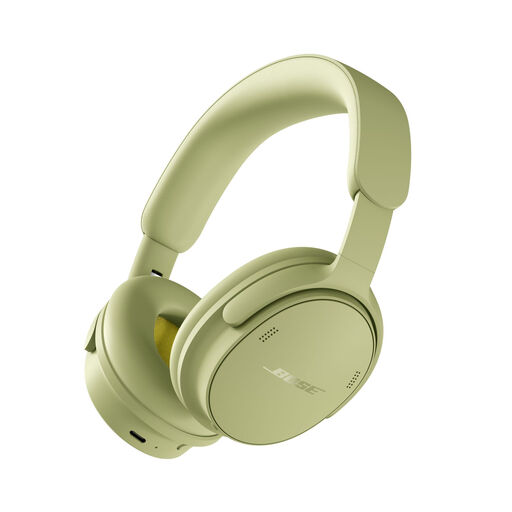 Image unavailable
An over-ear option to assess for fit and speech reproduction using a clip from your own interview.
 Image unavailable
An in-ear option to assess alongside over-ear models for fit and comfort during an interview.
Bluetooth 5.4.
 Image unavailable
A wireless in-ear option to compare if you’re looking for a style without over-ear cups.
The product name states that it has active noise cancelling.
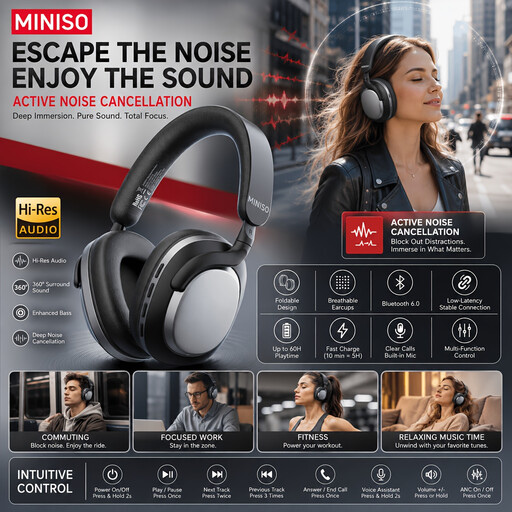 Image unavailable
An over-ear option to assess for wearing comfort and how clearly speech sounds in your own recording.
The product name states that it has noise cancelling and 24-hour battery life.
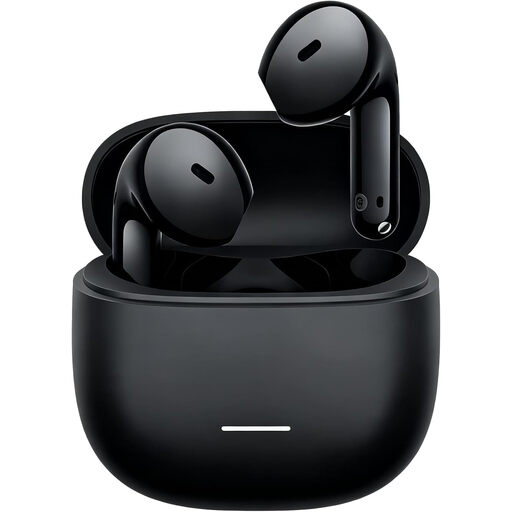 Image unavailable
A wireless in-ear option to assess for speech intelligibility and fit using a clip from your own interview.
Not on its own: the Consumers’ Association assesses speech clips separately from music and tests noise cancelling separately too. Try a clip similar to your recording, with both a loud and a quiet voice.
Start at a low volume and check whether sound from your headphones is audible, without turning the volume up to drown out room noise. Well-fitting noise-cancelling headphones may reduce the need to listen at a higher volume; the World Health Organization also recommends taking listening breaks.
Compare the figure for ANC on if that’s the mode you use. Sony states that the WH-CH720N offers up to 35 hours with noise cancelling on and 50 hours with it off; JBL states that the Tune 770NC offers up to 44 hours with ANC on and a maximum of 70 hours with ANC off. These are manufacturer figures; actual use may vary.
When you buy from a business online, you often have 14 days to change your mind, subject to legal exceptions. The Dutch government also says you’re entitled to a product that works properly. There’s no fixed statutory warranty period in the Netherlands, and the retailer is your point of contact if a product is faulty. Check the specific returns policy before buying.