What should you look for when choosing?
Start with your own recording and listening environment. Then consider whether fit, comfort, portability or a wired fallback matters most for your review work.
| What to consider |
What should you check? |
Who should pay particular attention? |
| Hearing speech clearly |
Listen to a clip of your own with quiet voices and background noise. Check the seal and adjust noise cancellation or ambient sound without turning the volume up unnecessarily. |
If I’m listening back without room speakers, I want to be able to follow quiet voices without turning up the volume. Clear speech is the top priority for around 40% of consumers. |
| Editing timing |
Test your headphones in your editing software on the computer you use. If there’s a cable option, check that the connection and wired mode work with your equipment. |
If I’m choosing edit points or recording a new track while another is playing, I want to know how my own setup performs. Precise editing is the top priority for around 30% of consumers. |
| Comfort during long sessions |
Try the fit during a longer listening session. If you wear glasses, check how the ear cushions feel with them on, too. |
If I’m listening to a whole interview in one sitting, I want a comfortable fit that stays comfortable and creates a good seal. Long-wear comfort is the top priority for around 20% of consumers. |
| Easy to carry |
Compare an in-ear model with an over-ear model, and check that earbuds create a good seal in your ears and remain comfortable. |
If I work in several places and have little room in my bag, I want to weigh portability against fit and seal. Around 10% of consumers prioritise a compact design above all else. |
Joybuy products
This Joybuy selection includes wireless headphones for reviewing interviews, with different options for noise cancellation and wired listening.
 No image available
Sennheiser MOMENTUM 4 Wireless, black
An option to explore if you want to listen back to interview recordings wirelessly and have a wired fallback, too.
Sennheiser lists up to 60 hours of playback. The product information mentions adaptive noise cancellation, equaliser settings through the app and an included 3.5 mm cable for wired listening.
The product description mentions a padded headband and deep ear cushions. You’ll need to assess the fit and speech clarity yourself using your recording.
View at Joybuy
 No image available
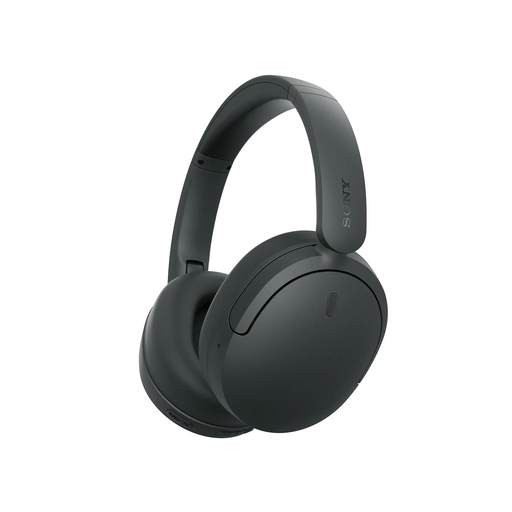
WH-CH730 Wireless Headphones, black
An option to consider if you want to listen wirelessly and have a wired fallback for editing.
The product information mentions a closed-back over-ear design, multipoint connectivity and a detachable cable with passive listening.
The headphones are described as foldable. Test the cable connection and timing with your own computer and editing software.
View at Joybuy
 No image available
Sonos Ace, black
An over-ear option to consider if you want to listen to interview recordings wirelessly and have wired connection options, too.
The product information mentions active noise cancellation, equaliser settings through the app and the ability to connect to two devices at once.
Wired listening is described as available via the included USB-C and 3.5 mm cables. Fit and speech clarity depend on how you use the headphones and on the recording.
View at Joybuy
 No image available
Sony WH-CH720N, blue
A wireless over-ear option to compare if you want to manage background noise while reviewing recordings.
Sony lists up to 35 hours of playback with noise cancellation switched on. The product information mentions multipoint connectivity and adjustable noise cancellation levels.
The stated battery life is a manufacturer figure; it doesn’t tell you how clearly your interview will sound or how comfortable the headphones will be for a full session.
View at Joybuy
 No image available
Bose QuietComfort Ultra Headphones (2nd Gen), black
An over-ear option to consider if you want to combine noise cancellation with wired listening for reviewing interviews.
The product information mentions active noise cancellation and a detachable cable option with USB-C and 3.5 mm connections.
According to the product information, the headphones are supplied without a charger and don’t support PD fast charging. A cable or noise cancellation on its own doesn’t guarantee low latency or clear playback of your recording.
View at Joybuy
Frequently asked questions
Do you always need to use a cable when editing interviews?
No. First, test whether latency from your computer, software and wireless connection affects your work. Accurate synchronisation matters when monitoring a new recording, so a suitable wired option can be a useful fallback.
Why does the sound change on your Windows PC when you use the headset microphone?
According to Microsoft, with Bluetooth LE Audio, stereo playback while the microphone is active depends on support from both the headset and PC, compatible drivers and the Windows version. Check that combination and select your preferred input and output in your editing software; don’t assume every Bluetooth setup will provide stereo sound.
How can you listen for long periods without constantly turning up the volume?
Check that the ear cushions or earbuds create a good seal, and keep the volume at a moderate level. VeiligheidNL lists a good seal and noise cancellation as ways to reduce the impact of background noise; noise cancellation isn’t a reason to turn the volume up.
What are your rights when you buy headphones online in the Netherlands?
For a qualifying distance purchase from a business, you generally have a 14-day cooling-off period in the Netherlands, according to the Dutch Government. You also have statutory rights to a product that meets legal requirements; there is no fixed statutory guarantee period in the Netherlands. Before buying, check who the seller is and which terms and conditions apply.
Can you review identifiable interviews using headphones and then publish them?
A sound recording in which someone is identifiable may count as personal data. Using headphones doesn’t change the applicable privacy rules: where the GDPR applies, processing requires a valid legal basis, and consent is one possible basis. The legal basis and publication rights that apply depend on the circumstances of the interview.


