
Vandaag of morgen in huis

Kwaliteit gegarandeerd

Welkomstaanbiedingen ontgrendelen: GRATIS bezorging | Tot 80% korting | Gratis 30 dagen JoyPlus-proefperiode
Download de app
Wireless headphones make listening to music, making calls and travelling easier. But there’s plenty of choice, from compact Bluetooth headphones to over-ear models with active noise cancellation. A higher price doesn’t automatically mean a model is right for the way you’ll use it.
Look out for these three common pitfalls:
On-ear headphones sit on your ears and are often compact and lightweight. According to the product specifications, the Sony WH-CH520 weighs 147 grams. This makes this style practical for commuting and everyday use. However, the earcups don’t enclose your ears as fully as those of an over-ear model.
Over-ear headphones go around your ears. They can offer more passive noise isolation and comfort, but are usually larger and heavier. The Bose QuietComfort, for example, has a stated weight of 240 grams, while the Sonos Ace weighs 312 grams.
For exercise or lots of movement, wireless earbuds may be more convenient. If so, check their protection rating. For the REDMI Buds 8 Active, the product information states that the IP54 rating applies to the earbuds only, not the charging case. This doesn’t mean you can submerge the set in water.
Don’t compare only the biggest number on the product page. Check whether the stated battery life applies:
The Sony WH-1000XM5 is stated to offer up to 30 hours with noise cancellation and 40 hours without it. For the JBL Wave Buds 2, up to 40 hours is quoted with ANC switched off, including the charging case. According to the product information, the Apple AirPods 4 with ANC offer up to 5 hours on a single charge and more than 30 hours with the case.
Headphones with long battery life are especially useful for travelling, studying and getting through several working days. Fast charging can be just as practical as a high maximum capacity.
Bluetooth 5.2 or 5.4 doesn’t, on its own, tell you how well a connection will work in every situation. Also look for features such as multipoint, which lets you connect to a laptop and smartphone at the same time, for example.
If you have lots of meetings, headphones with a microphone are useful. Check whether the product information simply mentions a built-in microphone or also includes features to reduce background noise. Claims about call clarity come from the manufacturer, so treat them as product claims rather than a guarantee of performance in every environment.
A wired input is useful if the battery runs out or you’re using a device without Bluetooth. According to the listed specifications, the Sony WH-1000XM5, Bose QuietComfort Ultra and Sonos Ace have a wired connection.
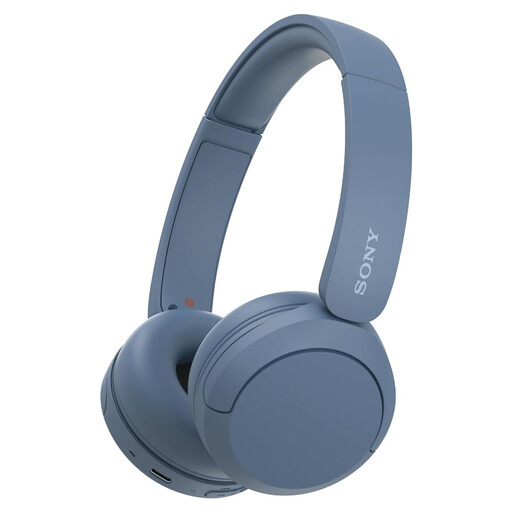
Why it suits this profile: Lightweight on-ear headphones for music, calls and everyday use, without lots of extra features to complicate the controls.
The product specifications clearly state the weight, Bluetooth connectivity, microphone and multipoint support. Bear in mind, though, that this model doesn’t have active noise cancellation and isn’t water-resistant.
147 grams, USB-C, microphone and multipoint, according to the product information. Stated battery life varies between product specifications, so check the current listing.
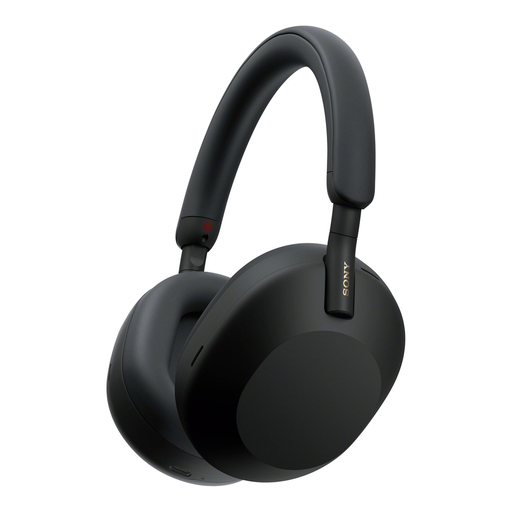
Why it suits this profile: Designed for travellers and people working from home who value over-ear comfort, active noise cancellation and the ability to connect to multiple devices.
Battery life is given separately for use with and without noise cancellation: 30 and 40 hours respectively, according to the product information.
Over-ear design, active noise cancellation, multipoint, microphone, USB-C and a cable included.
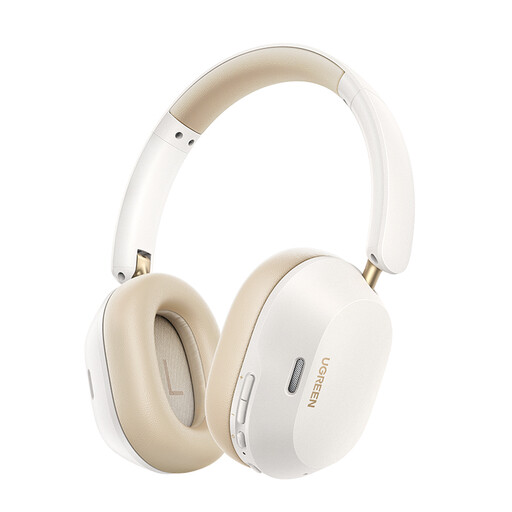
Why it suits this profile: A good choice for users looking for long listening sessions, multiple sound modes and adjustable equaliser settings.
The stated battery life distinguishes between ANC being on and off: 45 and 75 hours respectively. According to the information provided, the headphones aren’t water-resistant.
40mm drivers, Bluetooth 5.4, ANC and transparency modes, app controls and a weight of 264 grams.
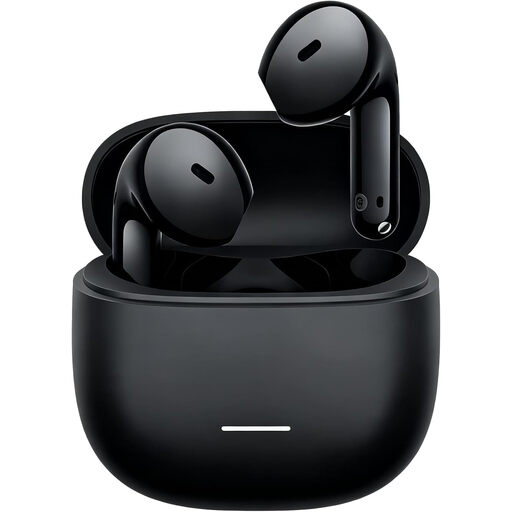
Why it suits this profile: Compact wireless earbuds, each weighing very little, with a charging case for use on the go.
The limits of the protection rating are clearly stated: according to the product information, IP54 applies to the earbuds, while the case isn’t protected against water or dust.
3.8 grams per earbud, Bluetooth 5.4, USB-C, up to 7 hours per charge and up to 37 hours with the case.
We’ve put together a complete, up-to-date list of products that meet these strict selection criteria and the applicable European safety requirements.
Switch on your headphones or earbuds, open the Bluetooth settings on your smartphone and select the product name. With models that support Fast Pair or Swift Pair, a connection notification often appears automatically. If it doesn’t work, remove an old pairing and try again. Also check that the headphones are sufficiently charged.
The battery life per charge is separate from the overall lifespan. Battery capacity decreases over time, particularly after lots of charge cycles and exposure to heat. Keep your headphones dry, charge them with a suitable USB-C cable and avoid leaving them fully discharged for long periods. The statutory consumer guarantee in the EU is generally at least two years; check the terms with the retailer.
Yes. Active noise cancellation uses additional electronics and can reduce playback time. Always compare battery life with ANC switched on and off. For headphones you’ll use when travelling, battery life with ANC on is usually the more relevant figure. Also bear in mind that noise cancellation reduces surrounding sounds, so don’t use it in situations where you need to hear traffic or other warning signals.
