
Attentive poetry listener
You want to follow the voice in a spoken performance clearly, so you compare spoken recordings, fit and sound settings rather than looking only at music specifications.


You don’t need headphones that store files themselves: an app on your phone or computer plays the recording stored on your device and sends the audio to your headphones via Bluetooth. Then choose based on how clearly you can follow a spoken performance, how the headphones fit and how much of your surroundings you want to hear. In a busy place, a good seal can help you avoid constantly turning up the volume; when you’re out in traffic, it’s important to be able to hear what’s going on around you.
You want to follow the voice in a spoken performance clearly, so you compare spoken recordings, fit and sound settings rather than looking only at music specifications.
You store spoken performances locally and want to play them without an internet connection. The player and file format on your phone or computer are separate considerations.
You’re looking for a good seal or noise cancellation to help reduce distracting background noise, while still being able to hear your surroundings when needed.
When listening to poetry from your own files, the player on your source device, how clearly you can hear the voice and the conditions you listen in are all important considerations.
| Priority | What to look for | Who should consider this? |
|---|---|---|
| Following the spoken performance clearly | If possible, listen to one of your own spoken recordings and assess the sound settings with that voice. | When I listen to poetry, I want to follow the words clearly, not just enjoy a pleasant sound for music. Around 29% of consumers prioritise hearing the voice clearly. |
| Playing your own files offline | Check that the app on your phone or computer can open and play the file format offline, then connect your headphones via Bluetooth. | I want to play my own spoken recordings without an internet connection, so I check the player and file format first. Around 23% of consumers prioritise offline playback of their own files. |
| Managing background noise | Compare the fit and the available noise cancellation or ambient mode. When you’re out in traffic, choose a setting that lets you hear your surroundings. | In a noisy place, I want to reduce background noise without having to listen at an unnecessarily high volume. Around 18% of consumers prioritise managing background noise. |
| Comfort during longer listening sessions | If possible, try the headphones on and check for pressure and warmth. Comfort depends on how they fit you personally. | When I listen for longer periods, I want my headphones to feel comfortable, even if maximum isolation isn’t my top priority. Around 18% of consumers choose mainly for comfort. |
| Battery life and running out of charge | Compare the stated playback times using the same ANC setting. Separately check whether you can connect a cable to your source device. | I don’t want to run out of charge unexpectedly, so I check the battery life in the setting I use. Around 12% of consumers prioritise battery life or having a wired backup. |
With the listening setup described here, the audio files are stored on the playback device. That device plays them and sends the audio to your headphones via Bluetooth.
Before buying, try playing one of your own files without an internet connection on the phone or computer you plan to use.
For the Sony and JBL models mentioned, the stated maximum playback times vary depending on the noise-cancelling setting.
Compare the figures for the setting you actually plan to use. If you want a wired backup, also check the connection on your source device.
Noise cancellation alone doesn’t tell you how clearly you’ll hear a voice. You also need to be able to hear your surroundings in places where traffic is a factor.
Try a spoken passage and adjust the fit or ambient mode to suit where you’re listening.
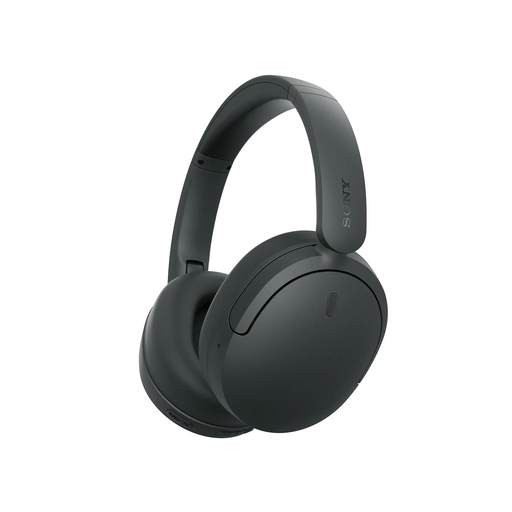
The WH-CH720N is an over-ear option for anyone looking to compare a detachable cable and battery figures for each NC setting.
The Tune 770NC is an over-ear option for anyone looking to compare how switching between Bluetooth sources and an ambient mode works.
The MOMENTUM 4 Wireless is an over-ear option with adjustable EQ and a transparency mode.
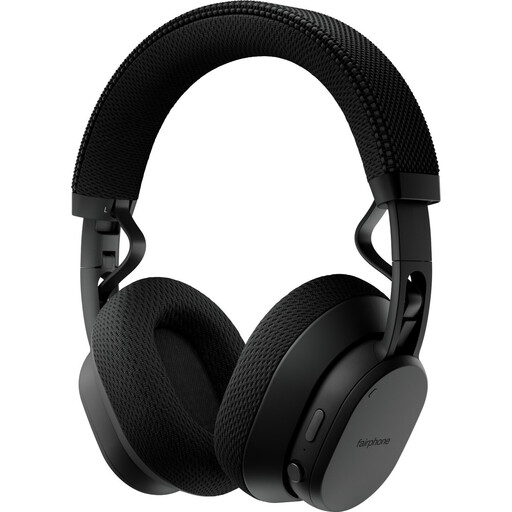
The TAH8506WT/00 is an example of an over-ear model with multipoint and an ambient mode.
The wireless over-ear models below are designed for listening to spoken performances stored on a phone or computer: your device plays the file and sends the audio to your headphones via Bluetooth.
 No image available
A good choice if you use a Bluetooth source and want to adjust the EQ or transparency mode.
Stated playback time of up to 60 hours; ANC, Transparency Mode and adjustable EQ via the app. The product description also mentions passive listening with a 3.5mm cable.
 No image available
A good choice if you’re looking for wireless over-ear headphones with noise cancellation and an ambient sound mode.
Stated music playback time of up to 75 hours without NC and 50 hours with NC. The description also mentions a detachable cable, passive operation and multipoint.
 No image available
A good choice if you want to switch between ANC and an ambient mode, and adjust the EQ presets.
Stated playback time of up to 30 hours without ANC and 26 hours with ANC. The description mentions a replaceable battery and adjustable EQ presets.
 No image available
A good choice if you want to adjust ANC and switch between noise cancellation and ambient sound.
Stated battery life of up to 35 hours with ANC and 50 hours without ANC. The description mentions 20 levels of ANC adjustment, an ambient mode and multipoint.
 No image available
A good choice if you want to use ANC and tailor the sound to your preferences with the adjustable Energy Slider.
Stated playback time of up to 100 hours without ANC and 48 hours with ANC. The description mentions adjustable bass or treble via the Energy Slider.
No, not with the listening setup described here: the app plays the files on your phone or computer and sends the audio to your headphones via Bluetooth. Check that your app can open the file format offline; one iPhone app we looked at lists MP3, FLAC, WAV and AAC among its supported formats.
Connect the headphones via Bluetooth to the device playing the file, then try a familiar spoken recording at a comfortable, low volume. If noise cancellation or an ambient mode is available, compare how the voice and background sound come across in each setting.
According to the Dutch government, listening to music hands-free while driving is permitted; holding an electronic device while driving is not. When listening, make sure you can still pay enough attention to traffic and relevant sounds around you.
In the Netherlands, there’s no fixed statutory guarantee period. What you can reasonably expect from a product depends on factors including the product itself and the circumstances. If something is faulty, repair, replacement or a refund may be possible. For online purchases from a business, you generally have 14 days to change your mind, although exceptions may apply; check the relevant terms and conditions.