
Language learner revisiting lessons
You play news recordings on a phone or computer and want to listen to spoken passages comfortably, pause them and start again. Comfort and easy controls may matter more than music-focused features.


If you play local files on a phone or computer, focus on fit and ease of use; built-in storage is only necessary if you want to listen without that device. Over-ear headphones with noise cancellation may suit long listening sessions in a noisy space, while open-ear headphones are a better fit if you want to stay aware of your surroundings. None of these features, on its own, proves that Dutch news lessons will be easier to understand.
You play news recordings on a phone or computer and want to listen to spoken passages comfortably, pause them and start again. Comfort and easy controls may matter more than music-focused features.
You revisit lessons somewhere background noise is distracting, so you compare fit and noise cancellation. These features do not prove that a particular model reproduces Dutch speech more clearly.
You want to put audio files on your headphones, or keep your ears free when you're out and about. These are different needs: if you want to play audio independently, check that storage and file transfer are actually supported.
First decide where the audio files will be played: on a connected device or directly from the headphones. Then compare fit, controls and how much of your surroundings you want to hear.
| What to consider | What to look for | Who might care most? |
|---|---|---|
| Speech and replay | If possible, try a spoken clip and check that pausing and resuming are easy. | If I revisit lessons often, I want voices to be comfortable to follow and passages easy to play again. Around 36% of consumers put speech and replay first. |
| Comfort | Compare over-ear and on-ear designs, and judge the fit during a longer listening session. | For long lessons, I want a headband-style model that feels comfortable; on-ear headphones may be more compact, but can press on your ears. Around 29% of consumers give comfort top priority. |
| Reducing noise | Check whether noise cancellation or an ambient sound mode is available, and compare battery life using the same setting. | If background noise distracts me from my lesson, I look for a fit or feature that suits the situation. Around 14% of consumers prioritise reducing distracting noise. |
| Files without a device | Check the storage, supported file formats and how you transfer files. | If I want to leave my phone or computer at home, I need headphones that can play files independently. Around 14% of consumers make this their main requirement. |
| Hearing your surroundings | Check whether the design leaves your ears unobstructed, and keep the volume at a level that suits your surroundings. | If I listen outdoors, I want to stay aware of sounds around me. Around 7% of consumers put this first. |
Consumentenbond assesses speech clips separately. Trying your own lesson material will therefore tell you more about your preferences than a music-focused sound feature alone.
Bluetooth lets you play audio from a connected device, but it doesn’t automatically mean you can put files on the headphones.
Decide where your files will be stored while you listen. If you want to listen without a phone or computer, check the storage, file formats and transfer method.
Manufacturers may quote different maximum playtimes with noise cancellation switched on and off. A voice EQ preset is not an independent test of speech intelligibility.
Compare battery life using the same setting and, where possible, try your own news clip. Also consider the controls and fit.
A close fit and noise cancellation can conflict with the need to hear traffic or announcements.
Keep your surroundings audible when travelling in traffic. The Dutch government allows hands-free listening, but prohibits holding an electronic device while driving.
Additional warranty cover does not replace your statutory rights if a product is faulty. In the Netherlands, the Dutch government states that there is no fixed statutory warranty period.
Check what additional cover includes, and remember that the retailer is your point of contact for your statutory rights.
The WH-CH720N is an over-ear model with noise cancellation and an ambient sound mode, for listeners who want to switch between blocking out and hearing their surroundings.
The Tune 730BT is an over-ear model for listening from a connected device, with adjustable sound profiles.
The TAH4209BL/00 is a compact, foldable on-ear option for lessons played from a connected device.
The OpenSwim Pro combines an open-ear design with Bluetooth and a separate mode for files stored on the device.
The Space One is an over-ear alternative with active noise cancellation and adjustable transparency.
This selection features wireless over-ear headphones for lessons played from a phone or computer. The features listed can help you compare fit, controls and awareness of your surroundings; they are not proof of better speech intelligibility.
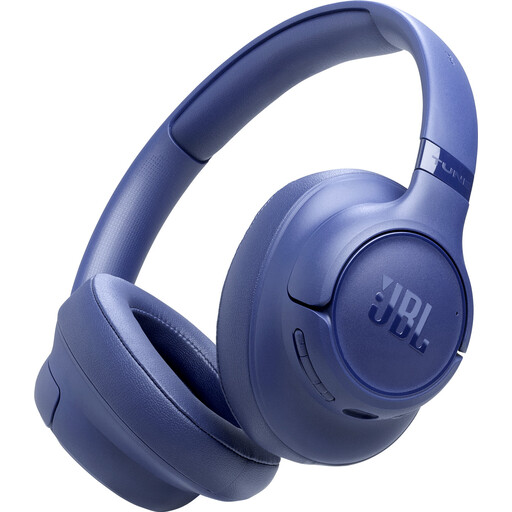 No image available
Suitable for listening via Bluetooth from a phone or computer; the product description also mentions noise cancellation.
The product description lists a Vocal EQ setting and a foldable headband. It also says the charging cable is not included.
 No image available
Suitable for lessons played from a connected device, with playback and pause controls.
The product description mentions Bluetooth, adaptive noise cancellation and a transparency mode.
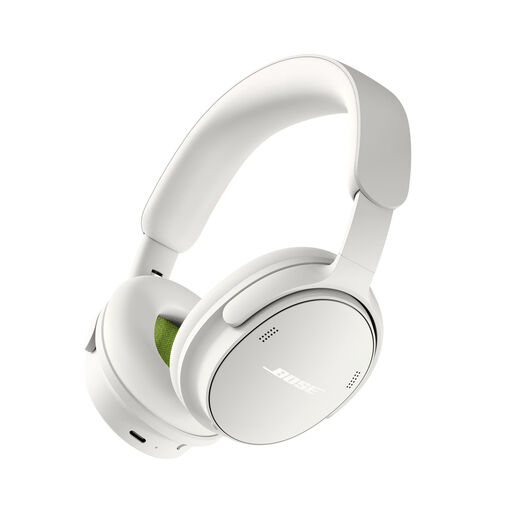 No image available
Suitable for listening via Bluetooth from a phone or computer, with controls on the earcups.
The product description mentions noise cancellation and an Aware mode for hearing your surroundings.
 No image available
Suitable for lessons played from a connected device; the product description mentions playback and pause controls.
The description lists active noise cancellation and an Aware mode. It also says the ear cushions are made from memory foam.
 No image available
Suitable for lessons played via Bluetooth from a phone or computer.
The product description mentions noise cancellation and simultaneous connection to a phone and laptop.
No, not if your phone or computer plays the files and sends the audio to your headphones via Bluetooth. If you want to listen without that device, check that the model supports storage and your file format. Shokz says you can transfer files to the OpenSwim Pro from a computer using the magnetic cable.
Check that your phone or computer can play Bluetooth audio, then use one of your own news files to try the pause and playback controls. Consumentenbond assesses ease of connection and controls separately; a quoted battery life does not guarantee how long the headphones will last with your use.
Keep the volume low and take breaks, as the World Health Organization says risks are linked to sound levels and listening time. It gives a maximum of 60% of your device’s maximum volume as a practical guideline, not a legal limit in the Netherlands.
In the Netherlands, you are entitled to a product that works as it should, and the Dutch government says there is no fixed statutory warranty period. The retailer is your point of contact for your statutory rights; normal wear and tear or damage caused by your own use does not automatically entitle you to a free repair.
The Dutch government says hands-free listening to audio while travelling is allowed, but holding an electronic device while travelling is not. Keep your surroundings audible, and remember that no headphones can guarantee you will notice every signal in every traffic situation.