
Vandaag of morgen in huis

Kwaliteit gegarandeerd

Welkomstaanbiedingen ontgrendelen: GRATIS bezorging | Tot 80% korting | Gratis 30 dagen JoyPlus-proefperiode
Download de app
A pair of wireless headphones may seem easy to choose on paper. Bluetooth, noise cancelling and long battery life are often displayed prominently on the packaging. However, isolated marketing terms reveal little about everyday use. A model may sound good, for example, but feel too heavy during a long train journey. Or a set of wireless earbuds may be water-resistant without being suitable for swimming.
The Joybuy Product Recommendation Officer selects products based on verifiable specifications and practical use cases. Below, you can find out which points matter and which models suit different user profiles.
A stated battery life usually applies under specific conditions, such as a particular volume level and with active noise cancelling switched off. So always check:
The difference can be significant with over-ear models. The Soundcore Space One Pro is stated to offer up to 60 hours without ANC and 40 hours with ANC. The Baseus EH10 NC lists up to 80 hours without ANC and 55 hours with ANC. These are product specifications taken from the product descriptions; actual battery life depends on volume, codec and features.
Active noise cancelling uses microphones to detect ambient sound and produce an opposing signal. This can be particularly helpful with constant noise, such as train engines or aircraft noise. Voices and sudden sounds are not always reduced in the same way.
Also pay attention to the difference between:
When a brand states “up to -45 dB”, for example, this refers to a specified maximum value under certain conditions. Based on the brand’s own research or measurements, that figure cannot automatically be translated into the same experience on every train, in every office or at every gym.
Over-ear headphones completely cover the ear and generally provide more room for larger drivers and a sturdy headband. This is practical for travelling and working, although the model may feel warmer to wear.
Wireless earbuds and true wireless earbuds are compact and easy to carry. On the other hand, fit, ear-tip size and pressure inside the ear vary considerably from person to person. For sports, sports earbuds with ear hooks or a neckband may offer a more secure fit. An open-ear or bone-conduction model allows more ambient sound through, which can be useful when running but less suitable for an immersive listening experience.
Bluetooth 5.3, 5.4 or 6.0 mainly provides information about the connection technology being used. Practical stability also depends on your phone, laptop, distance and obstacles. Also check whether the headphones:
A higher Bluetooth version does not, on its own, guarantee better sound quality. The codec being used and the source of the music are also important factors.
A larger driver does not automatically mean better sound. Look at the driver type, diameter, supported codecs and any equaliser features in an app. Hi-Res audio and Hi-Res Wireless are labels that indicate supported transmission or certification, but you also need suitable music files and a compatible device.
LDAC can transmit more audio data than some standard Bluetooth codecs. According to product information from Soundcore and Baseus, among others, LDAC is supported. However, check whether your smartphone supports this profile and whether using it affects battery life or connection stability.
For calls and online meetings, it is not only the number of microphones that matters. Wind, traffic and microphone placement all affect speech clarity. A headset with a microphone is therefore not automatically suitable for every working environment.
For water resistance, check the IP rating:
Also check the weight, the shape of the ear cushions and whether the headband is adjustable. Foldable headphones are more convenient to carry in a rucksack, but hinges deserve extra attention when the headphones are transported every day.
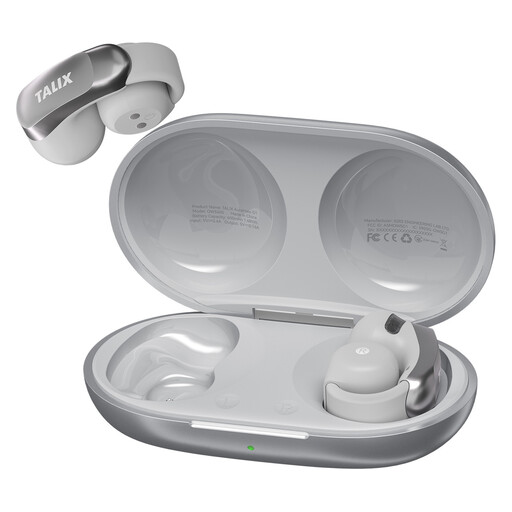
Why it suits this profile: The clip-on fit and weight of 5.2 grams per earbud make these suitable for everyday listening, commuting and light workouts.
The product information separately states 7 hours of listening per earbud and 28 hours including the charging case. IPX4 is more clearly defined than a general claim such as “waterproof”.
Bluetooth 5.3, four microphones, 28 hours of total battery life and 10 minutes of fast charging for, according to the product information, 2 hours of playback.

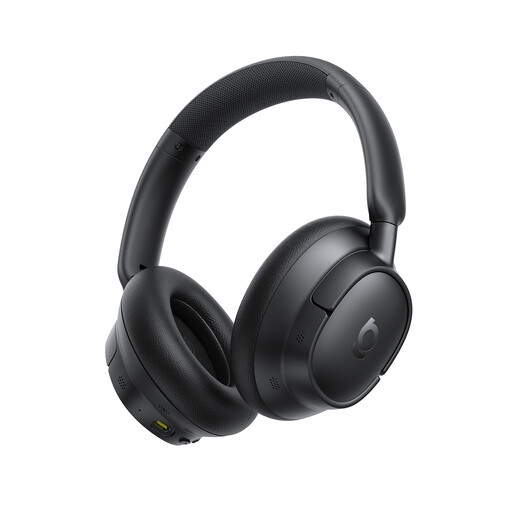
Why it suits this profile: These over-ear headphones are aimed at listeners who value comfort, adjustable sound and long listening sessions.
The stated 60-hour battery life is listed as a separate product specification. The headphones also support wired listening via 3.5 mm.
42mm transducers, adaptive noise cancelling, four microphones, multipoint and control via the Smart Control app.
Why it suits this profile: According to the product description, this model is designed for travelling, working and extended listening, with ANC, Hi-Res Wireless and an over-ear design.
The ANC rating of up to -45 dB and battery life with and without ANC are stated separately. Treat these as Baseus product specifications, not as a guaranteed result in every environment.
Up to 80 hours of stated playback without ANC, LDAC support, five microphones and a fast-charging function.
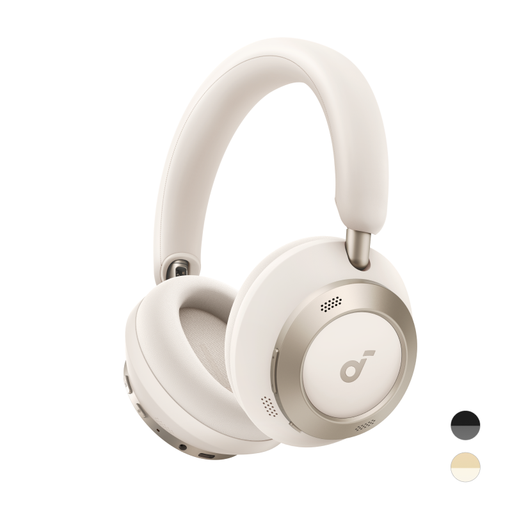
Why it suits this profile: The foldable design, adaptive ANC and pressure-relieving headband are well suited to commuting, air travel and office hours.
The stated 60 hours applies without ANC and 40 hours with ANC. This makes it clearer what playback time you can expect with noise cancelling switched on.
FlexiCurve folding technology, LDAC, six microphones and, according to the product information, 5 minutes of fast charging for 8 hours of playback.
We have put together a complete, up-to-date list of products that fully meet these strict selection criteria and the applicable European safety regulations.
First, charge the headphones, switch on Bluetooth on your phone and put the device into pairing mode. Then select the product name from the Bluetooth list. If the device has been paired before, the connection will often happen automatically. If you experience problems, check that the headphones are not still connected to a laptop or tablet.
This varies by model and usage. Check the playback time per earbud as well as the total capacity of the charging case. ANC, high volume levels, phone calls and an intensive Bluetooth codec can reduce battery life. Keep your earbuds in the case when you are not using them and charge them with a suitable USB-C cable.
Usually not. IPX4 and IPX5 are intended for sweat, splashes or limited water jets, not automatically for submersion. Check the complete IP rating and do not use sports earbuds during activities where water damage or reduced awareness of your surroundings could occur. Keep the volume at a moderate level and remain alert to traffic and other road users.
