
Vandaag of morgen in huis

Kwaliteit gegarandeerd

Welkomstaanbiedingen ontgrendelen: GRATIS bezorging | Tot 80% korting | Gratis 30 dagen JoyPlus-proefperiode
Download de app
Wireless headphones may seem easy to choose at first glance. However, cheaper models can disappoint because of an uncomfortable fit, short battery life or features that are less useful in practice than the packaging suggests. If you focus mainly on a big discount or an impressive number, you may overlook important details.
So watch out for these three common pitfalls:
Do not just look at the highest number of hours. Check whether the stated battery life applies with or without ANC, and whether the figure refers to a single charge or the earbuds plus charging case.
A model such as the Sony WH-CH520 is listed in the product information with up to 50 hours of battery life and a fast-charging function. The technical specifications also state 40 hours. This difference shows why it is sensible to check both the product description and the specifications table.
For daily commuting, 20 to 30 hours of battery life may be sufficient. If you travel frequently or want to charge as little as possible, also compare the fast-charging time and the connector, usually usb-c.
An on-ear headphone is generally light and compact. According to the product specifications, the Sony WH-CH520 weighs 147 grams. This can be useful when you are out and about, but surrounding sound usually remains more audible than with a closed-back over-ear model.
An over-ear headphone covers the entire ear. This can be comfortable during long listening sessions and often provides greater physical sound isolation. However, pay attention to the weight, the pressure from the headband and heat build-up around your ears.
With wireless earbuds, the right ear tips and a secure fit are important. A model may be lightweight but still come loose while walking or exercising. For sports use, a splash-resistance rating and secure attachment are more relevant than simply choosing a low price.
Bluetooth determines how the headphones connect to a phone, tablet or laptop. Multipoint is useful if you want to connect to, for example, a smartphone and laptop at the same time. However, check how many devices are supported simultaneously.
Audio codecs such as AAC, SBC and LDAC can affect compatibility and audio transmission. A codec alone does not guarantee a particular listening experience; the source device and music service being used also play a part.
For headphones used for music and calls, microphones, wind filtering and microphone positioning are practical points to consider. Claims about noise reduction during calls should be read as information from the brand’s product description, not as a guaranteed result in every environment.
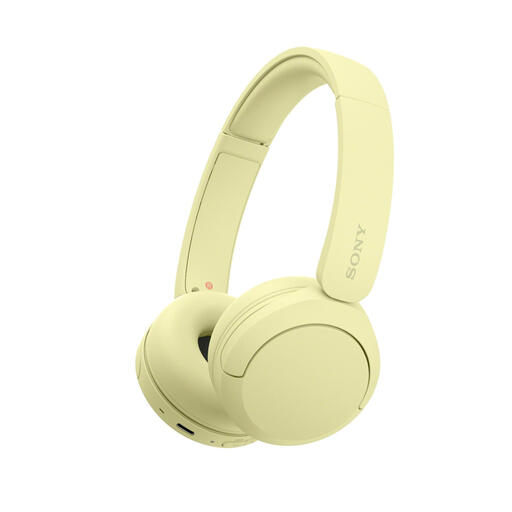
Why it suits this profile: These lightweight on-ear headphones are designed for everyday listening, travel and calls. The product information lists Bluetooth, a microphone, multipoint and a weight of 147 grams.
Specific information about weight, connectivity and battery life makes it easier to compare than relying on a promotional term alone.
147 grams, multipoint connectivity, usb-c and up to 50 hours of battery life according to the product description.

Why it suits this profile: This over-ear model is designed for music, calls and longer listening sessions. The listed features include active noise cancellation, multipoint and usb-c audio.
The product details state both the battery life with noise cancelling and multipoint connectivity. This gives you a clearer idea of which features affect usage.
Up to 30 hours of battery life according to the product specifications, Bluetooth 5.4, active noise cancellation and support for aptX Lossless, LC3, AAC and SBC.
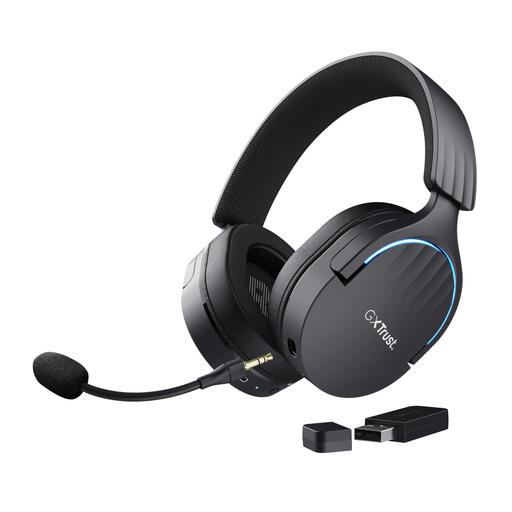
Why it suits this profile: This gaming headset combines Bluetooth with a 2.4GHz receiver and a cable. It is suitable for users who want to game or make calls on PC, console and smartphone.
The connection options are clearly listed. You therefore do not have to assume that Bluetooth alone is sufficient for every gaming platform.
2.4GHz and Bluetooth, detachable microphone, 50mm drivers, 3.5mm connection and stated battery life of up to 22 hours.
We have put together a complete, up-to-date list of products that fully meet these strict selection criteria and the applicable European safety regulations.
Turn on Bluetooth on your phone, switch on the headphones and activate pairing mode. Select the model name from the list of available devices. Fast Pair or Swift Pair can speed up this process on some Android, Windows and other compatible devices. Check the manual if the headphones do not appear.
Their lifespan depends on charging cycles, volume, storage and daily use. Keep the headphones dry if the model does not specify water resistance, use a suitable usb-c charger and store earbuds in their charging case. Battery life of 40 or 50 hours does not mean that the battery will retain the same capacity throughout the product’s entire lifespan.
Noise-cancelling headphones can be useful on trains, aeroplanes or in the office. According to the brand’s product description, they electronically reduce surrounding noise. The effect varies depending on the sound and the fit. Do not switch on noise cancelling in situations where you need to hear traffic, public announcements or other warning signals clearly.
