
Vandaag of morgen in huis

Kwaliteit gegarandeerd

Welkomstaanbiedingen ontgrendelen: GRATIS bezorging | Tot 80% korting | Gratis 30 dagen JoyPlus-proefperiode
Download de app
Wireless headphones can look very convincing on paper. Bluetooth, active noise cancellation and a battery that lasts for dozens of hours all sound appealing. In practice, however, you often only find out after buying whether a model really suits the way you use it. An uncomfortable fit, an average microphone or disappointing battery life can seriously limit everyday use.
The Joybuy Product Recommendation Officer helps you by comparing the most important specifications and use cases. This allows you to compare Bluetooth headphones based on verifiable features, rather than marketing terms alone.
Manufacturers often quote the maximum playback time under specific conditions. Active noise cancellation, high volume levels, phone calls and a high Bluetooth codec can all affect battery life. So check whether the quoted battery life applies with ANC switched on or off.
Headphones with long battery life are particularly useful for travelling, office work and long working days. Also look at fast charging. With some models, just a few minutes of charging can provide several hours of playback.
Headphones with noise cancellation use microphones and electronic processing to reduce surrounding noise. The result varies depending on the type of sound, the fit and the environment. Low, constant sounds such as train or aircraft noise are generally processed differently from voices or sudden noises.
Also check whether the headphones have an ambient or aware mode. This is useful when you want to hear an announcement on public transport or remain available to colleagues in the office.
Over-ear headphones completely enclose your ears. This can be comfortable during long listening sessions and helps with passive noise isolation, but the model is usually larger and can feel warmer around your ears. On-ear headphones rest on your ears and are often more compact, but they may create more pressure over time.
Wireless earbuds are small and easy to carry around. However, the fit depends heavily on the ear tips supplied. For sports, ear hooks or a model with an IP rating may be more practical than standard headphones.
Look at three separate details:
Quoted battery life is a product specification, not a guarantee for every use case. For a model such as the CMF Headphone Pro, the product description states up to 100 hours without ANC and up to 48 hours with ANC. The Soundcore Space One Pro states 60 hours without ANC and 40 hours with ANC. Always check the current product page before buying.
Bluetooth 5.0, 5.1, 5.3 or 5.4 mainly indicates the connection standard being used. Also check whether the headphones support multipoint. This allows you to keep, for example, a laptop and smartphone connected at the same time.
For music, support for codecs such as AAC, SBC or LDAC may be relevant. Actual sound quality also depends on the source, the streaming service and the smartphone being used. For work, a reliable headset with a microphone is more important than extensive codec support alone.
Check the weight, how adjustable the headband is and whether the ear cushions can be replaced. Comfortable headphones should not only feel soft, but also stay securely in place without putting unnecessary pressure on your head or ears.
An IPX4 rating offers a different level of protection from IPX5. These ratings do not make a product suitable for submersion. Always follow the manufacturer’s safety instructions and do not use standard headphones while cycling, driving or operating machinery.
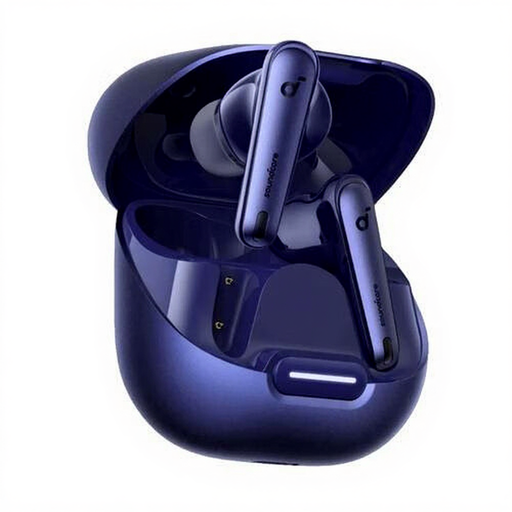
Why it suits this profile: These wireless earbuds are compact for everyday use and combine calls, music and Bluetooth 5.3 in one small package.
The product description states 10 hours of playback per charge, a charging case and IPX4 water resistance. The six microphones are useful for calls, but check call quality in your own environment.
Bluetooth 5.3, active noise cancellation, USB-C and a charging case.

Why it suits this profile: Over-ear headphones with active noise cancellation, app control and a supplied audio cable for combining music, travel and home use.
The quoted battery life is 24 hours, and the model can also be used with a wired connection. This means you are not entirely dependent on Bluetooth or a depleted battery.
Bluetooth 5.3, multipoint pairing, active noise cancellation and a 3.5 mm connection.
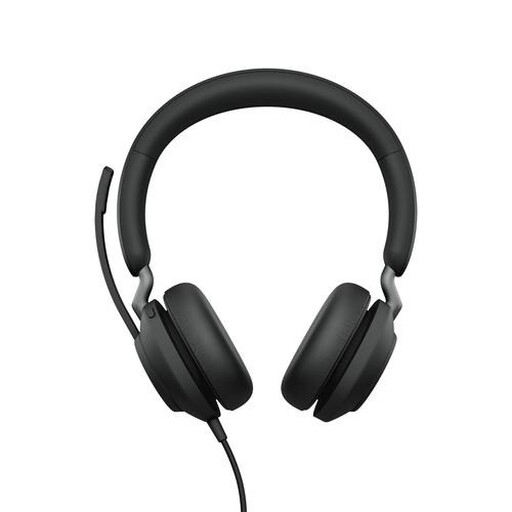
Why it suits this profile: These wireless headphones are designed for work, meetings and calls. The USB-A Bluetooth adapter is useful for computers without straightforward pairing.
The quoted battery life is up to 37 hours for music and 35 hours for calls. The microphone and Teams features are specifically designed for communication.
Bluetooth 5.0, range of up to 30 metres, USB-A adapter and quoted battery life of up to 37 hours.

Why it suits this profile: Over-ear headphones with a long quoted battery life, adjustable ANC modes and support for two devices.
The product information clearly distinguishes between 100 hours without ANC and 48 hours with ANC. The replaceable ear cushions can help with long-term use and maintenance.
Bluetooth 5.4, LDAC, four ANC modes, multipoint and fast charging.
We have put together a complete, up-to-date list of products that fully meet these strict selection criteria and the applicable European safety regulations.
Switch on the headphones and press and hold the Bluetooth or power button until the pairing light flashes. Then open the Bluetooth settings on your phone and select the product name. When connecting for the first time, the manufacturer’s app may offer additional settings or firmware updates.
Battery life per charge varies significantly depending on the model and settings. Physical lifespan depends on factors including battery use, charging habits, moisture, drops and the condition of the ear cushions. A model with replaceable ear cushions or a supplied cable may remain practically useful for longer.
Power consumption during charging is generally limited. The main recurring costs usually come from accessories, replacement ear cushions or a new charging case for earbuds. So check in advance whether these parts are available separately. Also bear in mind the minimum two-year legal guarantee in the European Union, in addition to any further rights under Dutch law.
