
Vandaag of morgen in huis

Kwaliteit gegarandeerd

Welkomstaanbiedingen ontgrendelen: GRATIS bezorging | Tot 80% korting | Gratis 30 dagen JoyPlus-proefperiode
Download de app
A pair of wireless headphones may seem easy to choose: connect via Bluetooth, switch on your music and you’re ready to go. In practice, comfort, battery life, sound isolation and call quality vary considerably between models. What’s more, a low price does not always reflect the total cost of ownership.
As a Joybuy Product Recommendation Officer, I therefore focus mainly on verifiable specifications and how well a model fits your everyday needs. Below, you’ll find the key points to consider, common marketing pitfalls and some popular choices.
Manufacturers often quote a maximum battery life, but this figure may apply with noise cancelling switched off, at a lower volume or only to the earbuds. So check the following:
With over-ear headphones, battery life is generally easier to interpret. With wireless earbuds, you should always check both the earbuds’ playback time and the case’s total capacity.
Active noise cancelling, often abbreviated to ANC, uses microphones and electronics to reduce surrounding noise. The result varies depending on the type of sound. Low, constant tones such as aeroplane engines are generally easier to dampen than voices or sudden noises.
You should therefore not interpret a claim such as “-45 dB” or “-50 dB” as meaning complete silence. According to Baseus’s product description, the EH10 NC is designed to reduce background noise by the stated amount; this is a brand specification, not a guarantee that you’ll have the same experience in every environment.
Also look for a transparency mode or ambient mode. This can be useful at a station or while out walking, but do not use noise cancelling when you need to hear traffic or warnings.
An inexpensive pair of in-ear headphones that will not stay in place is ultimately not a good-value purchase. With wireless earbuds, having several sizes of ear tips and stabilising wings is useful. With over-ear headphones, the pressure from the headband, the weight and the shape of the ear cushions determine how comfortable they are during extended use.
When choosing headphones for travel, also consider whether they fold and whether they come with a protective case. For sport, a secure fit and a relevant IP rating are more important than powerful bass alone.
Bluetooth 5.2, 5.3 or 5.4 may offer benefits in terms of power consumption and connectivity, but the version alone does not determine sound quality. Also check for support for:
A model with Bluetooth 5.3 will not automatically sound better than one with Bluetooth 5.1. The speakers, software and fit also play a role.
Look at the figure that is relevant to your circumstances. Headphones offering 24 to 30 hours of playback may be suitable for commuting and travel. Models with longer battery life reduce the need for daily charging, but may be heavier.
With wireless earbuds, the key factors are the combination of:
For example, the JBL Wave Buds 2 product description states up to 40 hours of total playback time with ANC switched off. When buying, always check the conditions that apply to this claim.
An IP rating consists of two digits. The first indicates protection against dust, while the second refers to water resistance. IPX4, for example, indicates resistance to splashing water, while a higher rating may provide greater protection. This does not automatically mean that a product is suitable for swimming.
The rating is important for sports earbuds, but always dry the earbuds and charging port before charging them. Also check whether the case has the same protection as the earbuds; this should not be taken for granted.
The selection below is linked to specific usage scenarios. Specifications are based on the product information and descriptions provided.
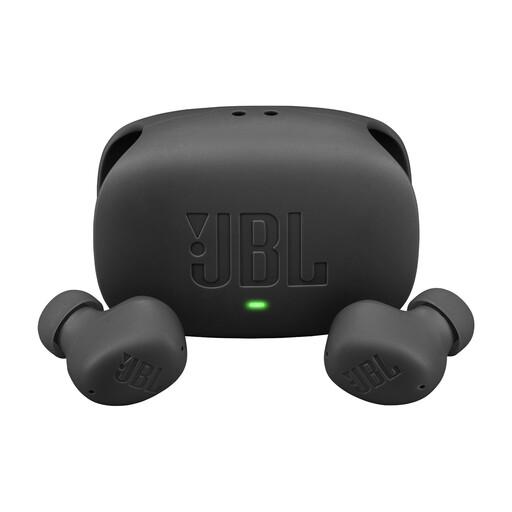
Why it suits this profile: These in-ear earbuds combine Bluetooth, ANC, multipoint and a charging case for everyday use without having to carry a larger model.
The product information states the total playback time and distinguishes between ANC on and off. The IP54 rating provides protection against dust and splashing water, but not immersion.
Bluetooth 5.2, multipoint and up to 40 hours of total playback time according to JBL’s product description, with ANC switched off.
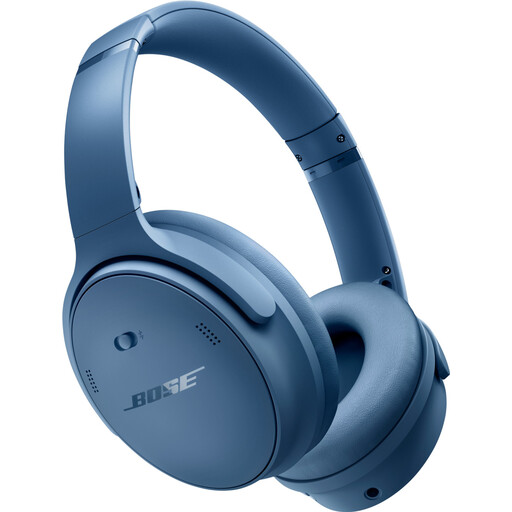
Why it suits this profile: These over-ear headphones are designed for extended listening, travel and work where a closed-back design and noise cancelling are desirable.
The stated battery life is 24 hours, and the model can also be used via a 2.5mm or 3.5mm connection. This means you are not reliant solely on Bluetooth.
Over-ear design, Bluetooth 5.1, a weight of 240 grams and adjustable Quiet and Aware modes according to the product information.
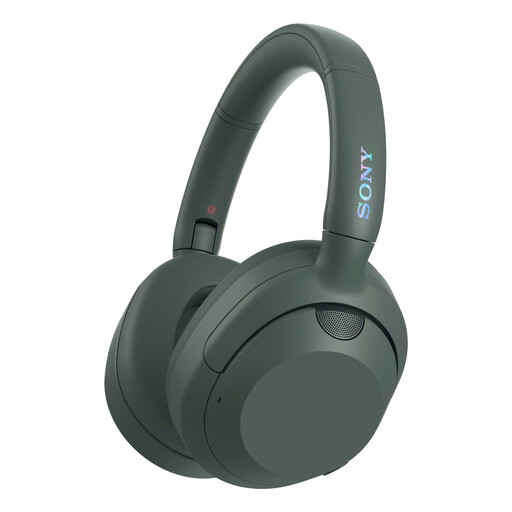
Why it suits this profile: This model is suitable for travellers and music listeners looking for over-ear comfort, pronounced bass and connectivity with multiple devices.
The product information separately states a battery life of up to 30 hours with noise cancelling and a fast-charging function. This makes it clearer which figure is relevant for travel.
Active noise cancelling, multipoint, a foldable design, 40mm drivers and a 3.5mm connection according to the product specifications.
We have put together a complete, up-to-date list of products that fully meet these strict selection criteria and the applicable European safety regulations.
Switch on Bluetooth on your phone, put the headphones into pairing mode and select the product name from the list of available devices. Some models require an app for equaliser settings, firmware updates or multipoint. If the connection does not work, remove the old pairing and try again with sufficient battery power.
Battery wear, charging frequency, volume and exposure to moisture all affect service life. A battery may hold less charge over time. A model with a cable option can still be used for listening when the battery is flat. Keep the headphones dry and avoid prolonged exposure to heat.
This depends mainly on the microphones, wind filtering and multipoint support. A model with multipoint can be connected to a laptop and phone at the same time. Check whether the product description mentions a microphone and clear call quality. If possible, also test whether the ear cups remain comfortable during longer meetings.
