
Vandaag of morgen in huis

Kwaliteit gegarandeerd

Welkomstaanbiedingen ontgrendelen: GRATIS bezorging | Tot 80% korting | Gratis 30 dagen JoyPlus-proefperiode
Download de app
Wireless headphones may seem easy to choose at first glance. You compare Bluetooth, battery life and noise cancellation, pick a colour and place your order. Yet the biggest differences often lie in details that only become apparent after a few weeks: an average fit, a microphone that performs poorly in busy surroundings or battery life that is only achieved under ideal conditions.
As a Joybuy Product Recommendation Officer, I filter the most important product specifications out of the marketing language. This helps you decide more confidently which wireless headphones or wireless earbuds suit the way you use them in the Netherlands.
‘Up to 40 hours of playback’ usually means the total playback time with the charging case, and often without active noise cancellation. For example, a pair of wireless earbuds may offer 8 hours per charge, while the case increases the total usage time. With ANC, high volume levels and lots of phone calls, the actual usage time may be lower.
Always check:
Noise-cancelling headphones use electronics to reduce background noise. This is different from passive isolation provided by ear cushions or silicone ear tips. ANC generally works differently against constant low-frequency noise, such as train or aeroplane noise, than against sudden voices or traffic.
Also pay attention to transparency mode. This allows surrounding sounds through, which can be useful outdoors or during a conversation. Do not use ANC in situations where you need to hear traffic or warning signals.
In-ear headphones can be light and compact, but not every shape suits every ear. Over-ear headphones distribute pressure differently and may be more comfortable during long listening sessions, but they are heavier and take up more space.
Before buying, check:
An IP rating is not a general guarantee that a product is completely waterproof. For example, IP54 means protection against dust and splashing water, while you should keep a case with a lower rating dry.
Bluetooth headphones generally work with smartphones, tablets and laptops. Bluetooth 5.2, 5.3 or 5.4 indicates the connection standard used, but does not in itself guarantee a longer range or better sound quality. Also check for multipoint support if you regularly switch between your phone and computer.
Bluetooth is not the only relevant factor when making calls. Look at the number of microphones, their positioning and any ENC or call noise-cancellation technology. Headphones with a microphone are useful for working from home, but performance in a busy street may differ from that in a quiet room.
Compare playback times on the same basis. A model offering 7 hours per charge with a case may be more practical for everyday use than a model with a longer stated playback time but no case or fast-charging function.
A USB-C connection is now standard. Wireless charging is mainly a convenience feature; it is not a direct indication of better sound. For built-in lithium-ion batteries, pay attention to safe charging, heat and damage. Batteries are consumable components and their capacity decreases over time.
A larger driver does not automatically mean a better listening experience. Tuning, fit and the audio codec used also play a part. Specifications such as 20 Hz–20 kHz are useful for comparison, but they do not tell the whole story about the sound.
For music, podcasts and films, equaliser settings in an app can be useful. For calls, clarity and microphone processing are often more important than deep bass. If you want to use wireless headphones both wired and wirelessly, check whether a 3.5mm connection and cable are included.
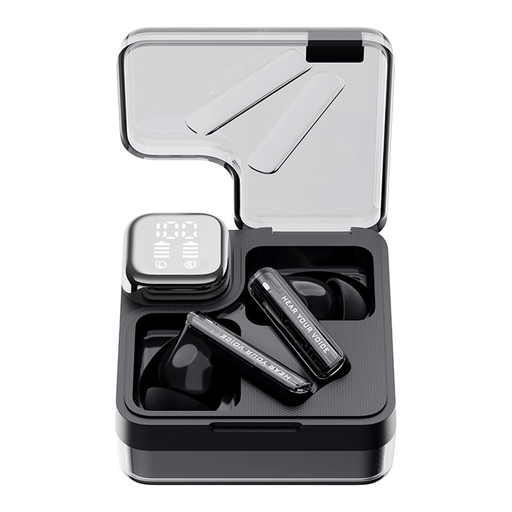
Why this suits the profile: These true wireless earbuds combine Bluetooth 5.3, ANC, an app and a USB-C charging port in a compact model for everyday use.
The specifications state a separate playback time of around 6–7 hours and approximately 28 hours in total, so you do not confuse the case’s contribution with the earbuds’ playback time.
ANC and transparency mode, IPX5 protection against sweat and splashing water, plus a low-latency mode of 0.06 seconds according to the product information.

Why this suits the profile: This model is aimed at users who place great value on advanced audio technology, controls and pairing with Galaxy devices.
The product information states the playback time both with ANC switched on and off: 6 and 7 hours per charge. This makes the effect of noise cancellation clearer.
Two-way speakers, Bluetooth 6.1, six microphones, an IP57 rating and support for USB-C and wireless charging.
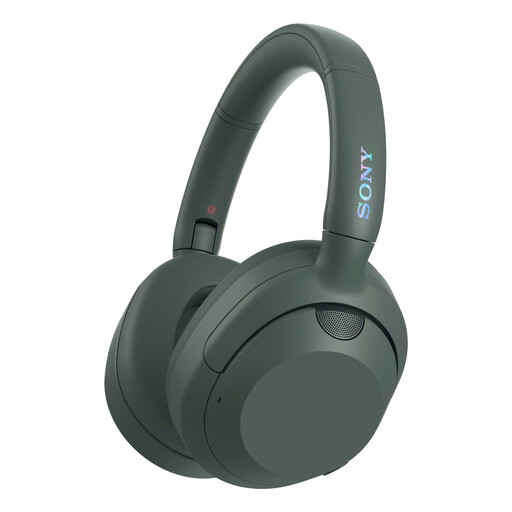
Why this suits the profile: These over-ear headphones are designed for travel, music and long listening sessions, with a headband, swivelling ear cups and active noise cancellation.
The stated 30-hour battery life is specifically linked to use with noise cancellation; a 3.5mm cable is also available for wired listening.
Multipoint for two devices, USB-C, a microphone for calls, a foldable design and a weight of 255 grams.
We have put together a complete, up-to-date list of products that fully meet these strict selection criteria and the applicable European safety regulations.
Choose wireless earbuds if you have limited space in your bag, make frequent calls or want a model for walking and exercise. Check the fit, IP rating and whether a charging case is included.
Over-ear headphones make more sense for travelling, working from home and listening to music. The larger ear cups can provide more passive isolation, while an adjustable headband affects wearing comfort. Compact earbuds are often more practical for intensive exercise, but check whether the case and earbuds are rated to withstand sweat or splashing water.
For all models, keep the volume at a moderate level and take regular breaks. Do not use headphones while cycling, driving or doing other activities where you need to remain fully aware of your surroundings.
Switch on Bluetooth on your phone. Put the headphones or earbuds into pairing mode and select the product name from the Bluetooth list. An app may be required for the first connection to access equaliser settings, firmware updates or controls. If pairing does not work, remove the old Bluetooth connection and try again.
Playback time per charge varies by model and settings. Earbuds often provide several hours per charge and are topped up via the case. Over-ear models can work for dozens of hours, depending on ANC and volume. Battery capacity decreases over time. Keep the headphones dry, avoid extreme heat and use a suitable USB-C charger.
Apart from the purchase price, there are few ongoing costs. However, you should allow for the electricity used for charging and any replaceable ear tips, ear cushions or protective case. A model with a sturdy case, USB-C and readily available replacement parts may be more practical in the long term. Also check the statutory minimum two-year guarantee for consumers in the European Union; additional rights may apply under Dutch law.
