
Vandaag of morgen in huis

Kwaliteit gegarandeerd

Welkomstaanbiedingen ontgrendelen: GRATIS bezorging | Tot 80% korting | Gratis 30 dagen JoyPlus-proefperiode
Download de app
A wireless gaming mouse gives you greater freedom of movement, but not every model suits every PC gamer. A high DPI rating may sound appealing, yet you may never use that level of sensitivity. A mouse with long battery life can also involve other compromises, such as a higher weight or fewer programmable buttons.
Use these practical checkpoints to compare a gaming mouse based on features that make a real difference in everyday use.
A high-DPI gaming mouse is not automatically more accurate in your games. DPI indicates how sensitive the cursor can be set. For an FPS player who uses low sensitivity, tracking, grip and the ability to adjust the DPI quickly are often more important than the maximum figure.
So also consider:
An 8K polling rate mouse reports its position up to 8,000 times per second. This can make movement processing feel smoother, but the difference depends on your screen, frame rate and processor. On some models, a higher polling rate can also use more system resources.
So check whether:
The stated battery life often applies to a specific polling rate and lighting setting. For example, the Rapoo VT3 is listed as offering up to 750 hours of use at 1,000 Hz. At 8,000 Hz or with the lighting switched on, actual battery life may differ.
Always check:
A lightweight gaming mouse weighing around 50 to 75 grams can be comfortable for fast FPS movements. However, a low weight is not ideal for every hand or grip. Check the dimensions, shape and whether the model is specifically designed for right- or left-handed use.
An ergonomic gaming mouse with a higher rear section may fit a palm grip better. A symmetrical model often offers greater flexibility for claw or fingertip grips. Also consider the position of the thumb buttons: if they are too far forwards or backwards, they can be awkward to use while gaming.
The sensor determines how the mouse registers movement. Look at the sensor type, maximum DPI and maximum speed, expressed in IPS. A high DPI is mainly useful if you want plenty of adjustment options; in practice, many users play at a lower setting.
The polling rate is expressed in Hz:
A programmable gaming mouse can provide extra functions for MMO, MOBA and RTS games. Check how many buttons are actually programmable and whether macros only work through software. Some models save settings to internal memory, making them easier to use on another computer.
Also check compatibility. According to the product information, the Rapoo A HUB software supports Windows and Mac OS. For the ET wireless mouse, the description states that the programming software is available for Windows only and works only in wired mode.

Why it suits this profile: A straightforward wireless mouse for PC and laptop gamers looking for 2.4 GHz connectivity, RGB lighting and several programmable buttons.
The specifications list more than just DPI, including a 1,000 Hz polling rate, six programmable buttons and battery life of up to 80 hours.
75 grams, an optical sensor up to 4,800 DPI, RGB lighting and the ability to keep gaming while charging via USB-C.
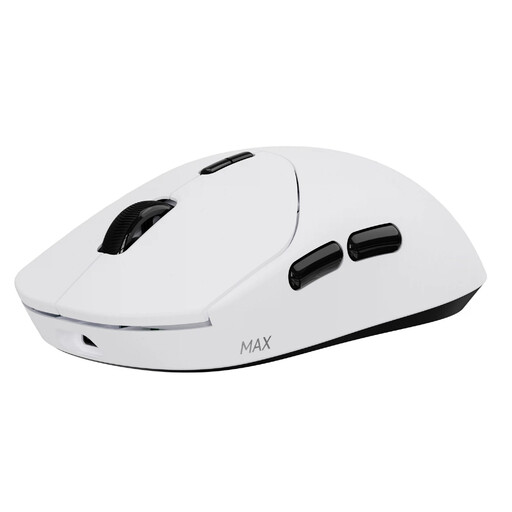
Why it suits this profile: Designed for players who want to combine low weight, extensive adjustability and optical switches with wireless 8K connectivity.
The product information states the conditions behind the battery-life claim: up to 750 hours at 1,000 Hz. This makes it easier to compare the claim with your own settings.
53 grams, native 8,000 Hz wireless, up to 30,000 DPI and 120 million optical switches according to the product description.
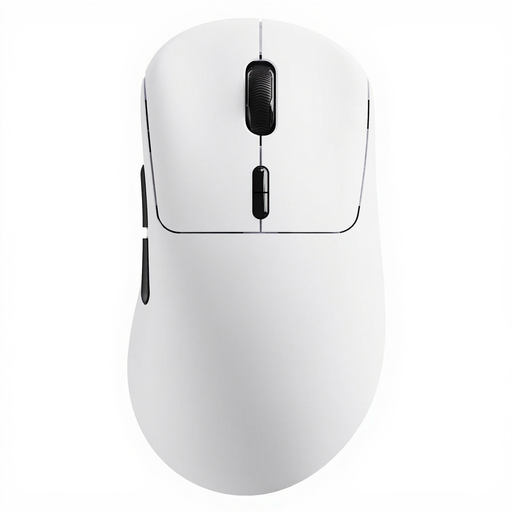
Why it suits this profile: Suitable for gamers who play for many hours and need ten programmable buttons, macro support and exceptionally long battery life.
The mouse offers both adjustable DPI and independent X/Y adjustment. According to the product description, battery life lasts up to 750 hours at 1,000 Hz.
53 grams, native 8K wireless, ten programmable buttons and mechanical switches with a stated lifespan of 100 million clicks.
We’ve put together a complete, up-to-date list of products that fully meet these strict selection criteria and the applicable European safety regulations.
It can be, particularly when the model has a 2.4 GHz connection with a USB receiver and an adjustable polling rate. Bluetooth is mainly useful for general use and energy-efficient operation. For competitive games, check the maximum polling rate, sensor and compatibility with your PC.
This varies considerably between models and settings. Product information may state, for example, 80 hours for the Trust GXT 929 Helox, 180 hours for the Rapoo VT9Pro and up to 750 hours for certain Rapoo models at 1,000 Hz. Higher polling rates, RGB lighting and intensive use can affect battery life.
Not always. A high DPI is mainly useful if you want to set a wide range of sensitivity levels. An 8K polling rate may be worthwhile for fast-paced games and powerful systems with high frame rates, but you may notice little difference during office work or on an entry-level PC. So compare the weight, shape, buttons, battery life and software as well before making a purchase.
