
Vandaag of morgen in huis

Kwaliteit gegarandeerd

Welkomstaanbiedingen ontgrendelen: GRATIS bezorging | Tot 80% korting | Gratis 30 dagen JoyPlus-proefperiode
Download de app
A wireless gaming mouse can help keep your desk tidy and give you more freedom of movement in FPS and MOBA games. But a high DPI rating or eye-catching RGB lighting doesn’t automatically mean a mouse is right for your play style. With feature-packed models in particular, it’s important to check which specs you’ll actually use.
The AJAZZ AJ159 APEX combines a low weight, high polling rate and three connection options. But even with this type of mouse, there are things to consider when it comes to compatibility, software and battery use.
A gaming mouse with 42,000 DPI sounds impressive, but most players use a much lower sensitivity in practice. DPI indicates the sensor’s sensitivity; on its own, it doesn’t tell you how accurately your cursor or crosshair will move.
Pay attention to the sensor, tracking speed and acceleration too. According to the AJAZZ product description, the AJ159 APEX has a PAW3950 sensor, a tracking speed of up to 750 IPS and a stated acceleration of 50G. These figures are most relevant for fast movements and low in-game sensitivity.
A gaming mouse with an 8K polling rate sends up to 8,000 position readings per second. AJAZZ states a response time of 0.125 ms in wireless mode. This can be useful for competitive FPS games, but not every user will notice the difference to the same extent.
A higher polling rate can also use more processing power and battery. So check:
A lightweight mouse isn’t automatically comfortable. Its shape, width, length and thumb-button placement all affect how well it suits your grip. The AJ159 APEX is described as a symmetrical gaming mouse for small to medium-sized hands, and weighs 56 grams according to the product information.
An ambidextrous shape can be practical for left- and right-handed users, but check that all the buttons are easy to reach in your preferred hand position. If you have large hands or use a pronounced palm grip, compare the dimensions before ordering.
A gaming mouse with a PAW3950 sensor is designed for precise optical tracking. According to the product description, the AJAZZ AJ159 APEX supports up to 42,000 DPI. This high range is mainly a technical maximum; lower settings are often more practical for everyday gaming.
When comparing mice, look beyond DPI and consider:
The polling rate determines how often the mouse sends information to your computer. Many wireless mice offer several settings, so you can choose between low latency and lower power consumption. According to the product description, the AJ159 APEX software lets you adjust the polling rate, DPI and LOD, among other settings.
Bluetooth is often enough for everyday office work. For gaming, a 2.4GHz gaming mouse is usually the natural choice, as this connection is designed for fast wireless data transfer. For maximum reliability, you can also use the mouse via USB-C.
An ultralight gaming mouse weighing 56 grams can make quick aiming movements feel less strenuous. The benefits depend on your mouse mat, sensitivity and grip, though. Some users may find a mouse that’s too light less stable.
The RGB gaming mouse with charging station version comes with a magnetic dock. According to the product description, the dock also houses the 8K receiver and has a colour TFT screen that can display information such as battery status, DPI and polling rate. Before buying, check that you have enough space beside or behind your keyboard for the charging station.
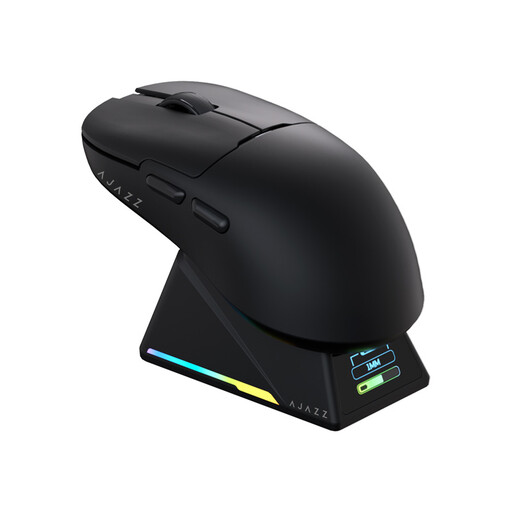
Why it suits this profile: This version combines 2.4GHz, Bluetooth and USB-C in one mouse. That means you can use the same mouse for gaming, laptop tasks and office work without needing several accessories straight away.
You aren’t limited to one type of connection. Bluetooth is available for everyday use, while 2.4GHz and USB-C are designed for gaming or when you want a direct connection.
Weighs 56 grams, has a PAW3950 sensor according to the product description, and offers adjustable DPI and polling rate profiles.
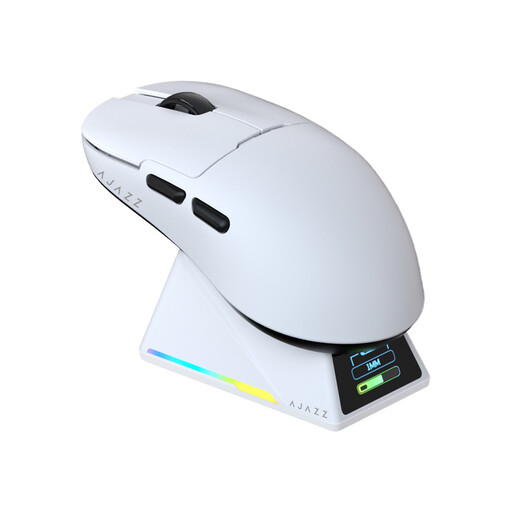
Why it suits this profile: The charging station, RGB lighting and TFT screen are well suited to a dedicated gaming setup where you want settings and battery status to be visible.
The dock isn’t just decorative: according to the product description, it has an integrated 8K receiver, and you can place the mouse on it magnetically to charge.
8K polling rate in wireless mode according to the product information, plus an adjustable TFT screen and RGB dock.
Why it suits this profile: The combination of low weight, high polling rate, adjustable LOD and macro settings is designed for players who want to fine-tune their mouse for each game.
You don’t have to run the mouse permanently at 42,000 DPI or 8K. According to the product description, you can adjust the DPI, LOD, polling rate and buttons using the software.
Supports macro assignment and features ETFE feet and Huano switches, which have been tested for more than 100 million clicks according to the product description.
We’ve put together a complete, up-to-date list of products that fully meet these strict selection criteria and the applicable European safety regulations.
Bluetooth is handy for office work, laptops and everyday use. Many users prefer a 2.4GHz gaming mouse for competitive games, as this connection is designed specifically for fast wireless data transfer. For important matches, USB-C is another option if you want to rule out wireless connection issues.
Battery life depends on battery capacity, polling rate, RGB lighting and how often you use the mouse. 8K mode and constant lighting can use more power. A charging station makes it easy to put the mouse back on charge after use, but always check the latest battery and charging-time information in the product details.
For most players, the maximum DPI rating isn’t the deciding factor. A reliable sensor, a comfortable shape and precise settings matter more. A 42,000 DPI gaming mouse mainly offers a wide range of settings. Start with a lower DPI and adjust the sensitivity to suit your mouse mat, grip and favourite game.
