
Vandaag of morgen in huis

Kwaliteit gegarandeerd

Welkomstaanbiedingen ontgrendelen: GRATIS bezorging | Tot 80% korting | Gratis 30 dagen JoyPlus-proefperiode
Download de app
A wireless gaming mouse can tidy up your desk and give you freedom of movement during FPS, MOBA and RTS games. However, a high DPI number or flashy RGB effect doesn’t automatically mean a mouse suits your play style. Latency, weight, battery life and software support are what really determine whether your purchase feels right in practice.
Joybuy’s Product Recommendation Officer filters the most important product information and turns it into practical choices. That way, you avoid paying for features you won’t use.
A gaming mouse with high DPI can move the cursor very quickly, but in practice many players use a lower sensitivity. So don’t just look at the maximum DPI number. Also check the sensor type, how adjustable it is, and whether the DPI can be fine-tuned in small enough steps.
An optical sensor is common on modern models. However, the overall experience also depends on the polling rate, firmware, surface and your in-game settings.
A gaming mouse with 8K polling rate reports its position up to 8,000 times per second, according to the product information. That can be interesting for fast movements and a monitor with a high refresh rate. At the same time, a higher polling rate demands more from your system and can increase power consumption.
So an 8K mode isn’t a must for every PC gamer. Check whether your PC, monitor and games can make sensible use of this setting. With some models, you’ll also need to update the driver or use a specific receiver first.
“Up to” doesn’t mean the same as a fixed usage time. Battery life can change depending on polling rate, RGB lighting, connection mode and power saving. A wireless gaming mouse with long battery life is practical, but always check under which settings the stated capacity applies.
Also pay attention to the charging method. A USB-C cable, replaceable battery or charging dock each have different advantages. If you often have long gaming sessions, you might find a mouse that lets you play while charging more convenient than one that needs to be switched off completely.
An ultra-light gaming mouse weighing around 53 to 59 grams glides easily across a large mouse mat. That can be comfortable with low sensitivity and big arm movements. However, a low weight isn’t comfortable for everyone. Check the dimensions, the shape, and whether the model suits palm, claw or fingertip grip.
An ergonomic gaming mouse doesn’t automatically fit every hand. Right-handed models often have a pronounced thumb rest, while symmetrical models can be more flexible for different grip styles.
Check these three details together:
According to the product description, the Rapoo VT3 MAX supports 30K DPI, independent X/Y adjustment and a native wireless 8K polling rate. The Trust GXT 929 Helox lists an optical sensor up to 4,800 DPI and a polling rate up to 1,000 Hz. These figures come from the supplied product specifications; the actual experience may vary depending on your system and settings.
A gaming mouse with programmable buttons is especially useful for MOBA and RTS games, where having shortcuts within reach adds real value. A gaming mouse with macro function can link actions to a button, but always check the rules of your game or competition. Not every macro is allowed.
Also pay attention to operating system support. According to the product information, the Rapoo A HUB driver is offered for Windows and Mac OS. With the ET mouse, the programming software only works on Windows and in wired mode, according to the description. That difference matters if you’re looking for a gaming mouse for PC and Mac.
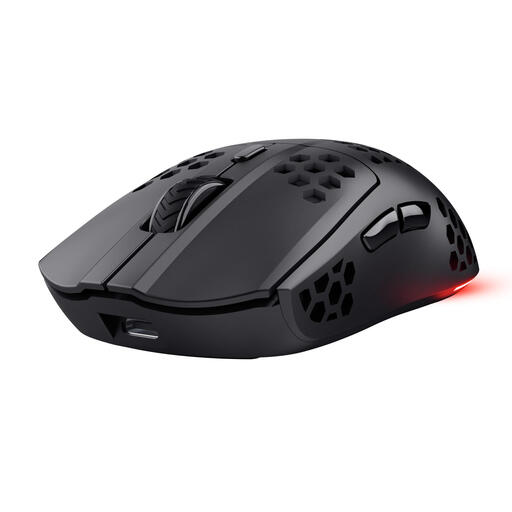
Why this fits the profile: This model combines wireless 2.4GHz connectivity, an optical sensor and a relatively low weight without jumping straight to 8K functionality. That makes it straightforward for anyone moving from a standard mouse to gaming.
The key figures are clearly stated: 4,800 DPI, 1,000 Hz polling rate and a battery life of up to 80 hours. That way, you’re not paying just for lighting or marketing terms.
75 grams according to the product listing, six programmable buttons, RGB lighting and the ability to play while charging via USB-C.
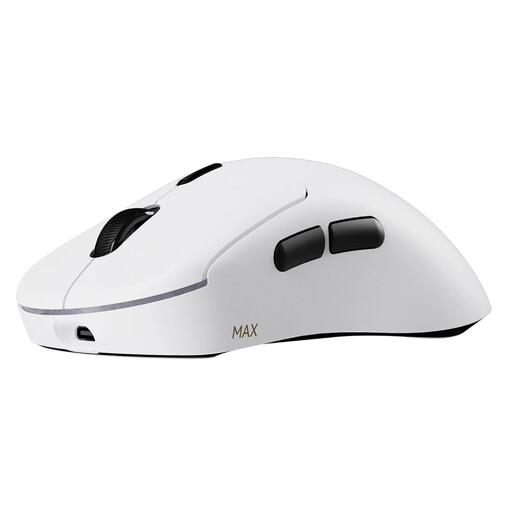
Why this fits the profile: This model is aimed at users who want a low weight, plenty of customisation and a high wireless polling rate all in one mouse.
The product description links 8K to a wireless connection and mentions 30K independent X/Y DPI adjustment. According to the description, a driver update is needed for the stated low-energy feature.
53 grams, optical switches with a stated lifespan of 120 million clicks, ten programmable buttons and, according to the product information, up to 750 hours of battery life at 1,000 Hz.
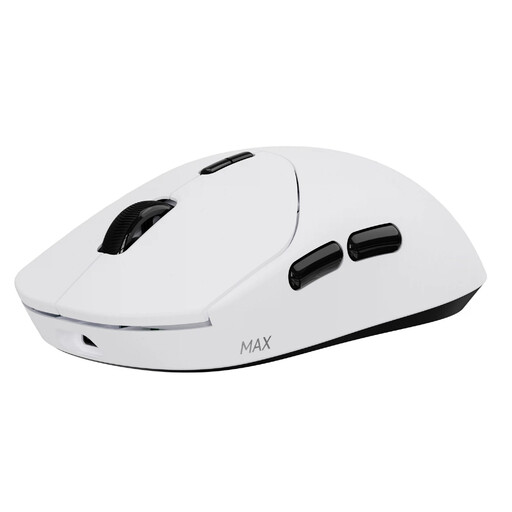
Why this fits the profile: The combination of a low weight, optical switches and a long stated battery life suits players who regularly have long sessions and use lots of buttons.
The listing distinguishes between optical and mechanical switches and states that the battery claim applies at 1,000 Hz. That helps with a fairer comparison of usage time.
53 grams, 8K wireless polling rate, 30K independent X/Y DPI and ten programmable buttons with macro support according to the product description.
Start with a polling rate that your system handles stably, then increase it step by step. Set the DPI based on your screen, game and personal control; an extremely high value isn’t compulsory. Place the wireless receiver close to the mouse if possible and avoid unnecessary obstacles.
Only use RGB if you care about the look. Lighting can shorten battery life and has no direct effect on sensor precision. For Mac users, it’s wise to check in advance which driver functions are available.
We’ve put together a full, up-to-date list of products that fully meet these strict selection criteria and comply with current European safety regulations.
It can be, especially with models that have a 2.4GHz connection and a suitable polling rate. Check the official specifications and use the mouse receiver close to your mouse mat. Bluetooth is usually more practical for everyday use than for competitive settings.
That varies by model and settings. RGB, 8K polling and intensive use can shorten the usage time. So always compare the battery claim with the stated polling rate and check whether a cable can be used while charging.
No. DPI mainly determines cursor sensitivity. Many players choose a lower DPI for control and then adjust the sensitivity in the game. Sensor consistency, shape, weight and a stable connection are at least as important.
