
Vandaag of morgen in huis

Kwaliteit gegarandeerd

Welkomstaanbiedingen ontgrendelen: GRATIS bezorging | Tot 80% korting | Gratis 30 dagen JoyPlus-proefperiode
Download de app
Wireless earbuds are handy for listening to music and podcasts, making calls, travelling and working out. However, a long list of features does not always tell you everything you need to know. For example, a model advertised with “noise cancelling” may only offer passive sound isolation. And the stated battery life often applies to the charging case and earbuds combined.
It is therefore best to focus on the features that suit the way you use them. Someone who commutes by train every day has different requirements from someone who mainly makes calls or goes running. Below, you can find out which specifications matter, which marketing claims to assess critically and which models suit different user profiles.
A manufacturer may state a total playback time of 20, 30 or even more than 50 hours. Check whether this figure applies only to the earbuds or includes the charging case. Active noise cancellation, high volume and phone calls can also affect battery life.
Also look at:
Active noise cancellation, often abbreviated to ANC, uses microphones and electronics to reduce ambient noise. Passive isolation is created by the fit of the earbuds and the silicone ear tips. A product with a “noise reduction microphone” may therefore mainly improve speech clarity during calls, without actively reducing the sound you hear.
For commuting and air travel, earbuds with noise cancelling are worth considering. For walking or cycling, an ambient or transparency mode may be more practical, as it allows you to hear your surroundings more clearly.
The IP code indicates the extent to which a product is protected against dust or water. IPX4, for example, means splash resistance; it does not permit submersion. IP54 likewise indicates limited protection against dust and splashing water. A higher rating may be more suitable for intensive exercise, but always check the product information for the specific model.
Waterproof earbuds are not automatically suitable for swimming. The product information for the Mojawa RunPlus states an IP68 rating, but always follow the manual and safety instructions when swimming or submerging the product.
A good fit prevents wireless in-ear headphones from falling out while you are running and helps to limit ambient noise passively. Check how many sizes of ear tips are included. According to the product description, the Apple AirPods Pro 3 come with five sizes of silicone earbuds. The Google Pixel Buds Pro come with three sizes.
An in-ear model seals the ear canal. If you find this uncomfortable, you could consider an open-ear or bone-conduction design. These models sit differently on or beside the ear, which affects both the wearing sensation and the listening experience.
Bluetooth 5.3 or 5.4 provides a modern basis for connecting to phones, tablets and laptops. The actual experience also depends on the source device, software and distance. Multipoint is useful if you want to connect a laptop and smartphone at the same time.
Audiophiles should also check which codecs are supported. The Sony WF-1000XM5 lists AAC, LC3, LDAC and SBC, among others. The Sony WF-C510 supports AAC and SBC. Not every smartphone supports every codec, so a long list of specifications does not automatically mean that you can use all the features.
Wireless earbuds for iPhone and Android generally work via Bluetooth, but additional features such as an app, spatial audio or quick device switching may differ between operating systems.
For earbuds used for calls, the number and positioning of microphones, as well as software-based noise cancellation, are relevant. According to the product information, the Trust Yavi has a dual ENC microphone. The MINISO MS106 lists six microphones for noise reduction during calls. These are product specifications, not a guarantee that every caller will experience the same clarity in every environment.
A model with long battery life is useful for travelling and long working days. Always compare the usage time with and without ANC. The Apple AirPods Pro 3 state up to eight hours with noise cancelling and up to ten hours in transparency mode. The Sennheiser MOMENTUM True Wireless 4 states up to 30 hours with the case. Treat these figures as stated maximums under specific conditions.
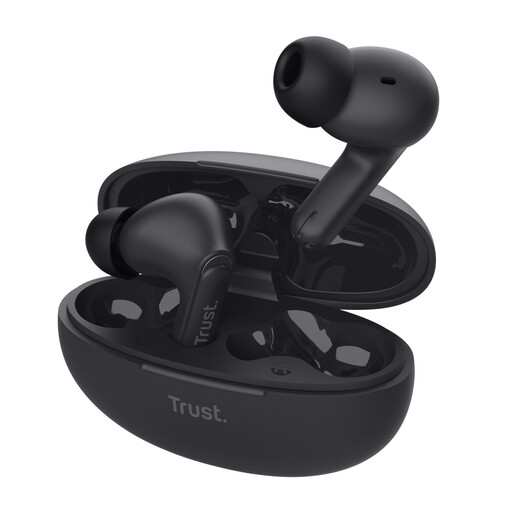
Why it suits this profile: A straightforward model for everyday listening, travelling and phone calls, without complicated features.
The product information distinguishes between passive noise cancelling and the dual ENC microphone. Battery life is stated as six hours per charge and 23 hours with the case.
USB-C, touch controls, a microphone, Bluetooth and a case are included according to the product specifications.
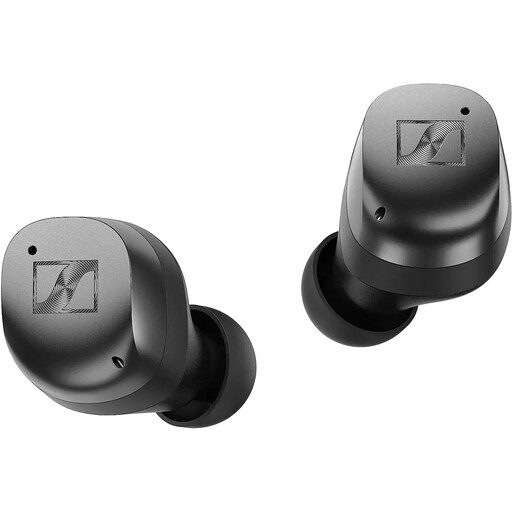
Why it suits this profile: Designed for users who value sound settings, wireless charging and longer total playback time.
The product page lists adaptive ANC, Bluetooth 5.4 and IP54. The IP rating means splash resistance, not suitability for submersion.
Up to 30 hours of playback with the case, Qi charging, Auracast support and an adjustable equaliser, according to the product information.
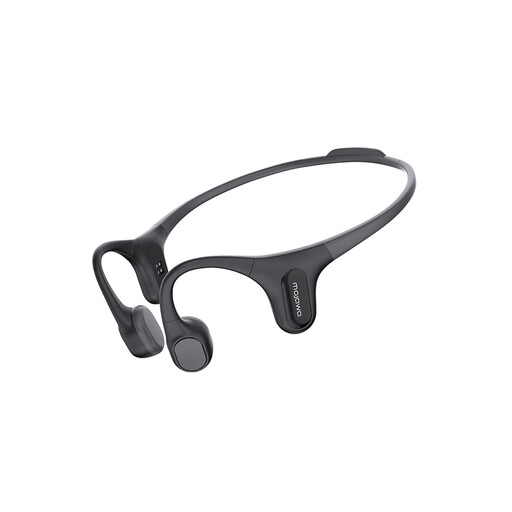
Why it suits this profile: An alternative for runners and athletes who do not want to use a traditional in-ear fit.
The open-ear design means you do not automatically choose a sealed in-ear fit. However, check that the shape and sound reproduction suit your sport.
Bone conduction, 32 GB MP3 storage and an IP68 rating, as stated in the product information.
We have put together a complete, up-to-date list of products that fully meet these strict selection criteria and the applicable European safety regulations.
Most Bluetooth earbuds can be paired with both systems. However, check that the relevant app is available for iOS and Android, and whether features such as multipoint, equalisation or spatial audio work on both platforms.
Battery life per charge is often between a few hours and a full working day. Total battery life with the case is longer. The lifespan of the built-in lithium battery decreases over time. Store the earbuds in the case, use suitable chargers and avoid extreme heat and moisture.
That depends on the fit and IP rating. For fitness and running, sports earbuds with a secure fit and splash resistance are practical. Swimming requires additional checks: not every IP rating permits submersion. Also, do not keep the volume high for extended periods and remain alert to your surroundings when out and about in traffic.
