
Vandaag of morgen in huis

Kwaliteit gegarandeerd

Welkomstaanbiedingen ontgrendelen: GRATIS bezorging | Tot 80% korting | Gratis 30 dagen JoyPlus-proefperiode
Download de app
Wireless earbuds are useful for listening to music on the go, making phone calls, travelling and exercising. However, a long list of features does not automatically mean that a model is right for your everyday use. A compact set may seem comfortable, for example, but start to cause pressure after an hour. And a long battery life may only apply when noise cancelling is switched off.
If you are looking for the “best wireless earbuds”, it therefore pays to look beyond the brand name, discount and individual marketing claims. Pay particular attention to fit, battery life, protection against moisture and how the model works with your phone.
Manufacturers often state the maximum playback time under specific conditions. ANC earbuds generally use more energy than models without active noise cancellation. So check whether the stated time applies per earbud, includes the charging case or is measured with ANC switched off.
A charging case is not an unlimited power source, either. If you take long train journeys every day or make lots of calls, a clearly stated usage time per full charge and a fast-charging function are both useful.
Earbuds with noise cancelling use microphones and electronics to reduce ambient noise. The result depends on the fit, the type of sound and your surroundings. Low, consistent noise on a train or aeroplane is generally a different scenario from voices in the street.
Treat ANC as a practical feature, rather than a guarantee of complete isolation. A transparency mode is important when you need to hear traffic, colleagues or public announcements.
An IP rating indicates the conditions against which a product has been tested. IPX4 means protection against splashing water, while IPX5 indicates protection against water jets under certain conditions. Neither rating makes a product suitable for immersion.
Also check whether the charging case has the same rating as the earbuds. Sweat and light rain are not the same as showering, swimming or carrying them in a wet bag.
True wireless earbuds sit completely independently of one another and usually come with silicone ear tips. Different sizes make it easier to find the right seal. A good fit not only helps prevent the earbuds from falling out, but also affects sound reproduction and passive noise isolation.
Open-ear models and clip-on wireless earbuds put less pressure on the ear canal. They can be comfortable when walking or working, but let in more ambient sound. For commuting, watching films and relaxed listening sessions, in-ear models are often the more logical choice.
Bluetooth 5.3 or Bluetooth 5.4 tells you something about the connection technology used, but it does not, on its own, indicate how stable the connection will be in practice. Also look at multipoint, the companion app and compatibility with iOS or Android.
Apple AirPods integrate with features within the Apple ecosystem. They can also be connected to other devices via Bluetooth, but some functions are then more limited. Sony earbuds, JBL earbuds and Soundcore models generally work with multiple devices, although app features may vary between operating systems.
Compare the battery life per earbud with the total battery life including the charging case. A model such as the JBL Wave Buds 2 states up to 40 hours of total playback when ANC is switched off. That is useful information, but it is not the same as 40 hours of continuous listening with noise cancellation.
For calls, the number and positioning of the microphones are relevant. They can help capture your voice, but call quality also depends on wind, network connection and software. Also consider whether touch controls, physical buttons or a stem suit you best.
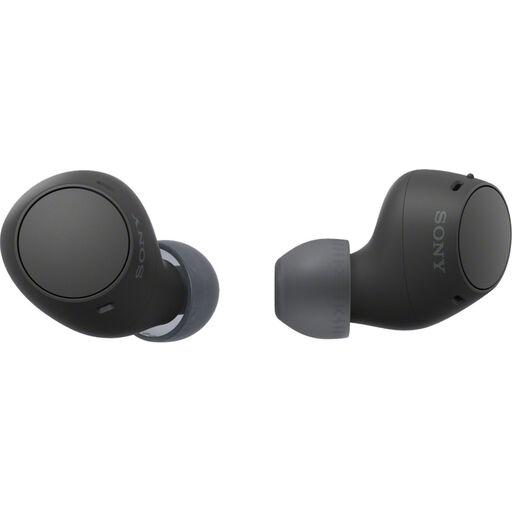
Why it suits this profile: This compact model is suitable for everyday listening, calls and commuting, without requiring you to pay extra for advanced ANC features straight away.
The product specifications state 22 hours of battery life including the charging case, plus IPX4 splash resistance. This makes the key usage limits clear.
Bluetooth 5.3, multipoint for two devices, USB-C and a weight of 4.6 grams per earbud.
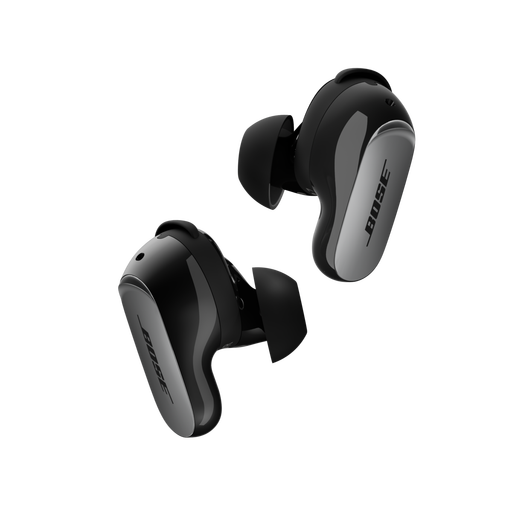
Why it suits this profile: For travel, the office and everyday use, active noise cancellation, a transparency mode and multipoint are practical features.
The included Fit Kit contains three sizes of ear tips and stability bands. The IPX4 rating makes the limits around splashes and sweat clear.
Bluetooth 5.3, up to 6 hours of playback per charge, and charging via USB-C or wirelessly.
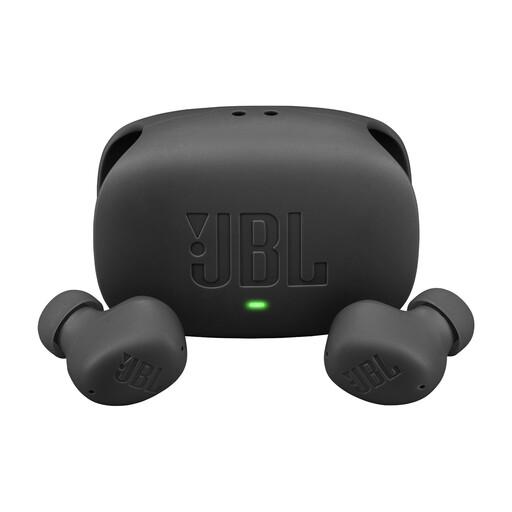
Why it suits this profile: A sensible choice for users who want to combine ANC, long total battery life and connections to multiple devices.
The stated 40 hours applies with ANC switched off, so that important condition is shown alongside the battery claim. IP54 applies to the earbuds, while the case has an IPX2 rating.
ANC, multipoint, USB-C fast charging, Google Fast Pair and Microsoft Swift Pair.
According to the product information, the Apple AirPods Pro 3 combine active noise cancellation, spatial audio, five sizes of silicone ear tips and up to 8 hours of battery life with ANC. The stated IP57 rating and heart-rate sensor are features you should weigh up against your own usage and compatible Apple devices.
The Apple AirPods 4 with ANC offer USB-C, Conversation Awareness and more than 30 hours of total battery life according to the product specifications. When purchasing, check that you are choosing the ANC version; according to the stated specifications, the standard Apple AirPods 4 do not have active noise cancellation.
We have put together a complete, up-to-date list of products that fully meet these strict selection criteria and the applicable European safety regulations.
Open the charging case, activate Bluetooth on your smartphone and select the earbuds’ name from the list. If automatic pairing does not work, press and hold the pairing button or touch surface as instructed in the manual. The next time you use them, most models will connect automatically to the last device used.
Battery capacity decreases over time, particularly when the earbuds are charged every day. Overall lifespan depends on charging cycles, heat, moisture and usage. Keep the earbuds in their case, charge them with suitable cables and clean them with a dry, soft cloth.
That depends on the fit and IP rating. According to their stated specifications, models with IPX4 or IPX5 are resistant to splashes or sweat, but are not automatically suitable for immersion. For running, an ear hook, stability band or clip-on design may be more practical than loose in-ear earbuds. When cycling or in traffic, always remain sufficiently aware of your surroundings.
