
Vandaag of morgen in huis

Kwaliteit gegarandeerd

Welkomstaanbiedingen ontgrendelen: GRATIS bezorging | Tot 80% korting | Gratis 30 dagen JoyPlus-proefperiode
Download de app
Wireless earbuds often look similar, but can differ significantly in comfort, controls, battery life and protection against moisture. A low price may seem appealing, but an average fit or limited connection can quickly make everyday use less enjoyable. Conversely, you may sometimes pay extra for features you barely use.
As a Joybuy Product Recommendation Officer, I filter the most important product specifications and marketing claims, so you can compare products more effectively. Below, you’ll find out which features really matter in Bluetooth earbuds and which pitfalls you can avoid.
The stated playback time often applies under specific conditions. With some models, the total battery life includes the charging case and may be measured with noise cancelling switched off. Therefore, always check:
For example, the JBL Wave Buds 2 states up to 40 hours of total playback time, while the product information specifies that this applies with active noise cancellation switched off. That’s useful information, but it’s not the same as 40 hours of uninterrupted listening on a single charge.
An IPX4 rating means protection against splashes, not immersion. IPX5 is intended to protect against jets of water under certain conditions. A charging case may also have a lower protection rating than the earbuds themselves.
For workouts at the gym or light rain, water-resistant earbuds with an IPX4 or IPX5 rating may be suitable. For swimming, you need a model whose product information explicitly states that it is suitable for underwater use, such as a model with an IP68 rating. Never simply take the case into the shower or swimming pool.
Active noise cancelling, or ANC, can electronically reduce surrounding noise. According to brands’ product information, this can be useful on the train, in the office or during a flight. However, it’s not a reason to completely ignore the sounds around you.
Don’t use ANC while cycling, driving or in other situations where traffic noise is important. Open-ear earbuds and bone conduction headphones generally allow more ambient sound through, but you still need to remain alert.
A good fit prevents you from constantly having to push the earbuds back into place. In-ear true wireless earbuds partially seal the ear canal, which can reduce surrounding noise more effectively. Ideally, choose a model supplied with multiple ear tip sizes.
Clip-on models and sports earbuds with ear hooks generally stay more securely in place while you’re moving. However, they may feel different from classic in-ear models. So check the weight, the hook material and whether the construction is adjustable.
Bluetooth 5.3 or 5.4 mainly tells you which connection standard is used. The actual experience also depends on your phone, codec, software and obstacles. Look out for these points:
A newer Bluetooth version therefore doesn’t automatically guarantee better sound. Consider the complete combination of specifications.
For commuting, 5 to 8 hours per charge may be sufficient. If you have long working days, travel frequently or take part in training sessions, a charging case with several additional charges is more useful. USB-C is now practical for use with many other devices.
Also pay attention to the safety instructions. Lithium batteries must not be opened, pierced or exposed to high temperatures. Stop using the product if you notice swelling, smoke, leakage or unusual heat. Listening at high volumes for long periods can damage your hearing.
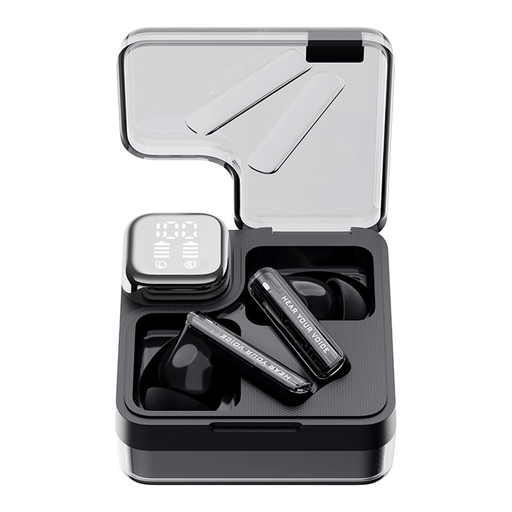
Why it suits this profile: These wireless earbuds combine ANC, an app and a USB-C charging port with a stated playback time of approximately 6 to 7 hours per charge.
The product information states the listening time, total usage time and IPX5 rating separately. According to the warning, the case should be kept dry.
Bluetooth 5.3, ANC and transparency mode; support for the QCY app and a stated total playback time of approximately 28 hours.
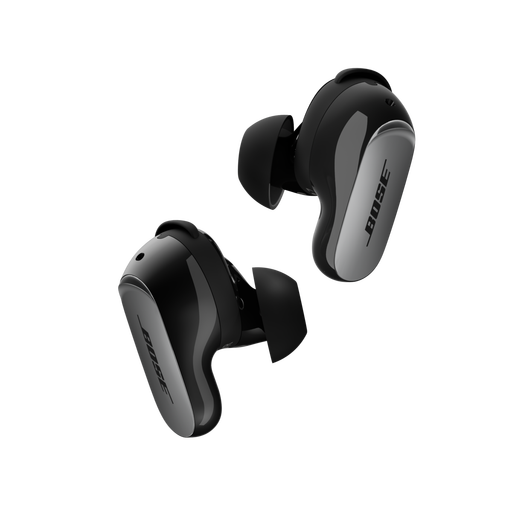
Why it suits this profile: If you travel, work or listen to music frequently, the product description states that you get ANC, an Aware mode and customisable controls.
The stated battery life is clearly given as up to 6 hours. The IPX4 rating makes it clear that this means splash resistance, not suitability for swimming.
Bluetooth 5.3, multipoint according to the product information, USB-C and wireless charging for the case.
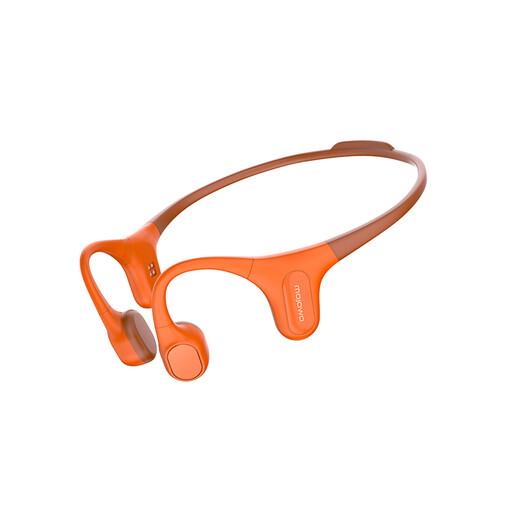
Why it suits this profile: According to the product information, this open-ear model is designed for running, cycling, fitness and swimming, with 32 GB of storage and an IP68 rating.
The open design doesn’t block the ear canal. Before use, check the manual and dry the product thoroughly before charging it magnetically.
32 GB of built-in MP3 storage and an IP68 rating stated in the product title for use during sports and around water.
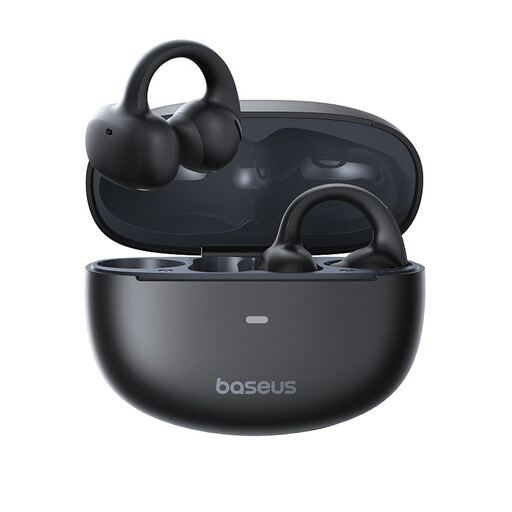
Why it suits this profile: The open-ear clip design is ideal if you want to remain aware of your surroundings while walking or commuting.
The product information states a range of up to 10 metres and makes it clear that this open-ear model shouldn’t be treated as waterproof.
Bluetooth 5.4, USB-C and an open design that allows you to hear surrounding sounds.
We’ve put together a complete, up-to-date list of products that fully meet these strict selection criteria and the applicable European safety regulations.
Use this quick checklist:
That depends on the number of microphones, their positioning and how background noise is processed. Product information for models such as the TALIX Ultra-Light Clip-On Wireless Earbuds states that they have four microphones and noise reduction for calls. Treat this as a product specification, not a guarantee of the same call quality on every street or in every office.
For many models, usage time per charge is around 5 to 8 hours, while a charging case can provide several additional charges. Actual battery life gradually decreases due to charging cycles, heat and leaving the battery completely empty for extended periods. Therefore, don’t store your earbuds in direct sunlight and use a suitable USB-C charger.
Yes, provided the fit and moisture rating are suitable for the activity. For fitness and running, ear hooks, clip-on designs or sports earbuds are often practical. When cycling, it’s important to remain aware of traffic and other surrounding sounds. For swimming, you should only use a model whose product information explicitly confirms that it is suitable.
