
Vandaag of morgen in huis

Kwaliteit gegarandeerd

Welkomstaanbiedingen ontgrendelen: GRATIS bezorging | Tot 80% korting | Gratis 30 dagen JoyPlus-proefperiode
Download de app
Wireless earbuds are handy when you’re out and about, at the office, studying or exercising. But a long list of features doesn’t always tell you everything you need to know. A low price may look tempting, but comfort, call quality or battery life may disappoint in everyday use.
Look out for these common pitfalls:
In-ear earbuds partially seal the ear canal. This can be helpful when listening on the train, but not everyone finds it comfortable. Open-ear earbuds and bone conduction headphones leave the ear canal more open. This can be useful when walking, cycling or working and you want to remain aware of the sounds around you.
Ear-hook or clip-on designs may offer more stability during sport than classic TWS earbuds. Still, check that the shape and materials suit your ears. A lightweight model isn’t automatically comfortable if the clip puts too much pressure on your ears.
Bluetooth 5.3, Bluetooth 5.4 and Bluetooth 6.0 are listed for various models. A newer version may offer benefits in terms of power consumption and connectivity, but your experience also depends on your smartphone, laptop or tablet. So check the full specifications:
Bluetooth headphones or wireless Bluetooth earbuds with multipoint are handy if you often switch between a laptop and phone.
Compare the listening time per charge with the total playback time including the charging case. A model offering a few hours per charge may be enough for your commute. If you travel often, you may prefer earbuds with long battery life or a quick-charge feature.
For earbuds used for calls, microphones, ENC or other forms of microphone noise reduction are worth considering. According to some brands’ own product information, a microphone array can help pick up voices in noisy environments. This isn’t a guarantee for every call: wind, traffic and the phone you’re using can all make a difference.
For water-resistant earbuds, check the IP code. According to the product information, an IPX4 model can withstand splashes and light rain, but not submersion. A higher rating doesn’t necessarily mean you can get the charging case wet either. Make sure the charging port is completely dry before charging.
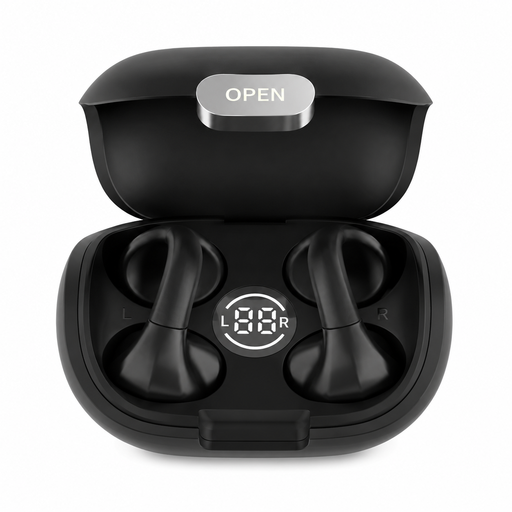
Why it suits this profile: These compact clip-on sports earbuds are designed for everyday use, travel and fitness. Touch controls make them easy to use.
The product information states a playback time of around 5 to 7 hours and a range of up to 15 metres. When buying, check that these figures suit the way you plan to use them.
Bluetooth 5.4, a charging case with a digital display and an ear-hook design.
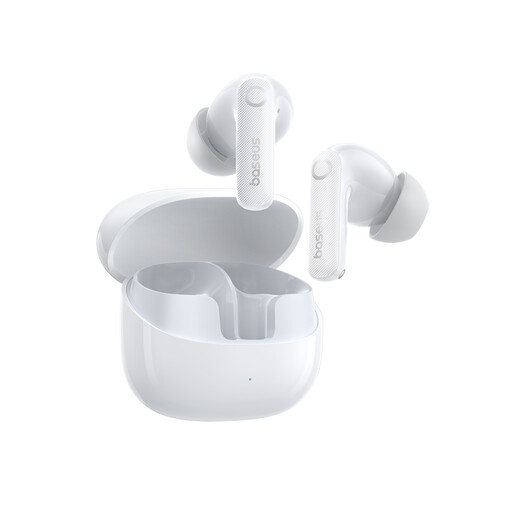
Why it suits this profile: According to the product information, this in-ear model is designed for music, travel and calls, combining several technical features in one set.
The stated battery life is clearly specified: up to 11 hours at 50% volume per listening session, and up to 55 hours in total according to the product information. ANC may affect battery life.
Bluetooth 5.4, support for SBC, AAC and LDAC, plus a stated IP55 splash-resistance rating.
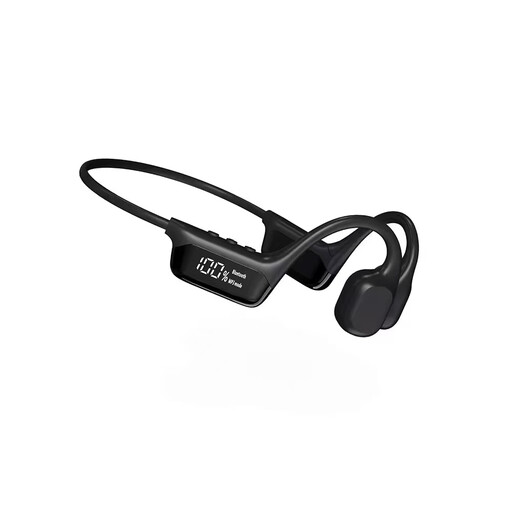
Why it suits this profile: According to the product description, the open-ear bone conduction design is intended for swimming, running, cycling and office work.
The product information mentions a swimming mode and Bluetooth 5.3, but always check the exact water-resistance rating and conditions of use before swimming.
Open-ear fit, multipoint according to the product information and a stated weight of 80 grams.
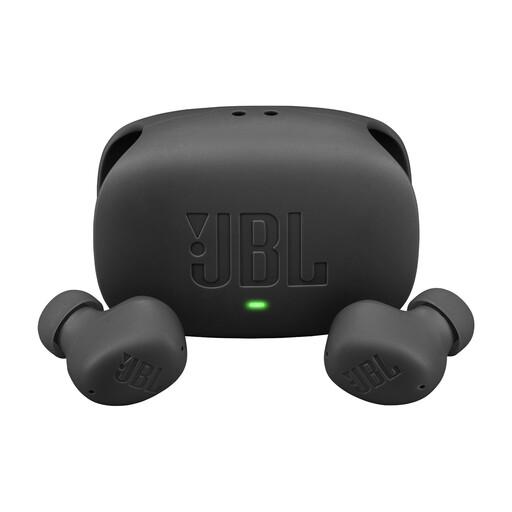
Why it suits this profile: A good choice if you want to combine music, calls and switching between devices on train journeys, at work and in everyday life.
The product information distinguishes between use with and without ANC: according to JBL, the total playback time of up to 40 hours applies when ANC is switched off.
IP54 rating for the earbuds, multipoint for two devices and a stated talk time of up to 4.5 hours.
We’ve put together a complete, up-to-date list of products that meet these strict selection criteria and the applicable European safety regulations.
First, charge the earbuds and the case. Then open the Bluetooth settings on your phone, take the earbuds out of the case or open the lid, and select the product name. If they’ve been connected before, you may need to remove the old device and pair them again.
Battery capacity decreases over time, especially if the earbuds are often fully discharged or exposed to heat. Keep them in the case, use a suitable USB-C charger and avoid prolonged exposure to high temperatures. Their overall lifespan also depends on charging cycles, care and everyday use.
That depends on the fit and the water-resistance rating. Sports earbuds with an ear hook or clip may stay in place more securely. Also check the IP rating: splash resistance doesn’t mean they’re suitable for swimming. An open-ear design can help you stay aware of your surroundings when cycling or running, but always pay attention to traffic.
