
Vandaag of morgen in huis

Kwaliteit gegarandeerd

Welkomstaanbiedingen ontgrendelen: GRATIS bezorging | Tot 80% korting | Gratis 30 dagen JoyPlus-proefperiode
Download de app
Wireless earbuds are handy for commuting, phone calls, exercise and travel. But a long list of features doesn’t automatically mean a model will suit your day-to-day needs. Claims such as “noise cancelling”, “long battery life” or “hi-fi sound” can also mean different things.
As Joybuy Product Recommendation Officer, I focus on specifications you can check: connectivity, battery life, fit, moisture protection and how a product charges. Below, you’ll find the main pitfalls to watch out for and practical recommendations for different uses.
Manufacturers sometimes quote total battery life including the charging case. That isn’t the same as the earbuds’ own playback time. Always check both figures:
For example, the Samsung Galaxy Buds4 Pro offer up to 6 hours of playback with active noise cancelling and 7 hours without ANC. With the case, the stated total battery life rises to 26 and 30 hours respectively. That difference matters on long train journeys or flights.
For sports earbuds, a specific IP rating is more useful than a general term such as “water-resistant”. IP54 protects against dust and splashing water according to the product classification, while IPX5 mainly indicates protection against water jets. Neither rating automatically means you can swim with the earbuds.
Check whether the charging case has the same protection, too. For some models, the IP rating applies only to the earbuds. Also, make sure the charging contacts are dry before you charge them.
ANC, or active noise cancelling, uses microphones and electronics to reduce background noise. How well it works depends on the surroundings. Low, constant sounds such as train or plane noise are generally different from voices or sudden sounds.
Check whether there’s a transparency mode, how many microphones the earbuds have and how long the battery lasts with ANC switched on. A claim such as “up to -45 dB” should be understood as a stated product value under specific conditions, not a guarantee of complete silence. According to the product description, Baseus claims up to -45 dB of hybrid active noise cancelling for the EH10.
Bluetooth 5.3, 5.4 or 6.0 tells you which connectivity technology is used, but it doesn’t, by itself, tell you how stable the connection will be in your situation. Also check:
A newer Bluetooth version will usually work with older devices, but advanced features depend on both devices.
In-ear headphones partly seal the ear canal, which can make them compact. The right ear tips and fit determine how much background noise you hear and how securely they stay in place. Models with ear tips in several sizes give you more options for adjusting the fit.
An open-ear model, such as the Baseus Bowie MC1, lets in more background noise. That can be useful when walking, but according to the product information, this model isn’t waterproof. For train journeys or the office, wireless headphones with over-ear cups may be more comfortable. They do take up more space, though.
If you make a lot of calls, don’t just look at the number of microphones. Also check for:
Clear calls depend on the model, your surroundings, the Bluetooth connection and your phone. Claims such as “AI-clear calls” are features claimed in the brand’s own product information, not a universal guarantee.

Why it suits this profile: An accessible choice for music, podcasts, commuting and video calls without bulky headphones.
The product information gives separate figures for playback time and total playback time: up to 7 hours per charge and 26 hours with the case. IP54 and Bluetooth 5.4 are also clearly listed.
13 mm dynamic drivers, Bluetooth 5.4, a stated low-latency mode of 60 ms and a USB-C charging case.

Why it suits this profile: Designed for listeners who value ANC, customisable audio and a wide range of everyday features.
The specifications list battery life separately with ANC on and off. IP57, six microphones, Bluetooth 6.1 and USB-C are also clearly specified.
2-way speakers, a 9-band equaliser, wireless charging and stated support for 24-bit/96 kHz audio.
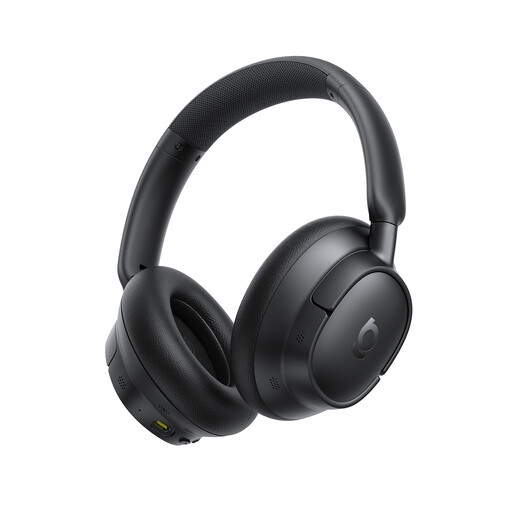
Why it suits this profile: An over-ear alternative for long journeys, work and extended listening sessions when you want large ear cups and long battery life.
The product description distinguishes between 80 hours without ANC and 55 hours with ANC. It also lists multipoint connectivity and an LED battery indicator.
Over-ear design, Bluetooth 6.0, support for LDAC according to the product information and five built-in microphones.
We’ve put together a complete, up-to-date list of products that meet these strict selection criteria and current European safety regulations.
First, charge the earbuds and put them into pairing mode. Then open the Bluetooth settings on your phone and select the model name. If the connection doesn’t work, remove any previous pairing from the Bluetooth list and try again. Also check that the earbuds aren’t already connected to another phone.
It depends on battery capacity, charging habits and how you use them. Before you buy, check the playback time per charge and the charging case’s total capacity. A charging case with USB-C is handy because you can often use the same cable for other devices, too. If you use your earbuds intensively, a model with fast charging may be more useful than one that simply makes a big claim about total battery life.
They can be, but check the IP rating, fit and controls first. ANC earbuds can reduce background noise, so use transparency mode when you need to stay alert to traffic or other people. For intense exercise, lightweight sports earbuds with a secure fit and a suitable splash-resistance rating are often more practical than large wireless headphones.
