
Vandaag of morgen in huis

Kwaliteit gegarandeerd

Welkomstaanbiedingen ontgrendelen: GRATIS bezorging | Tot 80% korting | Gratis 30 dagen JoyPlus-proefperiode
Download de app
Wireless earbuds are useful for listening to music, making calls, travelling and exercising. However, a long product title tells you little about how comfortable and practical a model is in everyday use. A low price may seem attractive, for example, while the battery life, fit or moisture protection may not suit the way you plan to use them.
Pay particular attention to these three common pitfalls:
Look at two figures: the playback time on a single charge and the total usage time with the case. For daily travel, earbuds with long battery life are practical, but also check how long they take to charge.
Specifications are usually based on the manufacturer’s test conditions. ANC, high volume, phone calls and an unstable Bluetooth connection can shorten the actual usage time. A fast-charging function is therefore useful: some models provide enough playback time for a train journey or phone call after just a few minutes of charging.
Also check the connection. USB-C is a practical choice in the Netherlands, as you can often use the same cable for your phone, tablet and other accessories. Wireless charging is convenient, but not essential if you are mainly looking for a compact and affordable model.
The term true wireless earbuds only means that there is no cable between the earbuds. It says nothing about comfort. In-ear earbuds seal the ear canal with silicone tips. This can help block out surrounding noise, but choosing the right size is important. A tip that is too large may press uncomfortably, while one that is too small may come loose or create a less effective seal.
For running and cycling, sports earbuds with an ear hook may stay in place more securely. An open-ear design leaves the ear canal unobstructed. This means you can remain more aware of your surroundings, but music may sound less isolated in a busy environment. Check whether the model is designed for your chosen sport and whether its water resistance is suitable for it.
Active noise cancellation, or ANC, uses microphones and electronic processing to reduce surrounding noise. Manufacturers sometimes present this as a fixed performance claim. Treat such statements as brand information: according to the manufacturer’s own research, results may vary depending on the fit, environment and device.
For calls, earbuds with a microphone and ENC noise reduction are relevant. ENC focuses on your voice during calls and is not the same as ANC for music. Also check whether your phone supports multipoint, particular audio codecs or a brand app. Bluetooth 5.3 or 5.4 indicates the connection standard, but does not automatically guarantee a longer range or better sound quality.
An IP rating consists of numbers and letters. IPX4 generally means protection against splashing water, while IPX5 indicates protection against water jets under specified conditions. A higher rating does not make a product suitable for swimming. The charging case may have a different IP rating or no IP rating at all.
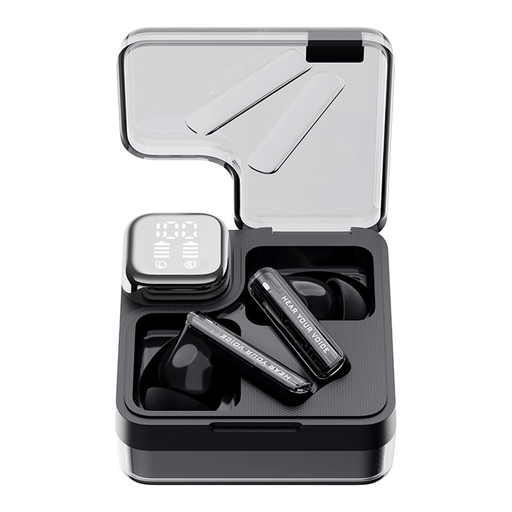
Why it suits this profile: This model combines ANC, ENC for calls and an app for EQ and control settings. It is a suitable choice if you want to get started with wireless earbuds without a complicated setup.
The product details specify around 6 to 7 hours of playback for the earbuds alone and approximately 28 hours with the case. IPX5 is also specified for the earbuds; keep the case dry.
Bluetooth 5.3, 10mm dynamic drivers, ANC and a stated low-latency mode of 0,06 seconds.
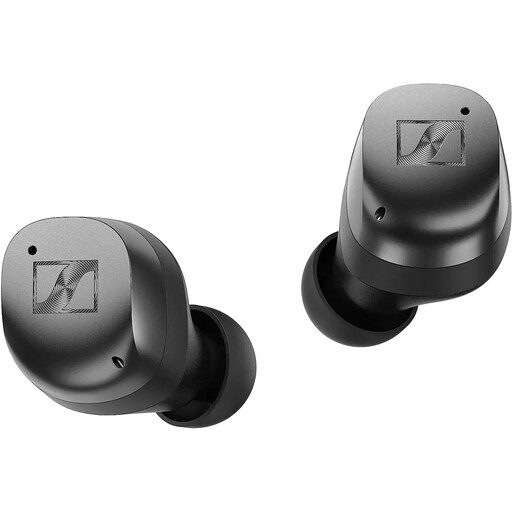
Why it suits this profile: Suitable for listeners who value music settings and want to use a more extensive ecosystem through a companion app.
The stated battery life is up to 30 hours with the charging case. The IP54 rating is suitable for splashes, but not for submersion.
Bluetooth 5.4, adaptive ANC, Qi charging and an adjustable 5-band equaliser according to the product description.
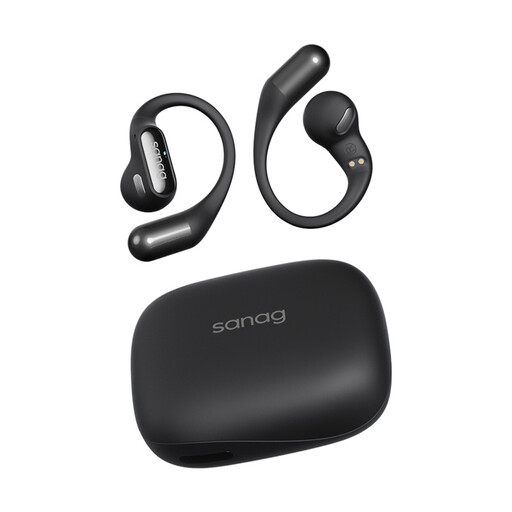
Why it suits this profile: The open-ear design with ear hook is intended for running, cycling, fitness and outdoor activities where you want to remain aware of surrounding sounds.
According to the product details, each earbud weighs approximately 5,6 grams. IPX4 provides protection against sweat and light rain, but not against submersion.
Bluetooth 5.3, touch controls, ENC for calls and a stated total usage time of approximately 26 to 48 hours, depending on the usage mode.
Prepare a short list of priorities in advance:
Do not use ANC in situations where you need to be able to hear traffic. Also avoid listening at high volume for extended periods and take breaks. If you experience irritation, pain or a poor fit, choosing a different earbud size or wearing style is the wiser option.
We have put together a complete, up-to-date list of products that fully meet these strict selection criteria and the applicable European safety regulations.
Charge the earbuds and case first. Open the case, activate Bluetooth on your phone and select the product name from the list. If automatic pairing does not work, press and hold the pairing button or touch surface as described in the manual. If you experience problems, check whether the earbuds are still connected to another device.
Battery capacity decreases over time. Usage time depends on volume, ANC, calls and charging cycles. Do not leave the earbuds in heat or direct sunlight for extended periods, and use a suitable USB-C charger. Replace a model when its battery life no longer meets your daily needs or when the battery becomes unusually hot.
Bluetooth uses relatively little power, but ANC and phone calls noticeably reduce playback time. The earbuds themselves account for the greatest energy demand; the case then needs to be recharged regularly. A model with fast charging may be more practical than one with only a high stated total battery life.
