
Vandaag of morgen in huis

Kwaliteit gegarandeerd

Welkomstaanbiedingen ontgrendelen: GRATIS bezorging | Tot 80% korting | Gratis 30 dagen JoyPlus-proefperiode
Download de app
Wireless earbuds with noise cancelling can look very similar on paper. In practice, though, there are big differences in comfort, battery life, call quality and protection against moisture. A high decibel claim or long playback time also doesn’t tell you everything about everyday use.
Your needs will be different if you mainly travel, work, make calls or exercise than if you prefer listening to music at home. Use these practical pointers to avoid paying for features you’ll hardly ever use.
Brands sometimes state the maximum number of decibels that active noise cancelling can reduce. This figure may be based on the brand’s own research or measurements, and apply only under specific conditions. Your experience on a train, in the office or on a plane may be different.
So, look out for:
The stated playback time is often measured with noise cancelling switched off. Some models have noticeably shorter battery life with ANC on. So check the battery life with active noise cancelling enabled, and see how many extra charges the case provides.
In practice, a short charging time can matter more than a big total. Depending on the model, a few minutes of charging may be enough for your commute.
An IPX4 rating means protection against splashes. That’s suitable for light rain or perspiration, but not for submersion. Models with IP55, IP57 or a similar rating offer more protection according to their product specifications, but swimming and prolonged submersion still aren’t automatically allowed.
Also check the charging case. It may offer less protection against moisture than the earbuds themselves.
Active noise cancelling, also known as ANC, uses microphones to detect ambient sounds and counteract them. It works particularly well with constant sounds, such as engine noise on a plane or train. Voices and sudden sounds may still be audible.
If you cycle, walk in busy traffic or work somewhere you need to hear announcements, a transparency mode is important. Also check whether you can easily adjust ANC using the earbuds, the app or your connected device.
Almost all the true wireless earbuds in this selection use Bluetooth. As well as checking the Bluetooth version, focus on the features you’ll use every day:
Bluetooth 5.x doesn’t automatically mean better sound quality. The codec, software and compatibility with your phone also play a part.
A good choice for long working days offers plenty of playback time per charge and a practical charging case. When choosing wireless earbuds with a charging case, look for USB-C, wireless charging if you want it, and fast charging.
The fit affects not only comfort but also sound quality and passive noise isolation. Multiple ear tip sizes or stability bands make it more likely that you’ll find a secure fit. For exercise, a higher IP rating and a secure fit are generally more useful than an extensive spatial audio mode.
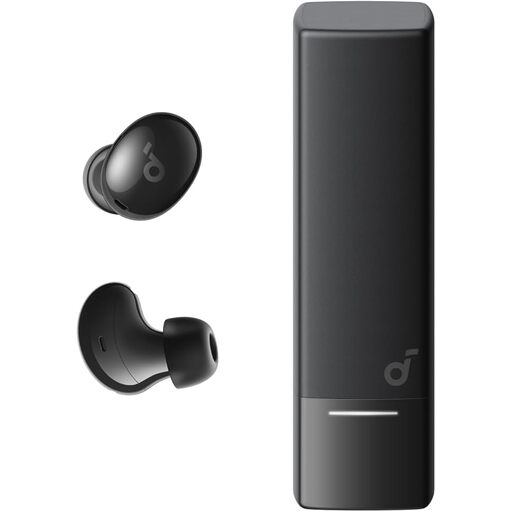
Why it suits this user: This compact model combines active noise cancelling, Bluetooth 5.4 and a charging case in a lightweight design. Soundcore says the A30i offers up to 7 hours of playback, or up to 24 hours with the case.
The product information mentions not just ANC, but also a transparency mode and different ear tip sizes. The IP54 rating is designed to protect against dust and splashes, not submersion.
Bluetooth 5.4, multipoint for two devices, USB-C and four microphones, according to the product specifications.
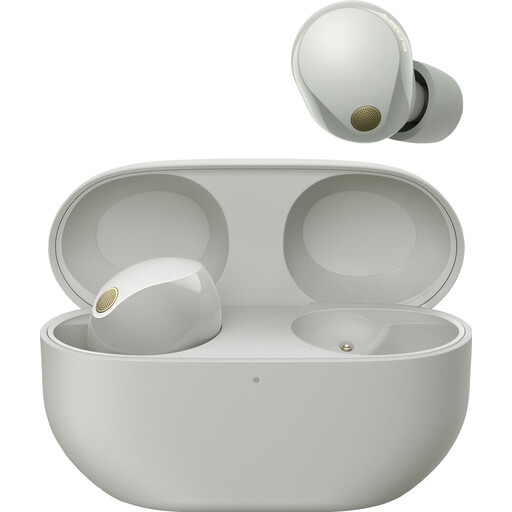
Why it suits this user: This model is designed for listeners who value ANC, multipoint and audio codecs. Sony says it supports AAC, LC3, LDAC and SBC, and offers up to 24 hours of battery life with the case.
The specifications list battery life separately with noise cancelling on and off. The IPX4 rating is also clearly identified as protection against splashes.
Multipoint, USB-C, fast charging and LDAC support, according to the stated product specifications.

Why it suits this user: This model is a good fit for people who exercise, are often on the move or use several Galaxy features. The stated IP57 rating and Bluetooth 6.1 are useful specifications for intensive everyday use.
The product specifications list playback time separately with ANC switched on and off. Despite the IP57 rating, it’s still best not to use the earbuds for swimming or prolonged submersion.
2-way speakers, six microphones, wireless charging and a stated total playback time of up to 30 hours without ANC.
We’ve put together a complete, up-to-date list of products that meet these strict selection criteria and the applicable European safety regulations.
Yes. With ANC earbuds, active noise cancelling can often be switched on separately. How much ambient noise is reduced varies by model and situation. For announcements or traffic, it’s best to use transparency mode.
Many models offer a few hours to around ten hours of use per charge, depending on ANC, volume and codecs. The charging case extends the total listening time. The built-in battery’s actual lifespan depends on charging cycles, temperature and use. So keep your earbuds in the case and charge them with a suitable USB-C charger.
That depends on the number of microphones, wind noise reduction and the model’s software. If you make calls regularly, multiple microphones, a stable Bluetooth connection and multipoint are useful features. It’s best to read the full product specifications rather than relying on a general claim about “clear calls”.
