
Vandaag of morgen in huis

Kwaliteit gegarandeerd

Welkomstaanbiedingen ontgrendelen: GRATIS bezorging | Tot 80% korting | Gratis 30 dagen JoyPlus-proefperiode
Download de app
Wireless earbuds with noise cancelling can often look very similar on paper. In practice, though, the experience can vary considerably from one model to another. For example, a long battery life doesn’t always tell you how long they’ll play for with ANC switched on. And good sound quality won’t count for much if the fit becomes uncomfortable after an hour.
As a Joybuy Product Recommendation Officer, I focus on verifiable product specifications and real-world use. Here are the main pitfalls and things to look out for if you’re choosing true wireless earbuds, Bluetooth earbuds or earbuds with ANC for travel, calls, sport and everyday use.
Manufacturers often quote battery life under specific conditions. Playback time with noise cancelling may be lower than the maximum quoted figure without ANC. So always check:
A model with, for example, 40 hours of total playback time may look appealing, but that doesn’t automatically mean you’ll get that much use during a long train journey with ANC on.
Active Noise Cancelling (ANC) uses microphones and electronic processing to reduce ambient noise. It’s particularly useful for low, constant sounds such as train engines, aircraft noise or air conditioning.
Environmental Noise Cancellation (ENC) is generally designed to improve the microphones during calls. ENC can help make your voice clearer to the person you’re speaking to, but it isn’t the same as active noise cancelling for music.
So, if you’re looking for earbuds with ANC, check that the product specification says Noise cancelling: Active. A product with call noise cancellation alone is no substitute for full ANC.
An in-ear model will generally create a better seal, but the earbuds still need to fit your ears. Check whether multiple ear tip sizes or stabilising wings are included. A poor seal doesn’t just affect comfort; it can also affect the perceived bass and passive noise isolation.
For sport, the IP rating is important:
The charging case doesn’t always have the same protection as the earbuds. So don’t put wet earbuds straight into a damp case.
For commuting, ANC and a good transparency mode are useful. Transparency mode lets you hear what’s going on around you without taking your earbuds out. It’s handy at the office or when you need to have a quick chat.
For calls, the number of microphones, beamforming and wind noise reduction are all relevant specifications. These details give you a technical indication, but they don’t guarantee the same call quality in every situation. According to Soundcore’s own information, for example, the AeroClip has four beamforming microphones and a wind-resistant mesh. Treat that as a product specification, not a universal guarantee for every call.
Bluetooth 5.3 or Bluetooth 5.4 can help provide a modern connection, but your overall experience also depends on your smartphone and software. Also check which audio codecs are supported, such as SBC, AAC, LC3 or LDAC.
Wireless in-ear headphones should fit securely without needing constant adjustment. Check the weight of each earbud, the shape of the housing and the sizes included. Touch controls are handy, but can sometimes be activated accidentally when adjusting the fit.
USB-C is now a practical charging standard. Wireless charging is a useful extra, but not essential. Focus on the total battery life and whether a replacement or additional charging case is available.
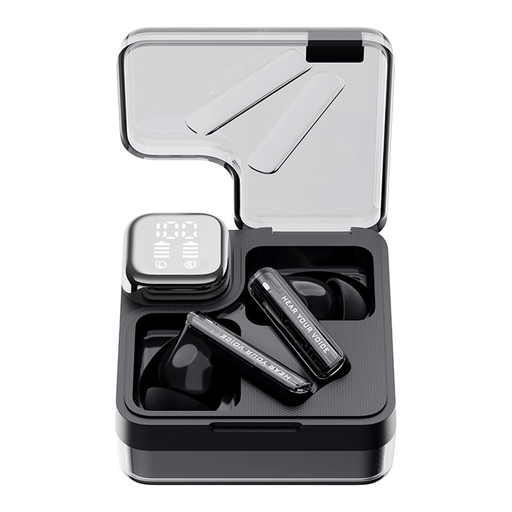
Why it suits this profile: This model combines ANC, transparency mode and app support for iOS and Android with a quoted total playback time of around 28 hours.
The product specifications list ANC and ENC for calls separately. They also clearly distinguish between playback time on a single charge and playback time with the case.
Bluetooth 5.3, USB-C, IPX5 rating for the earbuds, low-latency mode and control via the QCY app.
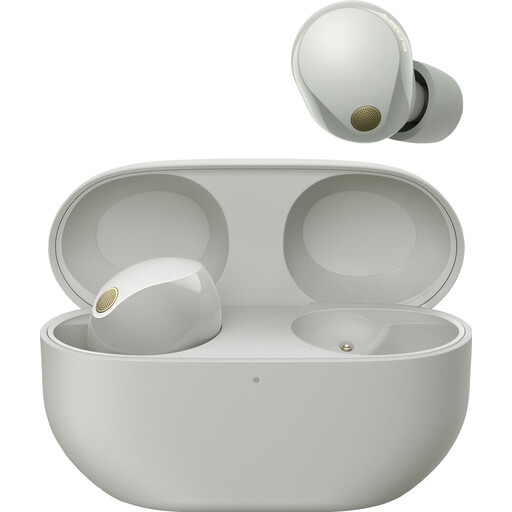
Why it suits this profile: The WF-1000XM5 is designed for users who want extensive control over sound settings, codec choice and noise cancelling.
The quoted 24-hour battery life includes use with the charging case. The specifications also state a playback time of 8 hours with noise cancelling switched on.
Support for AAC, LC3, LDAC and SBC, multipoint, USB-C and IPX4 splash resistance.

Why it suits this profile: This model is a good fit for users who value water and dust resistance, advanced controls and integration with Galaxy devices.
The quoted playback time is listed separately as 6 hours with ANC and 7 hours without ANC. This makes it easier to set realistic battery expectations for your needs.
IP57 rating, 6 microphones, Bluetooth 6.1, 2-way speakers and wireless charging.
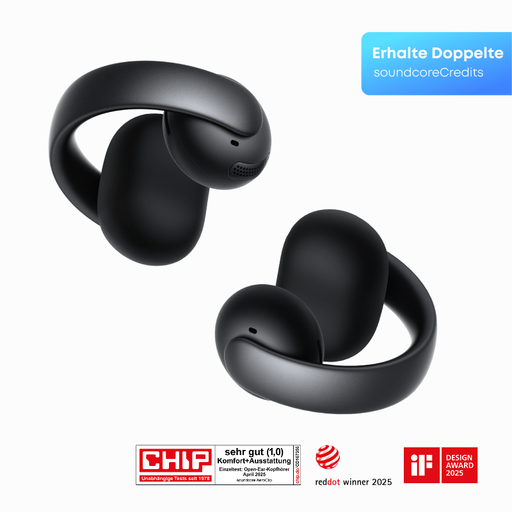
Why it suits this profile: The open-ear clip-on design is intended for walking, cooking, working and exercising when you want to stay aware of your surroundings.
The design puts less pressure on your ears than a traditional in-ear fit. Bear in mind, though, that an open design lets in ambient noise and doesn’t provide the full seal of ANC earbuds.
Open-ear clip-on design, 12 x 12 mm driver, four beamforming microphones and a flexible ring, according to the product information.
We’ve put together a complete, up-to-date list of products that meet these strict selection criteria and the applicable European safety regulations.
Wireless earbuds will usually connect via Bluetooth to both Android and iPhone devices. Extra features, such as an equaliser, firmware updates or automatic device switching, may depend on the operating system and the relevant app. Before buying, check compatibility and make sure all the features you want are available on your phone.
Their lifespan depends on usage, charging cycles, moisture, temperature and care. The built-in lithium battery loses capacity over time. Keep your earbuds in their case, keep the charging contacts clean and avoid prolonged exposure to heat. A manufacturer’s battery life claim describes the performance of a new product under certain conditions; it isn’t a guarantee of how long the product will last.
Don’t use ANC in situations where you need to hear traffic or warnings. When cycling or in busy traffic, transparency mode may help you stay more aware of your surroundings, but it’s no substitute for paying attention yourself. Also check local traffic rules and keep the volume at a moderate level.
