Choose in-ear earbuds if you want to save space and find the tips comfortable. A foldable on-ear headphone is an alternative if you don’t want earbuds in your ear canal. Also consider comfort, playback time per charge and how well the controls work with your learning app. Product specifications alone can’t tell you whether Dutch speech will sound clearer to you.
Who listens to audio exercises with a compact setup?
The listener who wants to pack light
They take listening exercises with them on their phone or laptop and want to store their headphones without taking up much space. With earbuds, fit and playback time without the case are important considerations, as information from the Consumentenbond and Sony Nederland also shows.
The listener with long practice sessions
They replay clips repeatedly and care more about a comfortable fit throughout the session than having the smallest possible case. The Consumentenbond and VeiligheidNL highlight the importance of choosing a suitable style and getting a good fit.
The listener in a noisy place
They practise somewhere with distracting background noise and compare well-fitting tips with larger headphones or noise cancellation. VeiligheidNL advises against turning up the volume to drown out noise.
What should you look for in wireless earbuds or headphones?
Fully wireless in-ear earbuds
Best when: you want to keep storage space to a minimum and find the tips comfortable.
Trade-off: fit varies from person to person, and the case only charges the earbuds while you’re not wearing them.
Foldable on-ear headphones
Best when: you don’t want in-ear tips and have room in your bag for a headband.
Trade-off: the ear cushions rest on your ears and may feel uncomfortable during longer sessions; on-ear headphones usually let in more ambient noise.
Closed-back or noise-cancelling over-ear headphones
Best when: you usually listen in one noisy study spot and don’t mind using more space in your bag.
Trade-off: their larger design takes up more room; noise cancellation doesn’t replace checking the fit or volume.
Open-ear earbuds
Best when: you want to hear traffic or announcements while listening.
Trade-off: they let in more ambient noise, so they offer less isolation from background sounds.
| What to consider |
What to check before buying |
Who might care most? |
| Easy to carry |
Compare the style and dimensions of the case; check whether the stated playback time includes the case. |
If I want to save space in my bag, I look at both the earbuds and the case. Around 36% of consumers prioritise compact storage. |
| Comfort during long listening sessions |
Check whether different tip sizes are included, or how the headband and ear cushions fit. |
When listening repeatedly, I want a fit that stays comfortable throughout my practice session. Around 29% of consumers prioritise wearing comfort above all else. |
| Background noise |
Check whether the model has tips, an ambient sound mode or active noise cancellation; also consider whether you need to hear your surroundings. |
If background noise distracts me from my exercises, I look for a good fit without turning up the volume. Around 21% of consumers prioritise managing ambient noise. |
| Controls and playback time |
Test pause and rewind with your own learning app; compare playback time per charge using the settings you’ll use. |
I want to replay clips easily and finish a practice session without having to stop and charge. Around 14% of consumers focus mainly on controls and uninterrupted playback time. |
Common buying mistakes for listening practice
-
Assuming battery life including the case means continuous playback
A case charges your earbuds while you’re not wearing them. So the total playback time with the case doesn’t tell you how many hours you can listen in one go.
Compare playback time per charge and check how it varies depending on which features are on or off.
-
Assuming compact on-ear headphones are better in noisy places
On-ear headphones usually let in more ambient noise. Turning up the volume to drown out background noise isn’t a good solution; VeiligheidNL highlights the importance of a good fit.
Compare the fit with well-fitting in-ear tips or over-ear headphones, and consider which sounds you need to be able to hear.
-
Treating models with an extra suffix in the number as the same product
The JBL Tune 520BT and Tune 520BT2 are different models. JBL Nederland states that the Tune 520BT offers up to 57 hours of battery life; check the full model number for the version on offer.
Compare the model name and specifications of the exact version you’re considering.
Brands for comparison
These examples show how the style and stated features vary between product lines; they aren’t a judgement on the brand as a whole.
Sony
The WF-C510 is a compact in-ear example, while the WH-CH720N has a larger over-ear design.
- Sony Nederland states that the WF-C510 offers up to 11 hours of playback with ambient sound mode off and 8 hours with it on.
- For the WH-CH720N, Sony Nederland quotes up to 35 hours with noise cancellation on; over-ear headphones take up more space than earbuds.
JBL
The Tune 520BT is a foldable on-ear example for anyone who doesn’t want in-ear tips.
- JBL Nederland lists multipoint and up to 57 hours of battery life for the Tune 520BT.
- On-ear headphones rest on your ears and may let in more ambient noise; check the full model number too.
Philips
The TAH3209BG/00 is a foldable on-ear example; the TAT3509WT/00 is an in-ear version with noise cancellation.
- Philips Nederland states that the TAH3209BG/00 offers up to 25 hours of playback and a low-latency setting for video.
- Philips Nederland lists up to 24 hours for the TAT3509WT/00, including the case; that isn’t continuous listening time.
soundcore
The Space A40 is a compact in-ear example with adaptive noise cancellation.
- Noise cancellation is a stated feature of the Space A40.
- A stated noise-cancelling feature doesn’t prove that Dutch speech will be easier to understand during listening exercises.
Product picks at Joybuy
The picks below focus on fully wireless in-ear earbuds for a compact listening setup.
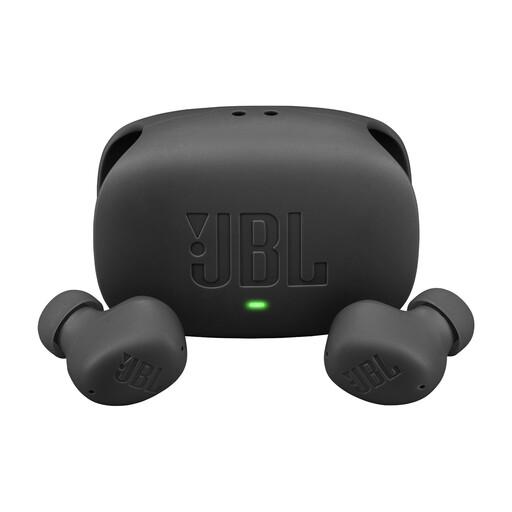 Image unavailable
JBL Wave Buds 2, Black
A fully wireless in-ear option for anyone looking for a compact listening setup. Compare the fit and controls with your own phone or laptop.
View at Joybuy
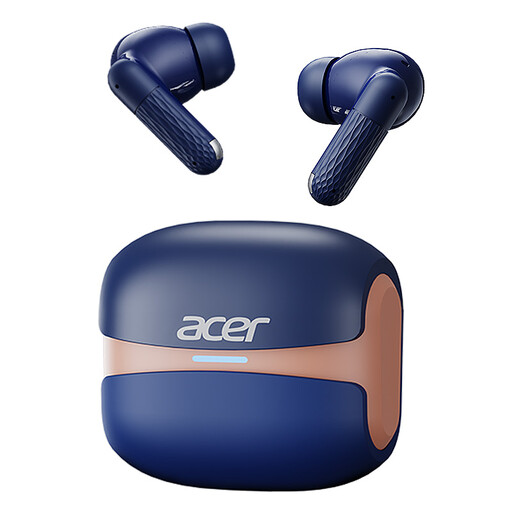 Image unavailable
Acer OHR548 Wireless Earphones, In-Ear
A wireless in-ear option for anyone who doesn’t want to carry a headband. The product name lists Bluetooth 5.4 and a Type-C charging case.
View at Joybuy
 Image unavailable
Samsung Galaxy Buds4 Pro
A wireless in-ear option for anyone considering noise cancellation; the product name lists Active Noise Cancelling. Check that the fit and controls suit your practice sessions.
View at Joybuy
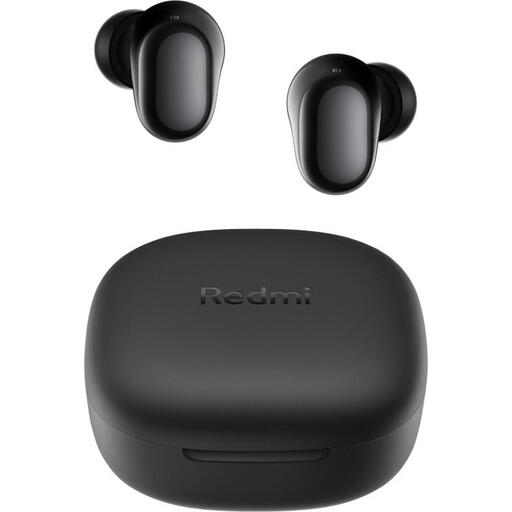 Image unavailable
Buds 6 Play, Black
A wireless earbud option for a compact setup. Before choosing, check that the fit and controls work with your playback device.
View at Joybuy
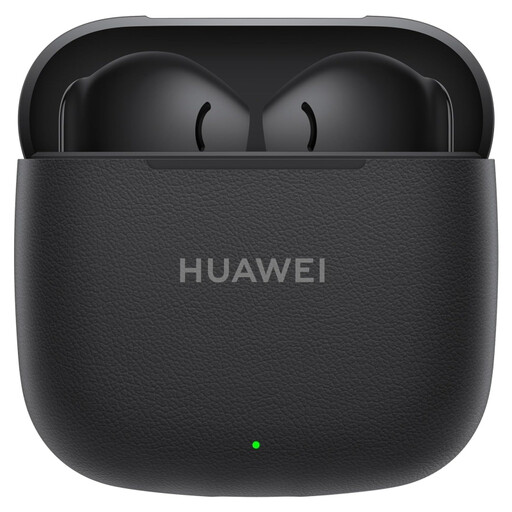 Image unavailable
HUAWEI FreeBuds SE 3, Black
An in-ear option to take with you without carrying a headband. Compare the style and how it works with your own learning app and device.
View at Joybuy
Frequently asked questions
Does stated battery life including the case mean you can listen continuously for that long?
No. Sony Nederland states that the WF-C510 offers up to 11 hours of continuous playback with ambient sound mode off and 8 hours with it on. For other models, compare the time per charge and the settings used too.
How can I stop myself from continually turning up the volume while practising?
Make sure you have a good fit and try not to drown out background noise by turning up the volume. VeiligheidNL points out that a good fit can help reduce sound leakage; in-ear tips or noise cancellation don’t automatically make loud listening safe.
What can I test before practising with new headphones?
Connect the headphones to the device your exercises are on, then test pause and rewind in your own learning app. If you’re using in-ear earbuds, check that the tips feel comfortable too.
Can I listen to music while cycling?
The Dutch Government states that you may listen to music hands-free while riding, but you must not hold an electronic device. Be aware of your surroundings; this information doesn’t require you to use a particular type of headphones.


