
Vandaag of morgen in huis

Kwaliteit gegarandeerd

Welkomstaanbiedingen ontgrendelen: GRATIS bezorging | Tot 80% korting | Gratis 30 dagen JoyPlus-proefperiode
Download de app
Wireless audio seems simple: choose a model, connect it via Bluetooth and listen. In practice, wireless earbuds and headphones vary widely in comfort, sound isolation, battery life and functionality. A low price may be tempting, but an unsuitable fit or limited water resistance can quickly make a purchase impractical.
Packaging may quote a long battery life, but always check exactly what this refers to. Is it for one earbud, the combination with the charging case or a situation without active noise cancellation? For example, the JBL Wave Buds 2 state up to 40 hours of total playback with ANC off. According to the product specifications, the earbuds themselves offer less playback time.
So pay attention to:
An IPX4 rating is intended to protect against splashes and sweat, not submersion. According to the classification, IP55 offers greater protection against dust and water jets, but it does not make a product suitable for swimming. The Baseus Bowie MC1 Open-Ear model also explicitly states that the product is not water-resistant.
So check whether you are looking for:
Always dry a charging port before connecting a device. Do not automatically use a product rated IPX4 or IP55 in a swimming pool or under a shower.
Noise-cancelling earbuds and ANC headphones use active noise cancellation. Microphones detect ambient sound and the electronics attempt to reduce it partially. How well this works depends on the fit, the type of sound and the environment.
“Noise reduction” may also refer to microphone noise reduction for phone calls or to passive sound isolation. According to Baseus’s own information, the Bass EP10 Pro features adaptive hybrid ANC of up to -50 dB. This is a brand claim about performance; the experience may vary from one user and situation to another.
Do not use ANC when you need to remain fully aware of surrounding sounds, such as in traffic. You also need to stay alert when using open-ear earbuds.
The design determines how long you can wear a device comfortably.
Bluetooth 5.3 or 5.4 may offer benefits in terms of energy consumption and connectivity, but a higher version number does not automatically guarantee better sound. Your phone, laptop and the audio codec being used also play a part.
Pay attention to:
A model advertised as Bluetooth 5.3 headphones should clearly state this specification in the product information. Also check whether your own smartphone supports the relevant features.
If you make frequent calls, do not just look at the number of microphones. Their positioning, wind filtering and software all affect how clearly your voice can be heard. A product featuring “AI call noise reduction” uses a marketing term; according to the brand’s own research or product information, this does not mean that calls will remain clear in every noisy environment.
Look for specific information about:
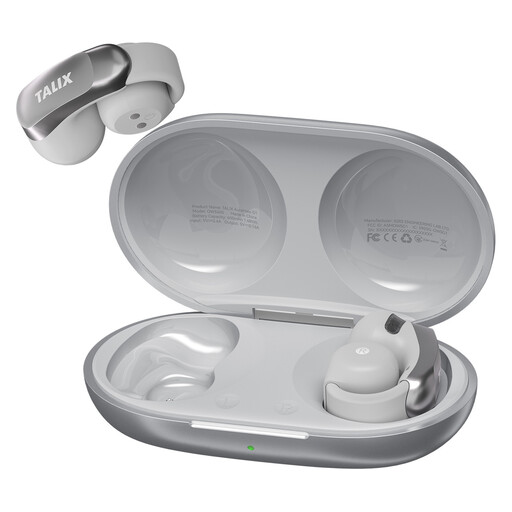
Why it suits this profile: The clip-on design with silicone ear hook is aimed at everyday use, commuting and light sporting activities.
The product specification states up to 7 hours of playback on its own and 28 hours with the charging case. IPX4 is described as suitable for sweat and light rain, not submersion.
Bluetooth 5.3, four microphones and a stated fast-charging function providing 2 hours of playback after 10 minutes of charging.

Why it suits this profile: Suitable for users looking for features such as ANC, an adjustable equaliser, spatial audio and wireless charging.
Battery life is listed separately for ANC on and off: 6 and 7 hours per charge. The IP57 rating is specified, but the warning states that the model is not intended for swimming.
Two-way speakers, six microphones, Bluetooth 6.1, USB-C and wireless charging according to the product information.
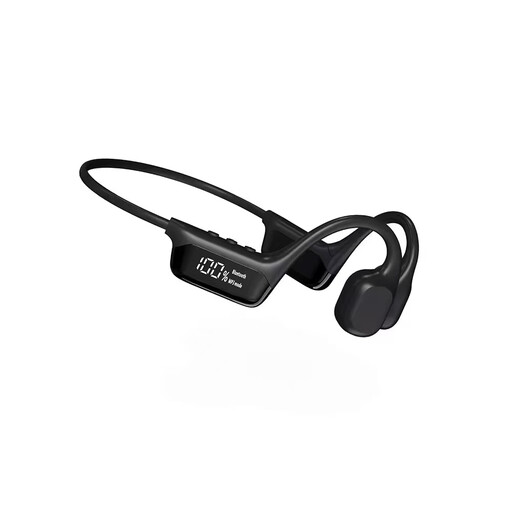
Why it suits this profile: The open-ear bone conduction design is intended for running, cycling, office use and situations where you want to remain aware of surrounding sounds.
The product listing states Bluetooth 5.3, an ear-hook design and a swimming mode. Before using it in water, check the exact instructions and make sure the charging port is dry.
Open-ear ergonomic sports design, multipoint connection, calling function and a stated battery life of 8 hours.
We have put together a complete, up-to-date list of products that fully meet these strict selection criteria and the applicable European safety regulations.
First, charge the earbuds and charging case. Then open the Bluetooth settings on your phone, open the case or press and hold the pairing button, and select the product name. If it does not work, remove an old pairing and try again. With multipoint, you need to pair both devices separately according to the instructions.
Playback time per charge often ranges from a few hours to around 11 hours, depending on volume, ANC and codec. Total battery life with the charging case can be much higher. The lifespan of the built-in battery depends on charging cycles, heat and usage. Keep earbuds dry and charge them with a suitable cable and adapter.
There are no cable or battery costs during use, but you do need to recharge the battery regularly. A USB-C charger you already own is generally sufficient if the product specifications allow it. Also bear in mind potential costs for replacement ear cushions, a charging case or repairs outside the warranty period.
