
Vandaag of morgen in huis

Kwaliteit gegarandeerd

Welkomstaanbiedingen ontgrendelen: GRATIS bezorging | Tot 80% korting | Gratis 30 dagen JoyPlus-proefperiode
Download de app
Wireless audio is handy for commuting, working from home, exercising and making phone calls. However, many models look better on paper than they perform in everyday use. For example, a long battery life may only apply when active noise cancelling is switched off. An IP rating does not automatically mean a product is suitable for swimming. And an inexpensive Bluetooth connection can be inconvenient if you often switch between your laptop and phone.
This buying guide will help you compare wireless earbuds and headphones using verifiable specifications. We’ll look at comfort, battery life, connectivity, microphones, water resistance and noise cancelling.
Manufacturers usually state battery life under certain conditions, such as at a medium volume with ANC switched off. For example, the JBL Wave Buds 2 are listed as offering up to 40 hours of total playback with ANC switched off. According to the product specification, the earbuds themselves last for up to 8 hours with Bluetooth enabled.
So always compare:
A model with long battery life isn’t automatically practical if its charging case is bulky or takes a long time to charge.
Noise cancelling earbuds and ANC headphones often quote a figure such as -45 or -50 dB. This is a technical claim about noise reduction under certain conditions. The actual experience also depends on the fit, the type of sound and the seal around your ears.
According to the product specification, the Baseus Bass EP10 Pro features adaptive hybrid ANC of up to -50 dB. The Baseus EH10 NC is listed on the product page as offering hybrid active noise isolation of up to -45 dB. Treat these figures as a point of comparison, not as a guarantee that every sound will disappear completely.
An IPX4 or IP55 rating has a limited meaning. IPX4 is designed to protect against splashes, while IP55 indicates protection against dust and water jets under the conditions set out in the rating. Neither means you can submerge the earbuds.
Pay particular attention to these differences:
After exercising, check that the charging contacts are dry before placing the earbuds in the case.
True wireless earbuds are compact and come with a charging case. They’re handy for everyday use and travelling, but the fit varies considerably from ear to ear. Choose a model with multiple ear tip sizes if your earbuds often feel loose.
On-ear headphones rest on your ears and are often lightweight and compact. An over-ear model covers your ears more fully and may be more comfortable on a train or plane, but takes up more space. Open-ear earbuds let in surrounding sounds. This can be useful when walking or cycling, but always stay aware of your surroundings and don’t use them in situations where you need to give your full attention.
Bluetooth 5.2, 5.3, 5.4 or 6.0 mainly tells you which standard is used. Also look at practical features:
Multipoint is useful if you switch between a laptop and smartphone at work. The Sony WF-C710N, JBL Wave Buds 2 and various Sony headphones are listed as connecting to two devices.
For calls, it’s not just the number of microphones and AI features that matter. Wind, distance from your phone and your surroundings can also affect how clearly you’re heard. The Baseus Bass EP10 Pro is listed as having six microphones for calls. The Baseus EH10 NC is listed as having five microphones and a noise reduction system for calls.
Treat these as product features stated in the specification. They don’t guarantee a particular call quality on every street, train or in every meeting room.
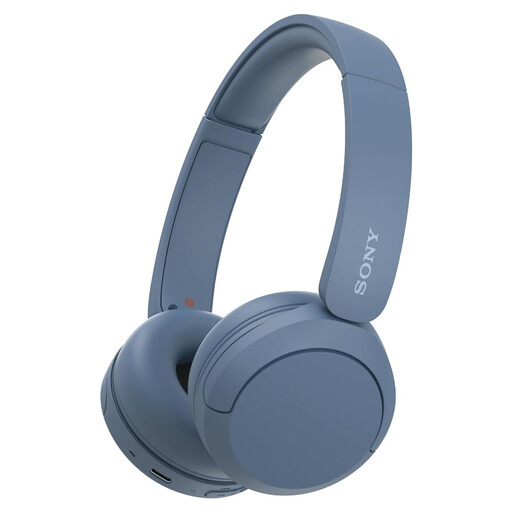
Why it suits this profile: These lightweight on-ear Bluetooth headphones are ideal for music, podcasts and calls without putting earbuds in your ear canal. The adjustable headband and multipoint feature make them a good fit for everyday use at home, school or in the office.
The product specification lists battery use, a microphone and multipoint. However, the available information gives different battery figures, so check the current product specification before buying.
147 grams, USB-C, AAC and SBC codecs, a built-in microphone and connection to two devices.
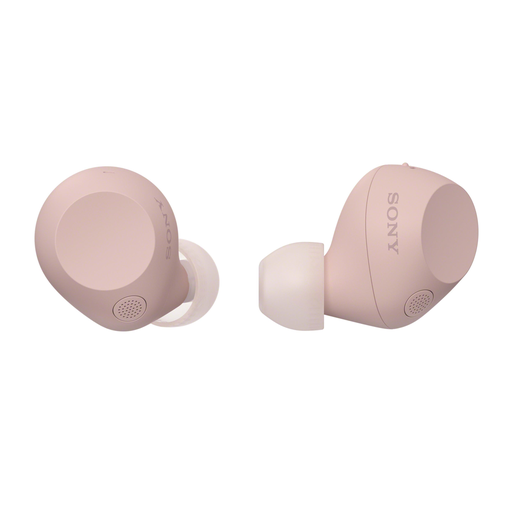
Why it suits this profile: This model is designed for people who want to combine compact wireless earbuds with noise cancelling, multipoint and app-based sound settings.
The product specification distinguishes between up to 30 hours with noise cancelling and 40 hours without it. This makes it easier to assess the battery life claim in the right context.
Bluetooth 5.3, multipoint, IPX4 and a stated weight of 5.2 grams per earbud.
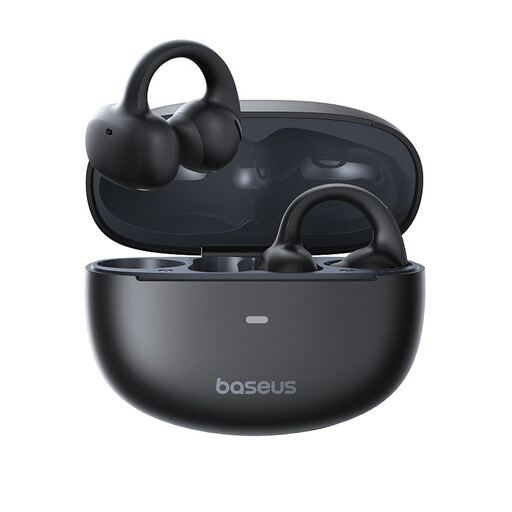
Why it suits this profile: The open-ear design is intended for people who want to stay aware of surrounding sounds while walking or working. The clip-on design is different from traditional in-ear earbuds.
The product information doesn’t state that the earbuds are water-resistant. So don’t assume this model can be exposed to rain, sweat or moisture without risk.
Bluetooth 5.4, a range of up to 10 metres in open spaces, USB-C and a charging case with a stated capacity of 600 mAh.
We’ve put together a complete, up-to-date list of products that meet these strict selection criteria and the applicable European safety regulations.
Open the charging case or switch on the headphones, then activate Bluetooth on your phone. Select the product name from the list of available devices. The connection will usually be made automatically next time. If pairing doesn’t work, remove the old Bluetooth profile and pair the devices again.
It depends on battery capacity, charging habits, volume, temperature and how often you use them. Playback time per charge generally decreases as the built-in battery gets older. Don’t leave the earbuds completely flat for long periods, and use a suitable USB-C charger according to the manufacturer’s instructions.
ANC can reduce distracting background noise, but its effectiveness varies depending on the situation. A good fit is important when travelling. For calls, microphone placement, wind noise and the software being used are at least as important as the ANC feature. Also check whether there’s a transparency mode for when you need to hear surrounding sounds.
