
Vandaag of morgen in huis

Kwaliteit gegarandeerd

Welkomstaanbiedingen ontgrendelen: GRATIS bezorging | Tot 80% korting | Gratis 30 dagen JoyPlus-proefperiode
Download de app
Wireless earbuds are useful for listening to music on the train, taking calls at work and enjoying podcasts while out walking. However, a purchase can still disappoint. An attractive design or a long claimed battery life does not automatically tell you anything about comfort, call quality or suitability for use in the rain.
So focus on the features that match the way you use them every day. Below, we explain what to look for and compare several wireless earbuds based on verifiable product specifications.
Manufacturers often state battery life at a particular volume and with features such as noise cancellation switched off. Actual playback time may therefore be lower. Also check whether the stated time applies to each earbud or to the earbuds together with the charging case.
For example, a model offering 8 hours of listening time per charge is different from a set offering 30 or 40 hours of total battery life including the case. For commuting, a charging case is usually more practical than simply having a high standalone battery capacity.
An IPX4 rating generally means protection against splashing, not submersion. An IP55 rating provides dust protection and protection against water jets under specific conditions, but it does not make a product suitable for swimming.
Also pay attention to the difference between the earbuds and the case. With some Bluetooth earbuds, only the earbuds are splash-resistant. Dry the contact points and USB-C connection before charging.
Active noise cancellation, also known as ANC, can reduce ambient noise. The result depends partly on the fit, the ear tips and the type of sound. Low, constant tones on a train are different from voices in an office.
Open-ear earbuds work differently: they deliberately let ambient sound through. This can be useful while out walking, but in a busy environment the music may feel less isolated.
Wireless in-ear headphones partially seal the ear canal, which can help reduce outside noise. Choosing the right ear-tip size is important for comfort and stable bass reproduction. Check whether several sizes are included.
Clip-on and ear-hook models grip around or onto the ear. They can be suitable for sport and movement, especially if conventional in-ear earbuds tend to fall out quickly. An open design feels less enclosed, but does not provide the same passive noise isolation.
Bluetooth 5.3 or 5.4 mainly indicates the connection standard used; on its own, it does not guarantee better sound quality. Also look at the supported audio codecs. Models with SBC and AAC are widely compatible. LDAC can offer greater audio bandwidth, but both the earbuds and the smartphone must support it.
Multipoint connectivity is convenient when you use a laptop and smartphone at the same time. Check that the feature is actually listed in the product specifications, rather than relying only on general claims such as “stable connection”.
For earbuds used for calls, the number of microphones and the noise-reduction technology used are relevant considerations. A model with four or six microphones may be able to focus on picking up your voice, but call quality also depends on wind, traffic, the smartphone being used and the software.
Pay attention to these three points:
A USB-C port is now a practical standard. For wireless charging, check that it is explicitly mentioned; not every wireless charging case supports this feature.
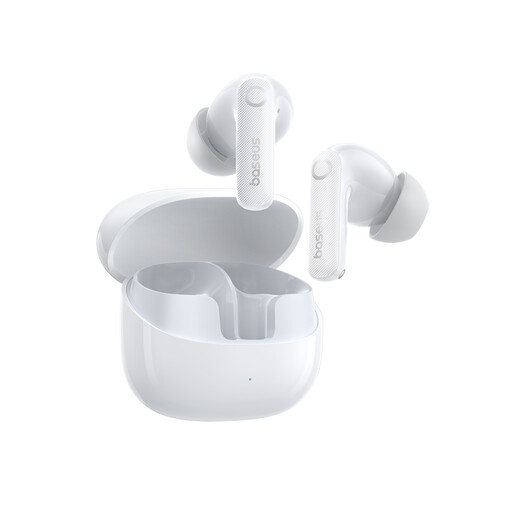
Why it suits this profile: This model combines in-ear comfort with ANC and a long claimed playback time, without requiring you to go straight for a fully featured premium model.
The product specifications state 11 hours of listening time at 50% volume, a charging time of approximately 1.5 hours and IP55 splash protection. Do not treat IP55 as permission to submerge the product.
Adaptive hybrid ANC of up to -50 dB according to the product information, six microphones for calls, Bluetooth 5.4 and support for SBC, AAC and LDAC.
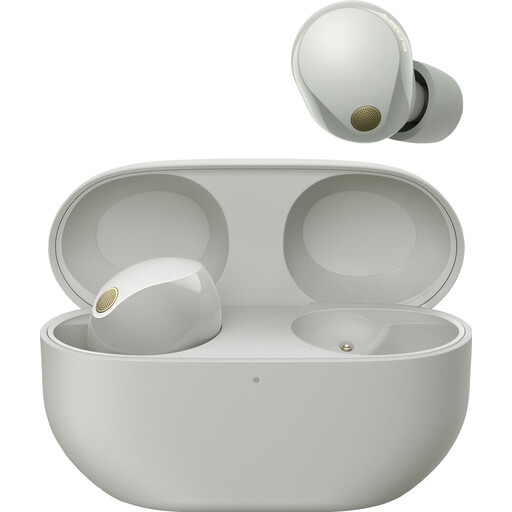
Why it suits this profile: This is an in-ear model for users who value ANC, multiple codecs, multipoint and extensive adjustment options for travelling and work.
The stated total battery life is 24 hours with the case, and according to the product information, the fast-charging function provides up to 60 minutes of playback after 3 minutes of charging. The IPX4 rating remains limited to splash protection.
Bluetooth 5.3, support for AAC, LC3, LDAC and SBC, active noise cancellation and connection to two devices.
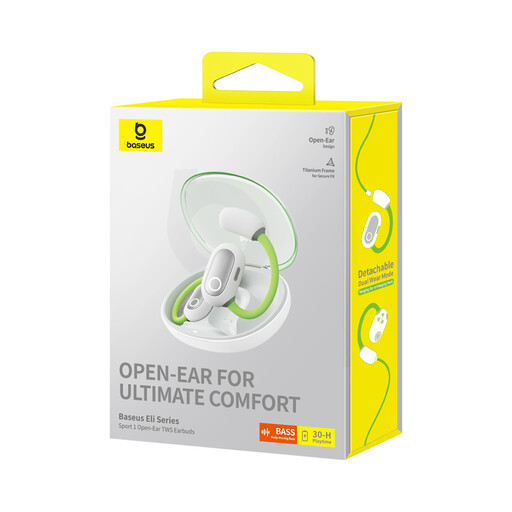
Why it suits this profile: The open-ear design is intended for users who want to remain aware of ambient sound while walking or going about their daily activities.
The product information clearly states that this model is not waterproof. Avoid rain, moisture and liquids, even though the design is suitable for active everyday use.
Open-ear wearing style, a 16.2 mm driver, approximately 7 to 8 hours of playback per charge and approximately 30 hours with the charging case, according to Baseus measurements.
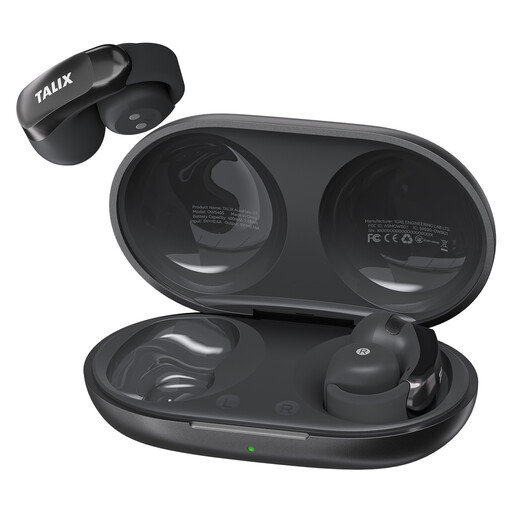
Why it suits this profile: The clip-on shape with a silicone ear hook is designed for users looking for a secure fit during workouts, commuting and online meetings.
The IPX4 rating is suitable for sweat and light rain, but not for submersion or heavy rain. This keeps the level of protection clearly defined.
Each earbud weighs 5.2 grams, with four microphones, Bluetooth 5.3, up to 7 hours of playback per charge and up to 28 hours with the case, according to the product information.
We have put together a complete, up-to-date list of products that fully meet these strict selection criteria and the applicable European safety regulations.
Open the charging case, activate pairing mode and go to Settings > Bluetooth on your phone. Select the name of the earbuds. If it does not work, charge both earbuds, remove any previous Bluetooth pairing and try again. Some models require an app for additional features such as an equaliser, firmware updates or multipoint.
Playback time per charge is often between a few hours and approximately 10 hours, depending on volume, codec and features such as ANC. The battery in the earbuds is not endlessly replaceable. Store the set in its case, avoid heat and charge it with a suitable USB-C cable. The statutory guarantee in the EU is separate from the expected battery lifespan.
ANC can reduce your ability to hear traffic and other ambient sounds. Therefore, do not use this feature while cycling or in situations where awareness of your surroundings is important. Open-ear earbuds let more ambient sound through, but you still need to pay full attention to the traffic.
