
Vandaag of morgen in huis

Kwaliteit gegarandeerd

Welkomstaanbiedingen ontgrendelen: GRATIS bezorging | Tot 80% korting | Gratis 30 dagen JoyPlus-proefperiode
Download de app
Wireless earbuds are useful for train journeys, work, exercise and online meetings. However, a long list of features means little if the fit is wrong, the battery runs out sooner than expected or the microphone struggles with background noise. If you focus only on the Bluetooth version, a high decibel claim or the number of hours of battery life, you may end up paying more than necessary.
In this buying guide, you’ll discover which specifications really matter. We’ll then look at several wireless earbuds for different situations, with information based on the stated product specifications.
Manufacturers often state battery life including the charging case. “30 hours of playback” therefore doesn’t mean you can listen with the earbuds continuously for 30 hours. Active noise cancellation, volume, codec and phone calls also affect battery life.
Pay attention to three figures:
Also check whether the stated figure applies with ANC switched on or off. For example, the Samsung Galaxy Buds4 Pro offer 6 hours with ANC on and 7 hours with ANC off, with up to 26 or 30 hours including the case.
An IPX4 or IPX5 rating doesn’t make earbuds suitable for swimming. These ratings refer to protection against splashes or water jets under specific test conditions. Sweat and light rain are not the same as submersion.
For sports earbuds, a clearly stated splash-resistance rating is useful as a minimum. Also check whether the charging case has the same protection. The JBL Wave Buds 2 have IP54-rated earbuds and an IPX2-rated case, so the case needs more care in rainy conditions.
Active noise cancellation can reduce background noise, but the result depends on the fit, your surroundings and the frequency of the sound. A product with multiple microphones isn’t automatically suitable for every phone call.
Claims about noise cancellation, translation or call quality should therefore be read as the brand’s product information. According to the relevant brand’s own research, performance under ideal conditions may differ from the results in a busy Dutch train or on a windy cycle path.
In-ear earbuds partially seal the ear canal and often provide better passive noise isolation. Half-in-ear models feel less enclosed for some users, but may fit more loosely. Clip-on earbuds with an ear hook offer extra support without the entire earbud sitting deep inside your ear.
Look out for:
Low weight helps, but the shape is just as important. An earbud weighing 3.9 grams can still be uncomfortable if its housing doesn’t suit your ear.
Bluetooth 5.2, 5.3 or 6.0 mainly tells you about the connection standard. Compatibility, multipoint and codec support have more impact on your everyday experience. With multipoint, for example, you can keep a laptop and phone connected at the same time.
These features are practical for everyday use:
Bluetooth headphones with large ear cups may be more comfortable in the office or on long journeys. Wireless headphones are generally less compact than true wireless earbuds, but often offer longer battery life.
Never use a product under water unless this is explicitly permitted. Also bear general safety instructions in mind: don’t listen at high volume for extended periods, and don’t wear earbuds while driving, cycling in heavy traffic or carrying out activities where hearing your surroundings is important.
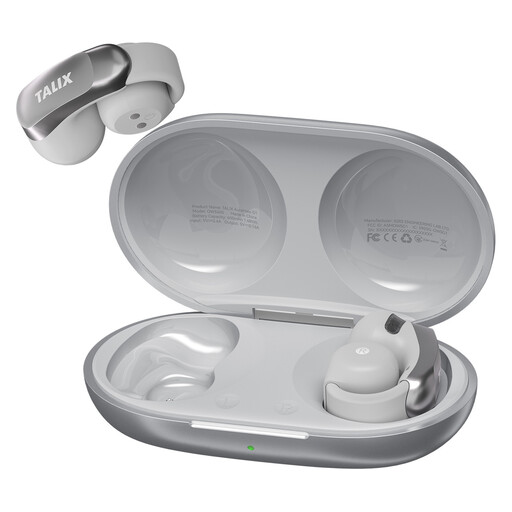
Why it suits this profile: A clip-on design with a silicone ear hook is practical for everyday use and light exercise. The stated 28 hours of total battery life leaves plenty of time for commuting and meetings.
The specifications state both 7 hours per charge and 28 hours with the case. IPX4 is clearly described as protection against sweat and light rain, not submersion.
5.2 grams per earbud, four microphones, Bluetooth 5.3 and two hours of playback after ten minutes of quick charging, according to the product description.

Why it suits this profile: This model is aimed at listeners looking for ANC, customisable audio and a more comprehensive ecosystem. The 2-way speaker configuration and 9-band equaliser offer plenty of adjustment options.
Battery life is specified separately with ANC switched on and off. IP57 is also stated; this does not mean swimming or prolonged submersion is permitted.
ANC, six microphones, Bluetooth 6.1, wireless charging and up to 30 hours of total playback without ANC, according to the product specifications.
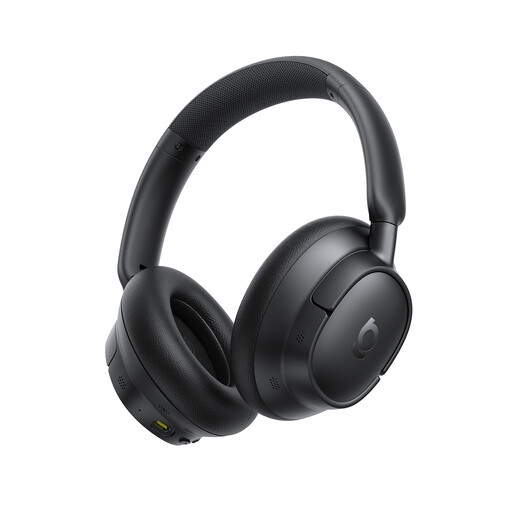
Why it suits this profile: An over-ear model can be suitable for long working days, travel and working from home. The large ear cups provide more coverage than compact earbuds, while the multipoint function is practical when using a phone and laptop.
The manufacturer states separate playback times with ANC switched on and off: 55 and 80 hours. The claim of up to -45 dB is a brand claim; actual noise reduction depends on the fit and your surroundings.
Over-ear design, Bluetooth 6.0, LDAC, five microphones, USB-C and, according to the product description, ten hours of playback after ten minutes of charging.
We’ve put together a complete, up-to-date list of products that fully meet these strict selection criteria and the applicable European safety regulations.
Switch on Bluetooth, open the charging case and activate pairing mode according to the instructions. Then select the product name in the Bluetooth settings. If the device has been paired before, many models will reconnect automatically.
Battery capacity decreases over time. Practical service life depends on charging cycles, heat, moisture and usage. Store the earbuds in the case, charge them with a suitable USB-C charger and don’t leave the battery completely flat for extended periods.
Don’t use ANC as a substitute for staying alert. When cycling in traffic, it’s important to be able to hear horns, sirens and other road users. Where necessary, choose transparency mode or don’t use earbuds in situations with an increased safety risk.
