
Vandaag of morgen in huis

Kwaliteit gegarandeerd

Welkomstaanbiedingen ontgrendelen: GRATIS bezorging | Tot 80% korting | Gratis 30 dagen JoyPlus-proefperiode
Download de app
Wireless earbuds are convenient when you’re out and about, at the office or exercising. However, it’s easy to pay too much for features you’ll rarely use. For example, a higher Bluetooth version does not automatically mean better sound quality. And “noise cancelling” does not mean that every background sound will disappear.
As a Joybuy Product Recommendation Officer, I filter product information based on verifiable specifications and practical use. This helps ensure that an appealing product name does not matter more than comfort, battery life or protection against moisture.
Manufacturers often quote playback time including the charging case. This is not the same as the usage time of a single earbud. For example, the JBL Wave Buds 2 are advertised as offering up to 40 hours with active noise cancellation switched off, while the earbuds themselves are specified to play music for up to 8 hours.
Pay attention to:
A model with a slightly shorter total playback time may be more practical if it charges faster or feels more comfortable.
The letters and numbers in an IP rating indicate what a product is protected against according to the specified standard. IP54, for example, provides protection against dust and splashing water, while IPX5 indicates protection against water jets. Neither rating automatically means that you can swim while wearing the earbuds.
Always check:
Water-resistant earbuds are suitable for various conditions, but the IP rating needs to match how you intend to use them.
Active noise cancellation works by electronically reducing background noise. The experience also depends on the fit, the earbuds and your surroundings. According to the product description, MINISO claims up to -50 dB of adaptive noise cancellation for the MS106. This is a claim from the brand’s product information, not a guarantee that every sound will be reduced in the same way for every user.
Also consider the microphones, wind-noise reduction and the option to hear your surroundings. For cycling, walking in busy traffic or working in a shared space, an open design may actually be more practical than complete isolation.
True wireless earbuds are completely separate from one another and are usually stored in a charging case. They are compact, but the fit can vary considerably from one ear to another. Choose a model with several ear-tip sizes if long-lasting comfort is important to you.
A wireless headset with a headband and ear cushions surrounds or covers the ears. This can be comfortable during long train journeys or when working from home, but this type of headset takes up more space.
Open-ear earbuds deliberately allow background sound through. They can be well suited to walking, commuting or working in an office. Bear in mind that awareness of your surroundings is not a substitute for paying attention in traffic.
Bluetooth 5.3, 5.4 or 6.1 can offer benefits in terms of power consumption and connectivity, but your phone and earbuds must support the features together. Actual connection stability also depends on distance, obstacles and wireless congestion.
For sound quality, codecs such as SBC, AAC and LDAC are relevant. According to the product specifications, LDAC can transmit more audio data, but the playback device and settings must support it. Therefore, check compatibility with your smartphone, tablet or laptop.
For everyday use, a combination of at least a few hours per charge and a charging case is often sufficient. If you travel frequently, you may want to look for models with a quoted long battery life and fast charging.
For earbuds for calls, the number of microphones and the type of noise cancellation provide useful indications. However, they do not tell you everything about voice clarity in windy conditions or heavy traffic. Also look for multipoint, which allows certain models to connect to, for example, a phone and laptop at the same time.
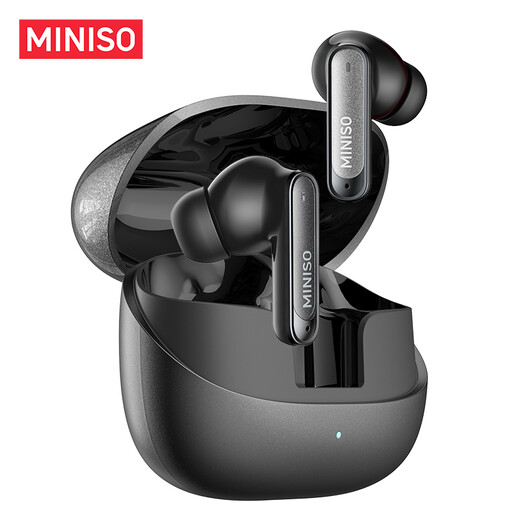
Why it suits this profile: According to the product description, this model combines TWS functionality, IPX5, touch controls and a long total battery life. This makes it a straightforward starting point for music, studying and everyday travel.
The product information lists an IPX5 rating and a quoted total battery life of up to 55 hours. However, check whether these figures match your volume level and usage.
10 mm dynamic driver, Bluetooth 6.0 according to the product title, 6 microphones according to the description and fast charging.

Why it suits this profile: According to the listed specifications, this model is aimed at users who place great value on adjustable sound, ANC, spatial audio and integration with Galaxy devices.
The product sheet lists the battery life separately with and without ANC: up to 6 and 7 hours. This makes it easier to compare the marketing claim with your own usage.
2-way speaker system, 24-bit/96 kHz according to the product information, six microphones, IP57 and wireless charging.
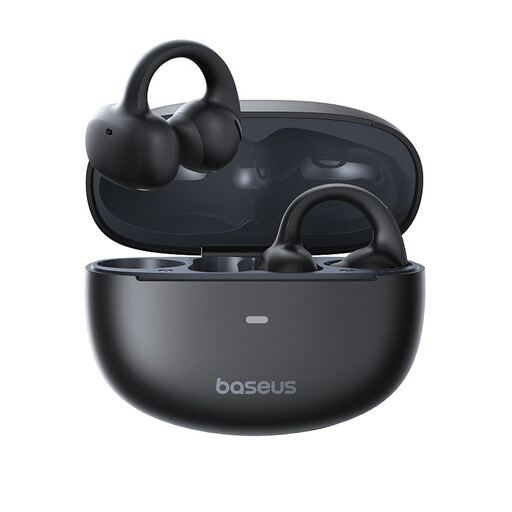
Why it suits this profile: The open-ear clip design is intended for people who want to listen to music while continuing to hear background sounds, for example when walking or working in an office.
The product information explicitly states that this model is not water-resistant. This makes it clear that it is not intended for rain, swimming or damp workouts.
Bluetooth 5.4, a quoted range of 10 metres in an open environment and a 600 mAh charging case according to the product specifications.
We’ve put together a complete, up-to-date list of products that fully meet these strict selection criteria and the applicable European safety requirements.
Open the charging case, activate Bluetooth on your phone and select the earbuds’ name from the list. Some models support fast pairing with Android or Windows devices. If the connection doesn’t work, place both earbuds back in the case and check that they have enough charge.
Usage time per charge is often between a few hours and roughly a working day, depending on volume, ANC and codec. The product’s overall lifespan also depends on the battery, charging frequency, moisture and maintenance. Store the earbuds in the case, keep the charging contacts clean and only charge them with suitable cables and adapters.
The electricity costs of charging are generally minimal. More important considerations are the purchase price, any replacement charging case and the availability of firmware or app support. When buying, also check the warranty, returns policy and battery safety information.
