
Vandaag of morgen in huis

Kwaliteit gegarandeerd

Welkomstaanbiedingen ontgrendelen: GRATIS bezorging | Tot 80% korting | Gratis 30 dagen JoyPlus-proefperiode
Download de app
Wireless earbuds are handy for listening to music, making calls, travelling, working and exercising. However, it can be difficult to compare marketing claims properly. A low price may, for example, come with short battery life, an average fit or a microphone that is barely intelligible outdoors.
Pay particular attention to these three common pitfalls:
The best fit depends on how you use your earbuds. In-ear earbuds partially seal the ear canal, so they can block out more background noise. They are suitable for commuting, studying and listening to music, but not everyone finds silicone earbuds comfortable.
Half-in-ear and open-ear earbuds let in more surrounding sound. This can be practical when walking or cycling, but the volume and clarity may be different in a busy environment. With open-ear models, such as clip-on or bone-conduction earbuds, a secure fit is more important than weight alone.
Always check:
A model with long-battery-life earbuds is useful for travelling and long working days. A charging case with a screen can also help you check the remaining battery level quickly. Bear in mind that volume, codec, Bluetooth connection and noise cancellation can affect the actual playback time.
Bluetooth 5.3, 5.4 or 6.0 mainly indicates the connection standard being used. Also check whether the model supports multipoint, so that you can switch between, for example, a laptop and smartphone.
For calls, earbuds with a microphone and multiple microphones are worth considering. Do not look only at the number of microphones: wind filtering, positioning and software also affect call quality.
An IP rating consists of numbers and letters. The second character refers to water protection. IPX4 is generally intended for splash protection, while IPX5 indicates protection against water jets. The manufacturer’s exact instructions should always take precedence. Only charge earbuds once the connectors are dry.
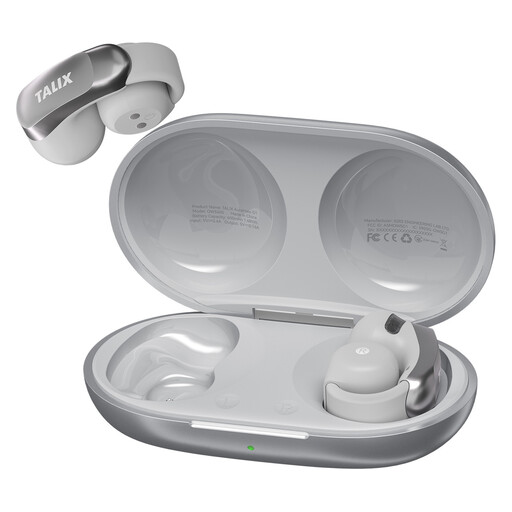
Why it suits this profile: The clip-on design with silicone ear hook is intended for everyday use, online meetings and light exercise. According to the product information, each earbud weighs 5.2 grams.
The product information states both the playback time per charge and the total time with the case: up to 7 and 28 hours. IPX4 is also clearly stated, so submersion is not implied.
Bluetooth 5.3, four microphones, up to 28 hours of total battery life and 2 hours of playback after 10 minutes of charging, according to the product description.

Why it suits this profile: This in-ear model is aimed at users who value advanced audio technology, active noise cancellation and connectivity with Galaxy devices.
The specifications distinguish between 6 hours with ANC and 7 hours without ANC, plus a total runtime of up to 26 or 30 hours with the case.
Two-way speaker system, six microphones, Bluetooth 6.1, IP57 rating, and USB-C plus wireless charging, according to the product specifications.
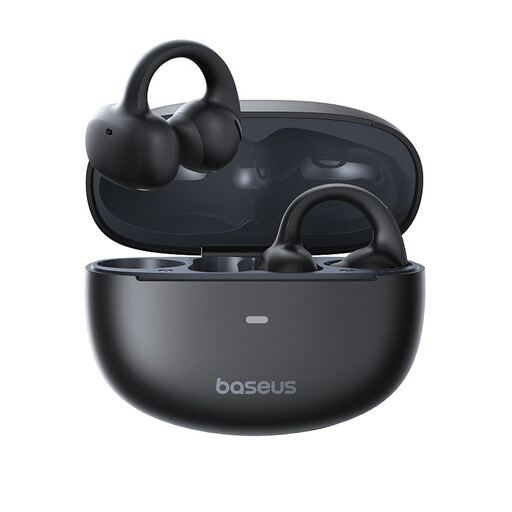
Why it suits this profile: The open-ear clip design is intended for users who want to remain more aware of their surroundings while walking, travelling or going about their daily routine.
The product information explicitly states that this model is not waterproof. This helps prevent you from accidentally using the open-ear earbuds in heavy rain or while swimming.
Bluetooth 5.4, a range of up to 10 metres in open conditions and a 600 mAh charging case, according to the product specifications.
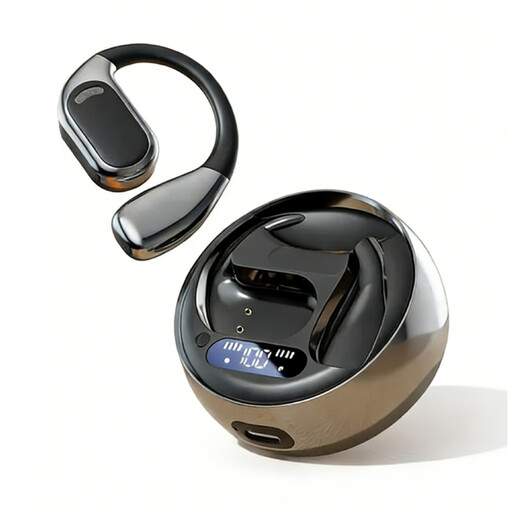
Why it suits this profile: According to the product description, this model supports real-time translation in up to 150 languages and is intended for learning, travel and business conversations.
According to the instructions, operation may depend on a smartphone and its associated app. Before buying, check which language pairs, app features and phone compatibility are available.
Compact in-ear design, Bluetooth connectivity and a real-time translation function, according to the stated product specifications.
We have put together a complete, up-to-date list of products that fully meet these strict selection criteria and the applicable European safety regulations.
First charge the earbuds and put them into pairing mode. Then open Settings > Bluetooth on your smartphone and select the model name. Some Bluetooth earbuds support fast pairing through an app. If the connection does not work, remove the old pairing and try again. Also check that the earbuds are not still connected to another device.
Battery capacity gradually decreases in lithium-ion batteries through charging and use. Battery lifespan depends on charging frequency, temperature, volume and storage. Keep the earbuds in their case, avoid extreme heat and use a suitable USB-C charger. Carefully clean the charging contacts if an earbud is not charging properly.
That depends on the fit and the water-resistance rating. Sports earbuds with an ear hook or clip may stay more securely in place than loose in-ear models. Also check the IP rating and do not use ANC in situations where you need to hear traffic or warnings. For cycling and running, an open-ear design may be more practical, provided you remain fully attentive to your surroundings.
