
Vandaag of morgen in huis

Kwaliteit gegarandeerd

Welkomstaanbiedingen ontgrendelen: GRATIS bezorging | Tot 80% korting | Gratis 30 dagen JoyPlus-proefperiode
Download de app
Wireless earbuds are handy for listening to music on the train, making calls from home, working out and gaming. Yet many models seem more alike on paper than they are in practice. For example, a long battery life may only apply when noise cancellation is switched off. A Bluetooth version also says little about comfort or how clearly you will be heard during phone calls.
With this buying guide, you can compare wireless earbuds based on verifiable specifications. That way, you can avoid paying extra for features you are unlikely to use.
Manufacturers usually state battery life as “up to” a certain number of hours. The result depends on volume, codec, phone calls, the Bluetooth connection and whether ANC is being used. Always check:
A model with a smaller battery can still be practical if the case provides several additional charges.
ANC earbuds use microphones and electronics to reduce ambient noise. How well they work varies depending on the environment. Low, constant sounds such as train engines are often easier to reduce than voices or sudden noises. The fit also has a major impact on the result.
Look out for a transparency mode, too. This lets you hear your surroundings without removing the earbuds. Do not use ANC in situations where you need to be fully aware of traffic, cyclists or public announcements.
An IPX4 or IP54 rating generally indicates protection against splashes, sweat or light rain under the conditions specified by the manufacturer. It does not mean that you can submerge the earbuds. In many models, only the earbuds themselves are protected, not the charging case.
For running and fitness, sports earbuds with a secure fit and a suitable IP rating are often more practical than loose in-ear models. After exercising, check that the charging contacts are dry.
In-ear earbuds partially seal the ear with a silicone tip. This can help with sound isolation, but not every user finds it comfortable. Check whether several ear tip sizes are included. A model with an ear hook or open-ear design may feel more secure during exercise and lets in more ambient sound.
Open-ear models, including some sports models, do not block the ear canal. This is practical for running or cycling, but the listening experience and bass response may differ from those of closed true wireless earbuds.
Bluetooth 5.3 or 5.4 can support a stable connection, but the range is also affected by walls, busy wireless environments and your phone. Also look for:
Bluetooth earbuds with low latency are useful for games and video. For everyday listening, a reliable connection is often more important than simply having the highest Bluetooth number.
Earbuds with a microphone are suitable for calls, online meetings and voice assistants. According to the product description, multiple microphones and ENC can help capture speech more clearly in noisy environments. This is a product claim and does not guarantee the same call quality in every situation.
When it comes to audio codecs, check compatibility with your smartphone. SBC and AAC are widely supported; LDAC requires support from both the earbuds and the playback device.
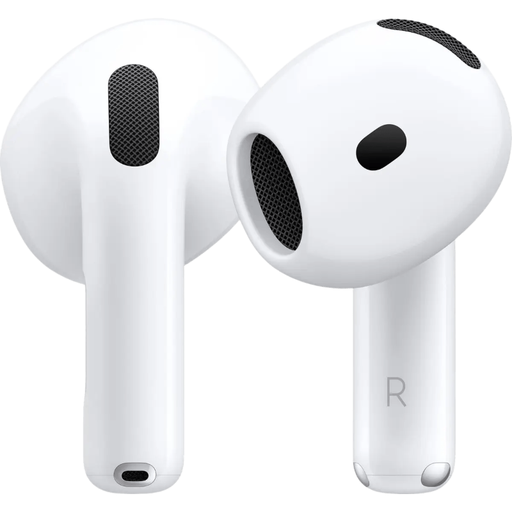
Why it suits this profile: A straightforward choice for everyday use with an Apple device, without active noise cancellation.
The product information clearly states that this model does not have ANC. You therefore do not pay for a noise-cancellation feature that is not included.
USB-C case, Bluetooth 5.3, transparency mode and, according to the product page, up to 30 hours of total battery life.

Why it suits this profile: Designed for Galaxy users looking for ANC, extensive sound settings and a robust IP rating.
The specifications list playback time separately with ANC switched on and off. This makes it easier to assess the battery claim realistically.
2-way speakers, Bluetooth 6.1, USB-C and wireless charging; the product information mentions IP57 and 6 microphones.
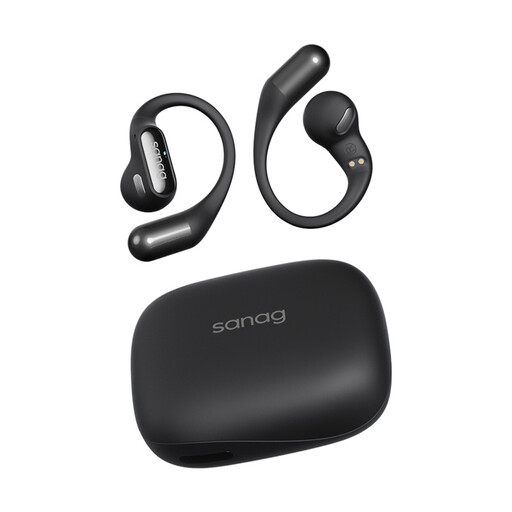
Why it suits this profile: An open-ear model with an ear hook for running, cycling, fitness and activities where staying aware of your surroundings matters.
The open design avoids fully blocking the ear canal. The IPX4 rating is suitable for splashes, not submersion.
Approximately 5.6 grams per earbud, Bluetooth 5.3, USB-C and a charging case offering, according to the product information, around 26 to 48 hours of use.
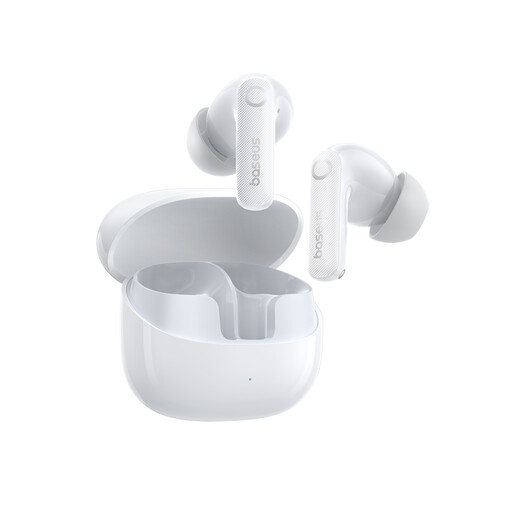
Why it suits this profile: For anyone looking to combine ANC and ample battery capacity while commuting, travelling and making calls.
The specifications state the conditions for the listening time: 11 hours at 50 per cent volume. The total claim of 55 hours should therefore be understood as usage-dependent.
Adaptive hybrid ANC, Bluetooth 5.4, LDAC support, USB-C, IP55 and 6 microphones according to the product information.
We have put together a complete, up-to-date list of products that fully meet these strict selection criteria and the applicable European safety regulations.
Open the charging case, activate Bluetooth on your smartphone and select the name of the earbuds. An app may be required for the first pairing. If the connection does not work, place the earbuds back in the case, check that they have enough charge and remove any old Bluetooth pairing from your phone.
Battery capacity decreases over time. The lifespan depends on charging cycles, heat, moisture and usage. Store the earbuds in the case, charge them with a suitable USB-C charger and do not leave them in a hot car for long periods. The statutory guarantee in the EU is at least two years; additional terms may vary by seller or manufacturer.
Not always. ANC is particularly useful on trains, aeroplanes or in the office, but less essential for quiet use at home. Also compare the fit, microphone quality, battery life, IP rating and compatibility with your phone. A simpler model may make more sense if you mainly listen to podcasts and make the occasional call.
