
Vandaag of morgen in huis

Kwaliteit gegarandeerd

Welkomstaanbiedingen ontgrendelen: GRATIS bezorging | Tot 80% korting | Gratis 30 dagen JoyPlus-proefperiode
Download de app
Wireless earbuds are handy for listening to music and podcasts, making calls, travelling and exercising. Yet many models look similar on paper. For example, a long battery life may only apply when noise cancelling is switched off. An IP rating also doesn’t automatically mean you can use earbuds under a running tap or in a swimming pool.
That’s why the Joybuy Product Recommendation Officer recommends focusing on specifications you can verify. This makes it easier to compare true wireless earbuds, Bluetooth earbuds and other wireless earbuds based on how you plan to use them.
A claim such as “up to 40 or 55 hours” often refers to the total listening time with the charging case. Listening time per earbud is usually considerably shorter. On some models, battery life also changes when ANC is on or the volume is turned up.
Always check:
An IPX4 or IPX5 rating is relevant for sweat and light rain, but not for submersion. Some models protect only the earbuds, not the charging case. That distinction matters if you exercise, cycle or spend a lot of time outdoors.
IP55, IPX4 and IPX5 indicate protection according to the stated product rating. Even so, don’t use the earbuds while swimming or in heavy rain unless the manufacturer expressly says it’s safe to do so.
Noise-cancelling earbuds and ANC earbuds work differently if the silicone tips don’t form a good seal. A loose fit can also mean less bass and a less secure feel. Open-ear earbuds don’t form a complete seal, so you can hear more of your surroundings, but you may experience music differently.
As well as ANC, consider:
Bluetooth 5.3 or 5.4 may be listed in the product specifications for modern connectivity, but it doesn’t tell you on its own how good the sound will be. Check which audio codecs are supported, too. According to the product information, the Baseus Bass EP10 Pro supports SBC, AAC and LDAC. The codec used depends on your smartphone and source device.
A range of around 10 metres is typical in open spaces. Walls, other Bluetooth devices and busy wireless environments can affect the range.
For earbuds for calls, the number of microphones and how noise reduction is described are both relevant. According to the product information, the Baseus Bass EP10 Pro has six microphones and a feature described as AI Clear Calls. This is a product specification, not a guarantee that every caller will hear you equally well in every environment.
Also look for multipoint connectivity. Some models can connect to two devices at once, such as a laptop and smartphone. This is useful for working from home and joining meetings.
USB-C charging ports are now common. Also check the stated charging time and whether fast charging is available. For example, according to the product description, the Sony WF-C710N offers up to one hour of listening after five minutes of charging. The JBL Wave Buds 2 claims up to three hours of extra listening time after ten minutes of charging, while total listening time depends on the settings you choose.
A long battery life is handy for your daily commute. For short training sessions, fast charging may matter more than the highest total battery-life claim.
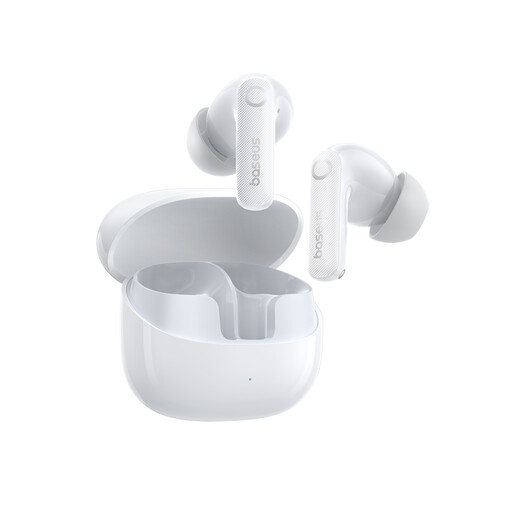
Why it suits this type of user: This model combines Bluetooth 5.4 and a USB-C charging port with a stated listening time of 11 hours per earbud at 50% volume. According to the product information, total battery life with the case is 55 hours.
The product information lists listening time, a charging time of around 1.5 hours and IP55 splash resistance separately. This makes it easier to compare the claim with those for other models.
Bluetooth 5.4, support for SBC, AAC and LDAC, six microphones according to the product specifications, and USB-C.
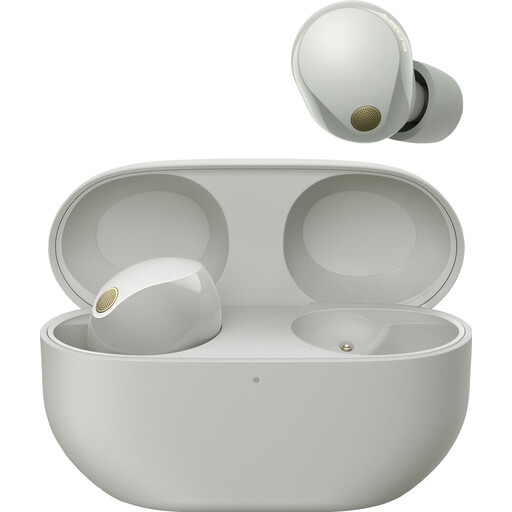
Why it suits this type of user: According to the product information, these in-ear earbuds support LDAC, LC3, AAC and SBC, feature multipoint connectivity and offer a stated battery life of 24 hours with the charging case.
The product information states the battery life with the charging case and mentions a fast-charging feature that provides up to 60 minutes of listening after three minutes of charging.
Active noise cancelling, multipoint connectivity, USB-C and IPX4 splash resistance according to the product specifications.
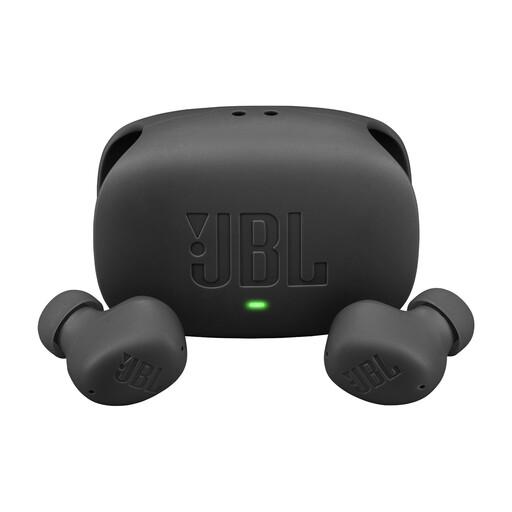
Why it suits this type of user: For commuting, work and exercise, multipoint connectivity, an app with sound settings and a stated total listening time of up to 40 hours without ANC are handy features.
The description distinguishes between listening time with and without ANC and gives the earbuds an IP54 rating. According to the information, the charging case has a separate IPX2 rating.
Multipoint connectivity, USB-C fast charging, ANC, Smart Ambient and compatibility with the JBL Headphones app.
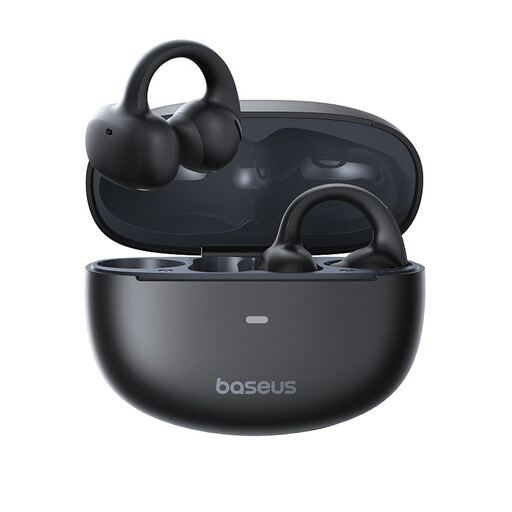
Why it suits this type of user: The open-ear clip design lets in ambient sound and can be a good choice for walking or training when you want to stay alert to your surroundings.
The product information specifically states that this model isn’t waterproof. This makes it clear that it’s less suitable for heavy rain or water sports.
Open-ear design, Bluetooth 5.4, a stated range of up to 10 metres and a 600 mAh charging case.
We’ve put together a complete, up-to-date list of products that meet these strict selection criteria and the applicable European safety regulations.
Sports earbuds often have an ear hook or clip to help keep them in place. Always check the IP rating, and avoid models without clearly stated protection if you sweat a lot.
Open-ear earbuds are a good choice when you need to hear what’s happening around you. They don’t fully block the ear canal, so they generally offer a different listening experience from in-ear models.
AI translation earbuds often work with a smartphone app. According to the product description, the VoxorAI M76 supports up to 150 languages. Before you buy, check which languages are available and whether you need an app and an internet connection. Translation features aren’t a substitute for human interpretation in important conversations.
First, charge the earbuds and charging case. Then open the Bluetooth settings on your smartphone, put the earbuds into pairing mode and select the product name. Some models support fast pairing with Android devices. If you have any problems, check the manufacturer’s manual or reset instructions.
Their lifespan depends on charging cycles, temperature, volume, moisture and daily use. Store the earbuds in the case, keep the charging contacts clean and avoid exposing them to heat. A drop in battery capacity is normal with built-in lithium batteries; any replacement should be carried out according to the safety instructions.
The earbuds themselves use relatively little power. The charging case needs to be recharged regularly, and features such as ANC can shorten listening time. You can usually charge the case alongside other devices using USB-C, but use a suitable cable and adapter in line with the product instructions.
