
Vandaag of morgen in huis

Kwaliteit gegarandeerd

Welkomstaanbiedingen ontgrendelen: GRATIS bezorging | Tot 80% korting | Gratis 30 dagen JoyPlus-proefperiode
Download de app
Wireless earbuds are handy for music, podcasts, calls, commuting and exercise. Yet many models look better on paper than they perform in everyday use. For example, a long battery life may only include the charge case as well as the earbuds. And a Bluetooth version tells you little about comfort or microphone quality.
Use this practical guide to focus on the specifications that really matter for everyday use in the UK. Then take a look at some popular options for different needs.
Manufacturers often quote total play time, including the charge case. So always check both figures:
For example, a model with 36 hours of total battery life may offer around 7.5 hours per charge. That’s enough for everyday use, but it’s not the same as 36 hours of continuous listening.
Look out for the difference between:
Claims such as “up to -50 dB” or “blocks 99.7% of surrounding noise” come from the brand’s product information. According to the brand’s own testing, these results may apply under specific conditions. Your experience will depend on the fit, surroundings and volume.
An IP rating shows what conditions a product is designed to withstand according to its stated level of protection. Always check whether the rating applies to the earbuds, the charge case or both.
Even if your earbuds are water-resistant, make sure the charge case is dry before connecting it to a power source.
A good fit means you won’t have to keep readjusting your earbuds. In-ear models usually seal the ear canal more effectively, making them a good choice for commuting. Semi-in-ear models feel more open, but may not stay as securely in place for everyone.
Open-ear wireless earbuds, such as earclip models, sit around or alongside the ear. They can be comfortable for working in the office or going for a walk when you want to stay aware of your surroundings. When cycling or near traffic, it’s important to stay alert to what’s around you.
Bluetooth 5.4 and other recent versions can help provide an efficient, stable connection. But your experience also depends on your phone, codec, distance and software. So check for:
The Bluetooth version alone doesn’t guarantee better sound quality. The driver, audio codec and tuning are just as important.
If you make frequent calls or join a lot of meetings, don’t just look at the number of microphones. Wind, traffic and your distance from the microphone can all affect how clearly you come across. Product descriptions mentioning ENC or AI noise cancellation refer to a feature claimed by the brand, not a guaranteed result in every situation.
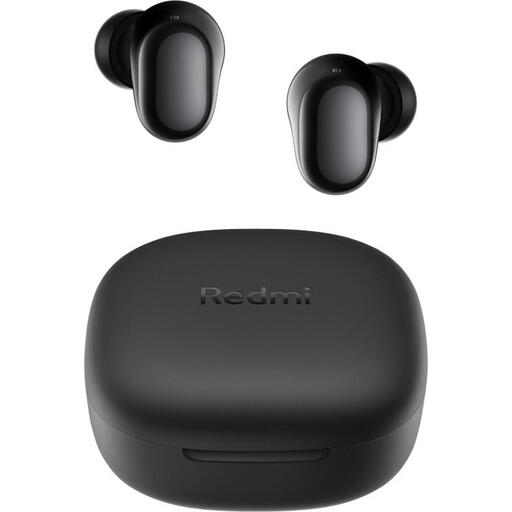
Why it suits this profile: This model has a compact design, Bluetooth 5.4 and a USB-C charging port. According to the product specifications, it offers 7.5 hours of play time per charge and 36 hours with the charge case.
The battery life per charge and total battery life are clearly stated. The IPX4 rating isn’t presented as full waterproofing; according to the specifications, the model is only suitable for protection against sweat and splashes.
Bluetooth 5.4, a 10 mm dynamic driver, extra ear tips in two sizes and a charge case that isn’t described as water-resistant.
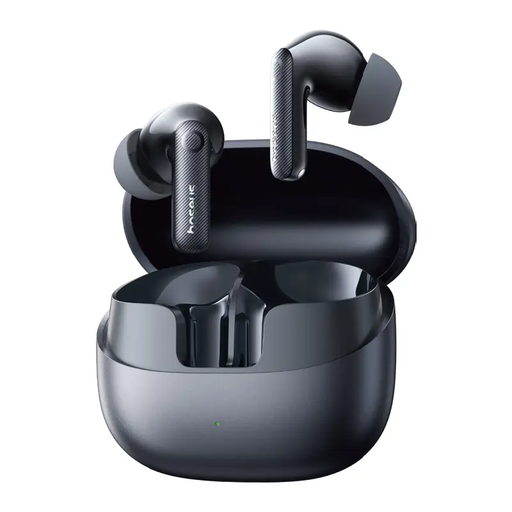
Why it suits this profile: According to the product information, this model focuses on ANC, calls and long total play time. It supports Bluetooth 5.4 and LDAC, as well as SBC and AAC.
The product information states both around 11 hours per charge and around 55 hours with the charge case. It also lists an IP55 rating for water and sweat resistance, not for swimming or submersion.
50dB adaptive hybrid ANC according to the product description, six microphones for calls, LDAC support and USB-C.
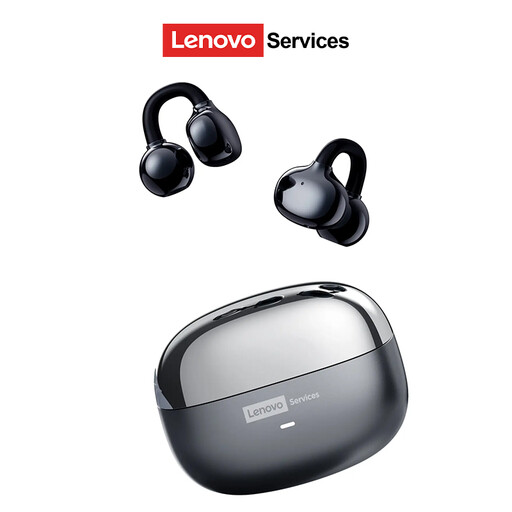
Why it suits this profile: The open-ear earclip design is intended for office work, walking and exercise when you want to stay aware of your surroundings. According to the product description, it works with Android, iOS and Windows.
The open design means you don’t have to rely entirely on transparency mode to stay aware of your surroundings. The product description quotes battery life of up to 25 hours.
Open-ear design, Wireless 6.0 according to the product description, support for multiple operating systems and up to 25 hours of battery life.
We’ve put together a complete, up-to-date list of products that meet these strict selection criteria and the applicable European safety regulations.
Open the charge case or take the earbuds out, then activate pairing mode as described in the manual. Next, open the Bluetooth settings on your phone and select the product name. If the connection doesn’t work, remove any previous pairing and try again. Also check that both earbuds are sufficiently charged.
Battery life per charge often ranges from a few hours to around a full working day. The overall lifespan of the built-in battery depends on charging cycles, temperature and use. Don’t leave your earbuds completely flat for long periods, and don’t charge them in a damp environment. A charge case can significantly extend their practical use time.
Not necessarily. ANC can be useful on the train, in the office or on a flight, while an open-ear model may be a better fit if you want to stay aware of surrounding sounds. Don’t use music or noise cancellation in traffic situations where you need to hear warning signals. Keep the volume at a safe level, too, and take regular breaks.
