
Vandaag of morgen in huis

Kwaliteit gegarandeerd

Welkomstaanbiedingen ontgrendelen: GRATIS bezorging | Tot 80% korting | Gratis 30 dagen JoyPlus-proefperiode
Download de app
Wireless earbuds are convenient for music, commuting, calls, studying and exercise. However, a long list of features does not automatically mean a model suits the way you use it. Bluetooth earbuds in particular tend to lead to the same purchasing mistakes: an average fit, battery life that only applies under ideal conditions, or an IP rating that is misunderstood.
In this buying guide from the Joybuy Product Recommendation Officer, you’ll learn what to consider before buying wireless earbuds. The recommendations below are based on stated product specifications rather than general marketing claims.
Some models rely solely on passive noise isolation by creating a good seal in the ear. Active noise cancellation, commonly referred to as ANC, uses microphones and electronics to reduce ambient noise. The result varies depending on your ears, the fit and the surrounding sound environment.
Therefore, check whether the product page explicitly mentions ANC, “active noise cancelling” or an equivalent term. A claim such as “up to -50 dB” is a stated maximum value, not a guarantee for every user or situation.
A manufacturer may quote the total playback time including the charging case. This is different from the playback time of a single earbud. ANC, volume, codec, phone calls and temperature also affect battery life.
At a minimum, compare these three specifications:
A model with slightly shorter total battery life may be more practical if it recharges quickly enough for your train journey or working day.
IPX4 means protection against splashing water, while IPX5 describes protection against water jets. This does not mean you can submerge the earbuds or swim with them. With sports earbuds, you should also keep the case dry: a water-resistant case does not automatically have the same IP rating as the earbuds.
Bluetooth 5.3, 5.4 or 6.0 can offer benefits in terms of power consumption, connectivity and latency. However, the overall experience also depends on your smartphone, laptop or tablet. A newer Bluetooth version alone is therefore not a sufficient reason to choose a particular model.
For everyday use, multipoint or intelligent connectivity with two devices can be especially useful. Make sure multipoint is explicitly listed, however. On some models, “multi-device” only means that multiple devices can be paired—not that they can remain connected simultaneously.
A larger driver, such as a 10 mm or 12.4 mm unit, provides information about the hardware but does not, by itself, predict sound quality. Also check for supported codecs such as SBC, AAC or LDAC, particularly if you use an Android smartphone. In addition, make sure your device supports the codec you want to use.
If you mainly listen to podcasts or make phone calls, clear voice reproduction and a capable microphone may be more valuable than powerful bass.
In-ear models generally create a better seal in the ear canal, but not everyone finds them comfortable. Half-in-ear models feel more open, while clip-on or ear-hook earbuds may stay more securely in place during movement.
Pay attention to:
For calls in busy environments, check the number of microphones and whether a call-noise-reduction feature is listed. Claims such as “AI-clear calls” come from the brand’s or seller’s product description and should not be interpreted as a guaranteed result.
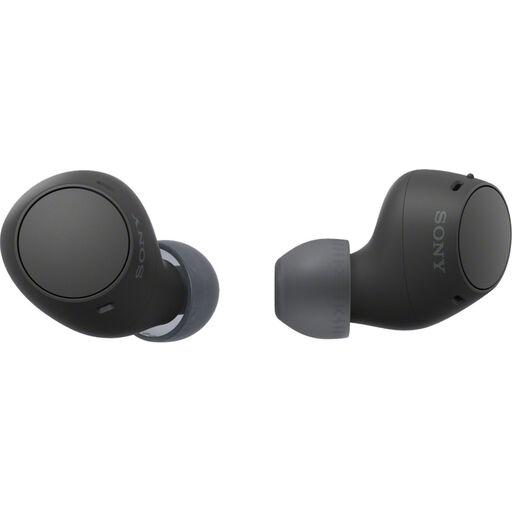
Why it’s a good fit: A compact model for everyday use, travel and calls. The stated specifications include Bluetooth 5.3, multipoint, a microphone and 22 hours of total battery life.
The product information lists IPX4 splash protection and battery life including the case separately. This makes the key expectations clearly defined.
Lightweight design at 4.6 grams per earbud, a USB-C case, multipoint and a stated 22-hour battery life.

Why it’s a good fit: Designed for users who value ANC, adjustable sound and seamless smartphone integration.
The stated specifications distinguish ANC battery life from battery life without ANC: 6 and 7 hours per charge respectively.
Two-way speakers, Bluetooth 6.1, six microphones, IP57 and up to 30 hours in total with the case according to the product information.
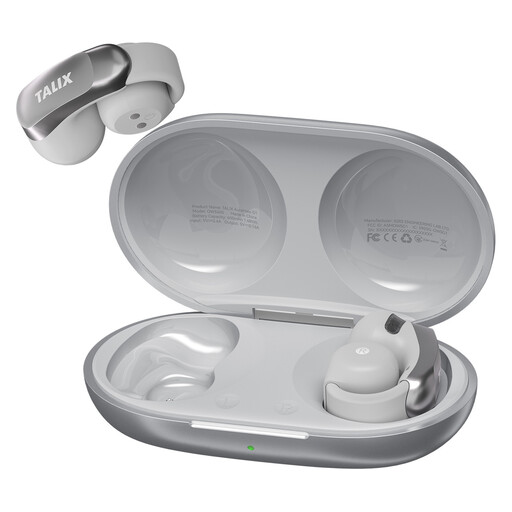
Why it’s a good fit: The clip-on design and silicone ear hook are intended for walking, fitness and commuting, where a secure fit is essential.
IPX4 is clearly suitable for sweat and light rain, but not for submersion. This prevents an overly broad interpretation of water resistance.
Bluetooth 5.3, four microphones, up to 7 hours per charge and 28 hours with the case according to the product description.
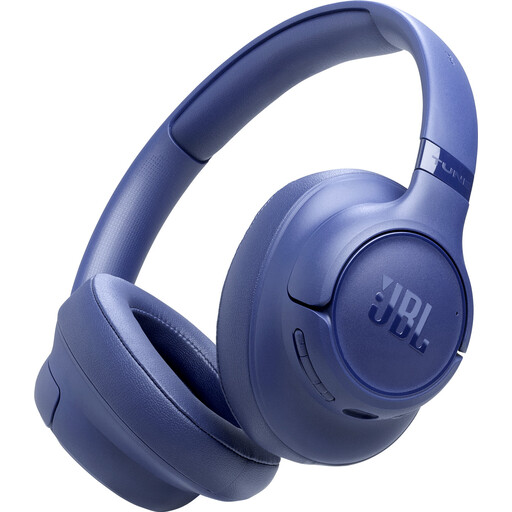
Why it’s a good fit: These wireless over-ear headphones are well suited to working from home, travelling and extended listening sessions.
The specifications list both playback time and talk time. This makes the claim of up to 76 hours easier to put into context.
40 mm drivers, two microphones, Bluetooth 6.0, multipoint and a foldable over-ear design.
Browse a current selection of Bluetooth in-ear earbuds with different combinations of battery life, fit, microphones and noise cancellation.
First charge the earbuds, open the case and enable Bluetooth on your phone. Select the model name from the list of available devices. If pairing does not work, remove an old connection from the Bluetooth settings and reset the earbuds according to the manual.
Battery capacity gradually decreases over successive charging cycles. Practical service life depends on usage, charging habits, heat and maintenance. Store the earbuds in their case, keep the charging contacts clean and avoid charging them in a damp environment. Replacing the built-in battery is not straightforward on many true wireless earbuds.
Active noise cancellation can reduce ambient sound. Use transparency mode or disable the feature whenever you need to hear traffic, cyclists or other warnings. Always follow traffic regulations and avoid using earbuds if they reduce your attention or compromise your safety.
