
Vandaag of morgen in huis

Kwaliteit gegarandeerd

Welkomstaanbiedingen ontgrendelen: GRATIS bezorging | Tot 80% korting | Gratis 30 dagen JoyPlus-proefperiode
Download de app
Wireless earbuds are handy for listening to music, making calls, travelling, gaming and exercising. But a long list of features doesn’t always tell you what they’ll be like to use every day. A model with a large battery, for example, may be less suitable if it’s uncomfortable to wear. And a product advertised with “noise cancellation” may not offer what you expect.
So, before you buy Bluetooth earbuds, look out for these common pitfalls.
Brands sometimes quote playback time on a single charge, and sometimes the total playback time including the charging case. These are different figures. According to the product specifications, the REDMI Buds 8 Active offer up to 7 hours per charge and up to 37 hours with the case. The Redmi Buds 6 Play offer up to 7.5 hours per charge and 36 hours with the case.
Using ANC, listening at high volume and making phone calls can also affect actual battery life. Check both figures and make sure you know whether the stated time applies to the earbuds, the case or both together.
ANC, or active noise cancellation, uses microphones and electronic processing to reduce background noise. ENC is mainly designed to improve voice transmission during calls. Passive noise isolation, on the other hand, comes from how the earbuds fit.
A product listing may mention features such as “AI noise cancellation” or “clear calls”. Treat these as claims from the product information, not as guaranteed results in every situation. Wind, traffic, voices and the fit of the earbuds can all affect how well they work.
An IP rating indicates the conditions a product is tested to withstand under the stated test standard. Pay attention to the difference between IPX4, IPX5, IP54 and IP57. The rating may also apply only to the earbuds, not the case.
According to the product information, the Redmi Buds 6 Play earbuds have an IPX4 rating. The case is not waterproof. That makes them suitable for careful everyday use, but not for rinsing or submerging. Models with a higher rating aren’t automatically suitable for swimming either.
Bluetooth 5.4 is found in various current true wireless earbuds. A newer version may offer benefits in terms of power consumption and connectivity, but it doesn’t necessarily tell you anything about sound quality. Also check which codecs are supported, such as SBC, AAC or LDAC, and whether your smartphone supports them.
For video and gaming, synchronisation and latency matter. The Lenovo LE302 lists Wireless 6.0 and a zero-latency experience in its product description. Treat this as a manufacturer’s specification; the experience in practice may vary depending on the device and how you use it.
Wireless in-ear headphones partially seal the ear canal, which can help block out more background noise. Semi-in-ear models sit less deeply in the ear, while open-ear earbuds don’t block the ear. This can be more comfortable in the office, while walking or when exercising and you want to stay aware of the sounds around you.
Open-ear models don’t offer the same seal as in-ear earbuds with ANC. According to the product information, the Lenovo LE302 is a lightweight open-ear model with an ear-clip design. With this type, check that it stays securely in place when you move and that the controls are easy to reach.
If you make calls often, it’s worth checking the number of microphones and the call features listed. Wireless earbuds with a microphone may offer ENC or other forms of voice noise reduction, but call quality also depends on wind, how far you are from your phone and the app you’re using.
A USB-C port is convenient, as you can often use the same cable for other devices. Also check the charging time, playback time per charge and the capacity of the case. A longer total battery life is especially useful when travelling, on workdays and on long train journeys.
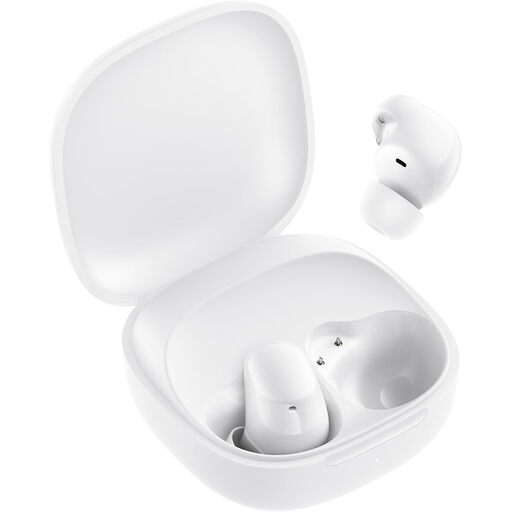
Why it suits this type of user: A straightforward model for listening to music and podcasts, and making calls with Android or iOS devices. According to the product information, each earbud weighs 3.6 grams and they come with additional ear tips in two sizes.
Battery life per charge and total battery life are clearly stated. The IPX4 rating applies only to the earbuds; the case should be kept dry.
Bluetooth 5.4, USB-C, up to 7.5 hours per charge and up to 36 hours with the case.

Why it suits this type of user: Designed for users looking for active noise cancellation, customisable audio and extensive controls. The product information lists a two-way speaker system and support for Galaxy features.
The stated playback time distinguishes between ANC on and off. It also clearly states that IP57 protection covers splashes and does not mean the earbuds are suitable for swimming.
ANC, six microphones, USB-C, wireless charging and up to 30 hours of total playback without ANC, according to the product details.
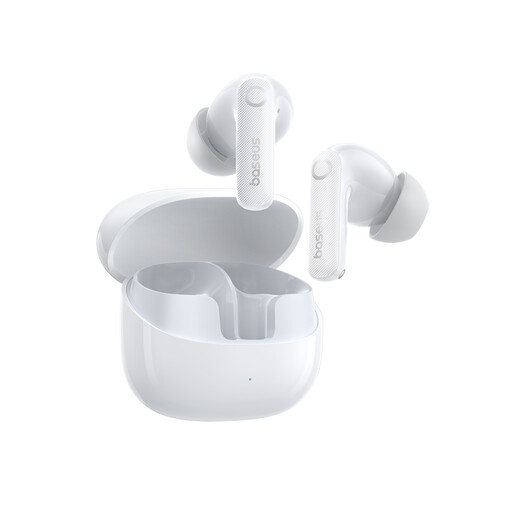
Why it suits this type of user: A good choice if you want to combine ANC, long battery life and call features while travelling, commuting or working in the office.
The product information states both playback time per charge and total battery life. IP55 is described as splash-resistant, not suitable for submersion.
Adaptive hybrid ANC, six microphones, USB-C, support for SBC, AAC and LDAC, and 11 hours of listening time at 50% volume, according to the specifications.
We’ve put together a full, up-to-date list of products that meet these strict selection criteria and the current European safety requirements.
Open the charging case, activate pairing mode and go to Settings > Bluetooth on your phone. Select the name of the earbuds. If they won’t connect, first remove any previously saved pairing and put the earbuds back in the case. Also check that both earbuds are sufficiently charged.
Their lifespan depends on charging cycles, heat, moisture and everyday use. Battery capacity decreases over time. Don’t leave the case in direct sunlight or extreme temperatures for long periods, and charge it with a suitable USB-C charger. Clean the contacts carefully on a regular basis and keep the charging port dry.
It depends on the fit and IP rating. Sports earbuds with suitable splash or sweat resistance may be fine in light rain or during exercise, but always check whether the rating also applies to the case. Don’t use earbuds while swimming unless the manufacturer explicitly says they’re suitable. When cycling or near traffic, make sure you can still hear the sounds around you.
