
Vandaag of morgen in huis

Kwaliteit gegarandeerd

Welkomstaanbiedingen ontgrendelen: GRATIS bezorging | Tot 80% korting | Gratis 30 dagen JoyPlus-proefperiode
Download de app
Wireless earbuds are handy for music, podcasts, calls, travel and exercise. But a long list of features doesn’t automatically mean a model will suit your day-to-day needs. A low price may look tempting, for example, only for the fit to disappoint or the battery life to match the claims only in ideal conditions.
Look out for these three common pitfalls:
Marketing claims without context
Terms such as “noise cancelling”, “hi-fi” and “waterproof” aren’t always explained using a measurable standard. Check whether the product lists an IP rating, battery test conditions or Bluetooth version.
Confusing earbud battery life with the charging case’s battery life
“Up to 40 or 55 hours of listening” often means the earbuds’ playback time plus several recharges from the case. Check the battery life per charge too, and whether noise cancelling is switched on.
Choosing the wrong shape for your ears
In-ear earbuds with silicone tips fit differently from ear-hook or open-ear models. A model may perform well technically but still feel uncomfortable or slip out during exercise.
For everyday use, Bluetooth earbuds with a recent Bluetooth version are a practical choice. Bluetooth 5.3 or Bluetooth 5.4 may support a stable connection and low power consumption, but your actual experience also depends on your phone, laptop and the codec used.
Check:
A model with Bluetooth 5.4 won’t automatically sound better than one with Bluetooth 5.3. Compatibility and app quality are just as relevant.
Noise-cancelling earbuds electronically reduce background noise. This can be useful on the train, in the office or on a flight. ANC performance generally varies depending on the surroundings and the fit. A good seal with the right ear tips can already block out a lot of background noise.
It’s worth knowing the difference between:
For calls, multiple microphones and noise reduction for conversations are useful. However, manufacturers’ claims of “crystal-clear calls” don’t guarantee the same results in every situation. Wind, traffic and a busy office can all affect call quality.
Don’t look only at the total playback time. For example, the Sony WF-C710N claims up to 30 hours with noise cancelling on and up to 40 hours with it off, including the charging case. The Baseus Bass EP10 Pro claims up to 11 hours of listening from the earbuds at 50 per cent volume and up to 55 hours with the case.
Also check:
IPX4 means protection against splashes in practice, not immersion. IP55 offers greater protection against dust and water jets according to its stated rating, but it isn’t suitable for swimming. For many models, the case is less water-resistant than the earbuds. Dry both parts before charging them.
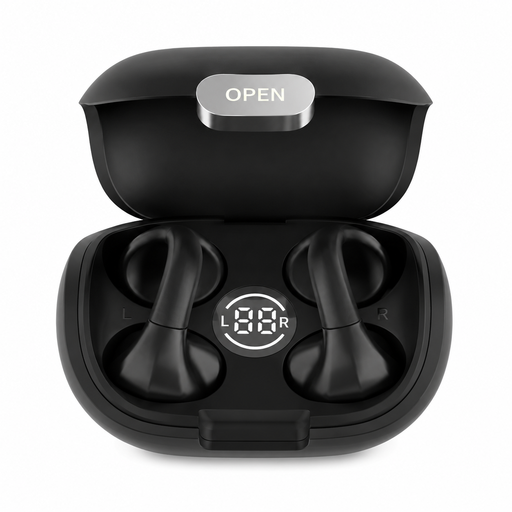
Why it suits this user: This model combines an ear-hook design with Bluetooth 5.4, touch controls and a digital display on the case. It’s a practical choice for everyday use and light exercise.
The product information states a playback time of around 5 to 7 hours per charge and a 300 mAh case. This gives you a clearer idea of what to expect each time you use them.
Bluetooth 5.4, ear-hook design, touch controls and a charging case with a display.

Why it suits this user: This model is designed for users who value ANC, multiple microphones, extensive controls and pairing with Galaxy devices.
The specifications list ANC, six microphones, an IP57 rating, Bluetooth 6.1 and separate playback times with ANC on and off.
Two-way speakers, ANC, IP57, wireless charging and up to 30 hours in total with the case, according to the product information.
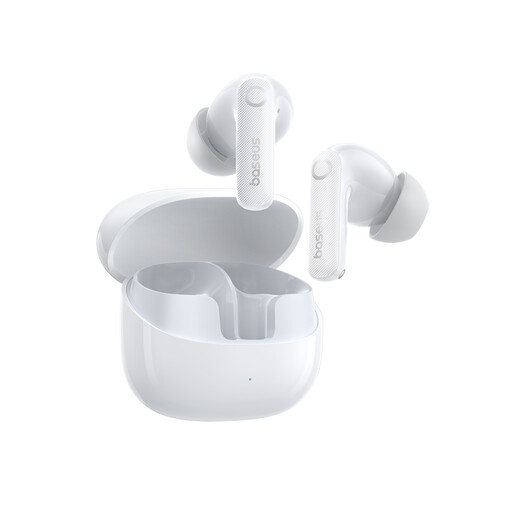
Why it suits this user: For travel, commuting and longer listening sessions, adaptive ANC, long total playback time and multiple microphones are useful features.
The product information gives the test conditions for the playback time: around 11 hours at 50 per cent volume. It also lists IP55; the warning states that the earbuds aren’t suitable for immersion.
Bluetooth 5.4, SBC/AAC/LDAC, adaptive hybrid ANC, six microphones and USB-C.
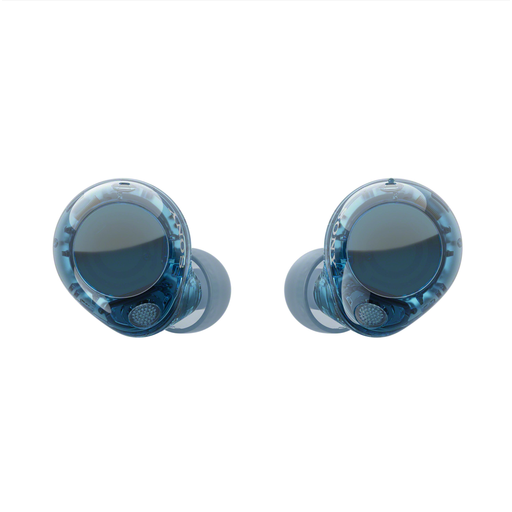
Why it suits this user: These true wireless earbuds are a good choice if you’re looking for compact wireless in-ear headphones with ANC, multipoint connectivity and an app for customising settings.
The IPX4 rating is clearly stated, indicating protection against splashes. The case isn’t designed to withstand liquids, so take care when storing and charging it.
ANC, multipoint connectivity, microphone, Bluetooth 5.3, USB-C and up to 30 hours with ANC on, according to the product information.
We’ve put together a complete, up-to-date list of products that meet these strict selection criteria and the applicable European safety regulations.
First, charge the earbuds, open the case and switch on Bluetooth on your phone. Then select the product name from the list of available devices. Some models require a brand app to access extra features, firmware updates or touch-control customisation.
Their lifespan depends on charging cycles, use, volume, heat and moisture. Keep the earbuds in their case, charge them with a suitable USB-C cable and avoid exposing them to heat or moisture for long periods. Battery capacity decreases over time, so a long stated playback time won’t necessarily remain the same for years.
That depends on the fit and IP rating. Sports earbuds with ear hooks can provide extra stability while you’re moving. Models with a suitable splash-resistance rating are more practical for sweat and light rain. Always check whether the charging case is protected too, and don’t use earbuds in situations where you need to hear your surroundings clearly.
