
Vandaag of morgen in huis

Kwaliteit gegarandeerd

Welkomstaanbiedingen ontgrendelen: GRATIS bezorging | Tot 80% korting | Gratis 30 dagen JoyPlus-proefperiode
Download de app
Wireless earbuds are handy for commuting, working from home, watching films, making calls and exercising. However, a long list of features doesn't automatically mean a model will suit your daily use. A high battery claim, for example, might only apply with noise cancellation switched off, while an IP rating doesn't mean you can swim with them.
In this guide from the Joybuy Product Recommendation Officer, you'll find out what to look for in wireless earbuds, Bluetooth earbuds and true wireless earbuds. The recommendations are based on verifiable product specifications and clearly stated usage features.
Manufacturers often state battery life under specific conditions. For the JBL Wave Buds 2, the quoted total playtime applies with ANC off, for example. The Apple AirPods Pro 3 claim up to 8 hours with active noise cancellation and up to 10 hours in transparency mode. So don't just compare the highest number; check:
An IP54, IP55 or IP57 rating relates to specific conditions. According to the product information, the Samsung Galaxy Buds4 Pro are rated IP57 for dust and water resistance. The manufacturer notes that this does not make them suitable for swimming. The Apple AirPods 4 have IP54 and are not waterproof according to the specifications.
For exercise or cycling in the UK, protection against sweat and light rain is useful, but always check the exact IP code. Damage from submersion is not automatically covered under normal product warranty.
Terms like "AI call noise reduction", "3D audio" and "up to -50 dB ANC" are product claims. Don't take them as guaranteed results: according to the relevant brands' or sellers' own information, these features are designed to improve calls, spatial audio or ambient sound. The actual experience depends on factors such as fit, phone, environment and software.
For music, podcasts and films, the driver design, codec support and fit are relevant. A larger driver doesn't automatically mean better sound. The Baseus Bass EP10 Pro, for example, supports SBC, AAC and LDAC, while the JBL Tune 210 works with a cable and 3.5mm connection.
Wired in-ear earbuds don't need Bluetooth pairing or recharging. That makes them practical for laptops, tablets, games consoles or older phones with a headphone jack. Just check whether your device still has a 3.5mm port.
Earbuds with noise cancelling use microphones and electronics to reduce ambient noise. ANC is especially useful on the train, in the office or during a flight. It typically uses extra battery power and doesn't replace hearing protection.
A transparency mode lets ambient sound in. That can be handy on the street or when someone at the office speaks to you. For calls, the number of microphones, their placement and the software processing matter. The Samsung Galaxy Buds4 Pro feature six microphones; the JBL Tune 210 has one built-in microphone according to the product description.
In-ear earbuds partially seal the ear canal. A good fit helps keep the buds stable and can improve sound isolation. The Apple AirPods Pro 3 come with five sizes of silicone ear tips. Other models, such as the Apple AirPods 4, don't mention multiple ear tip sizes.
Also consider the weight and shape. For sports earbuds, a secure fit, an appropriate IP rating and simple controls are more important than features you rarely use. Open-ear models, like the Baseus Bowie MC1, let in more ambient sound. According to the safety information, they are not intended for use while cycling, driving or operating machinery where attentiveness is required.
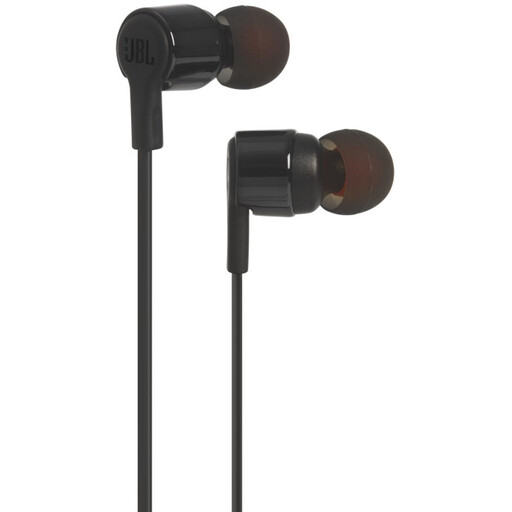
Why this fits: A straightforward choice for music, podcasts and calls without Bluetooth or charging. The 3.5mm connection works with devices that have a headphone jack.
Playtime doesn't depend on a battery. You don't need to compare battery claims with ANC on or off.
JBL Pure Bass Sound, integrated microphone, volume control and no charging case needed.
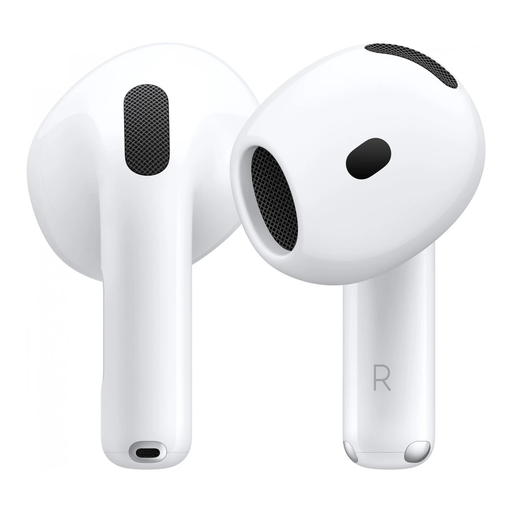
Why this fits: Designed for daily use with iPhone, iPad and other Bluetooth devices. The USB-C case and stem controls suit straightforward use.
The specifications separately state up to 5 hours of music and over 30 hours with the case. That makes the battery claim easier to assess.
Active noise cancellation, transparency mode, USB-C and wireless charging according to the product information.

Why this fits: A model for those who value ANC, multiple microphones and pairing with Galaxy devices.
The stated playtime is split into 6 hours with ANC and 7 hours without ANC. The IP57 rating is also listed separately.
Six microphones, 2-way speaker system, Bluetooth 6.1, wireless charging and up to 30 hours with the case without ANC.
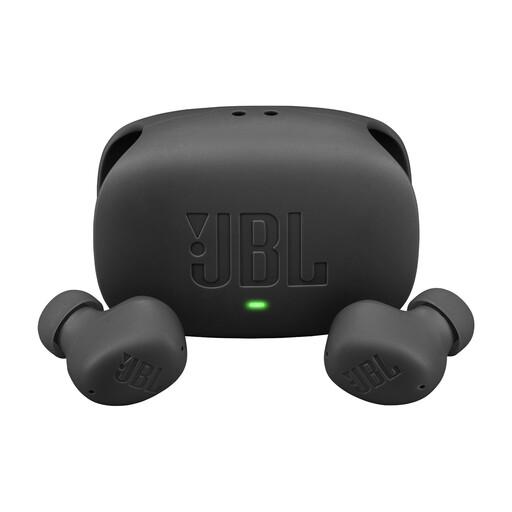
Why this fits: Practical for commuters and home workers who switch between laptop and phone.
The product information states separate playtime and notes that up to 40 hours total applies with ANC off.
ANC, Smart Ambient, multipoint, IP54 and USB-C fast charging with, according to the description, 3 hours extra playback after 10 minutes of charging.
Browse a current selection of music earbuds and compare models on connection type, fit, ANC, battery life and price.
The lifespan depends on battery wear, charging habits, volume and software. Manufacturers usually state a playtime per charge, not a fixed lifespan in years. Store the earbuds in a cool, dry place and avoid prolonged exposure to heat.
They can be, but results vary by model and environment. Look at the number of microphones, whether noise cancellation for calls is mentioned, and user reviews. A model with earbuds with a microphone isn't automatically clear on a busy street or train.
Wired earbuds don't need charging and have no battery that ages. Wireless models, on the other hand, offer more freedom of movement, a charging case and features like ANC or multipoint. The right choice depends on your devices and how often you listen on the go.
