
Vandaag of morgen in huis

Kwaliteit gegarandeerd

Welkomstaanbiedingen ontgrendelen: GRATIS bezorging | Tot 80% korting | Gratis 30 dagen JoyPlus-proefperiode
Download de app
A desk free of cable clutter and devices that are always fully charged. That's the promise of a wireless charger. But in practice, it can be a different story. A charger that's too slow, a phone that slides off during the night, or a charging station that gives up the ghost after a few months. Choosing the right charger is trickier than it seems.
Before you make a purchase, it's wise to understand the common problems. Many marketing claims hide design flaws or limitations that only become apparent after you buy.
MagSafe charger. Cheaper models often have weak magnets, causing your iPhone to misalign, lose its connection, or even fall off. This leads to inefficient charging and frustration.To avoid these pitfalls, it's important to look at a few key technical specifications. These determine the performance, safety, and user-friendliness of your wireless charger.
The power, measured in watts (W), determines the charging speed. A standard wireless charger delivers 5W to 7.5W. A wireless fast charger provides 15W or more. Here, the new Qi2 standard (pronounced 'chee-two') is a major development.
Qi2 is the latest universal standard for wireless charging. Its main advantage is the integration of a magnetic ring, similar to Apple's MagSafe. This ensures two things:
Qi2 charger delivers a guaranteed speed of 15W to compatible devices, such as the iPhone 13 and newer. This makes wireless charging significantly faster and more reliable.Not every charger works with every device. Always check compatibility, especially if you're looking for a 3-in-1 charger or a wireless charging station.
charger for iPhone and Apple Watch. Note: the charging puck for an Apple Watch is specific and won't work for other smartwatches. MagSafe and Qi2 chargers are ideal for recent iPhones.Consider where and how you will use the charger.
Based on these criteria, we have selected a few chargers that suit different user profiles.
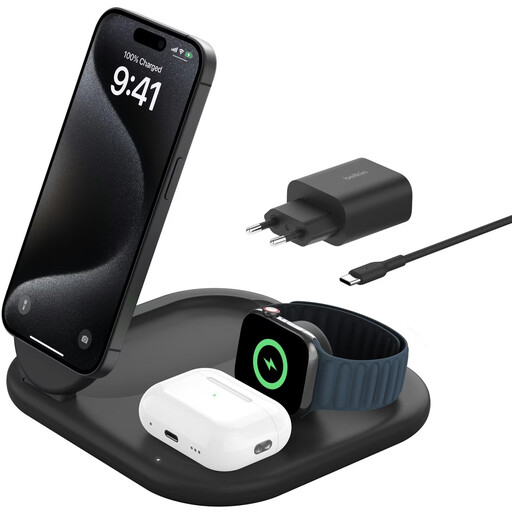
Why This Fits Their Persona: Ideal for those who want a tidy desk and need to charge their iPhone, Apple Watch, and AirPods simultaneously. The stand holds the phone at a convenient viewing angle, and its foldable design also makes it suitable for travel.
The official Qi2 certification guarantees a stable 15W fast-charging speed and perfect magnetic alignment. This avoids the pitfalls of slow performance and a weak connection.
Charges 3 Apple devices at once. Supports fast charging for recent Apple Watch models. Includes a 36W adapter and cable.
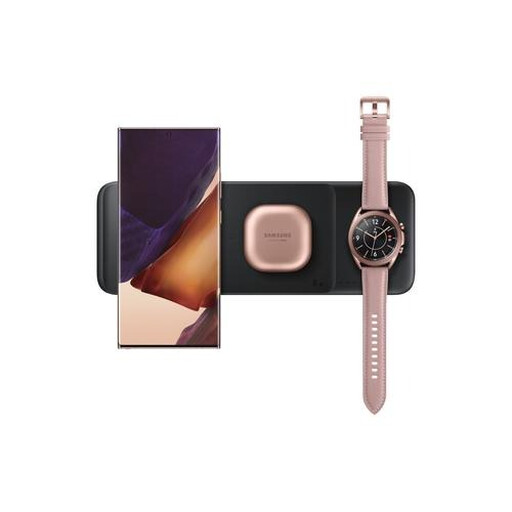
Why This Fits Their Persona: For the user who is fully invested in the Samsung ecosystem. This flat pad has dedicated spots for a Galaxy phone, Galaxy Watch, and Galaxy Buds, allowing everything to be charged neatly in one place.
As an official Samsung product, compatibility is guaranteed. The special recess with a magnet for the Galaxy Watch prevents the common issue of universal chargers not working well with Samsung's smartwatch.
Designed for the Samsung ecosystem. Charges three devices simultaneously. Clear LED indicators for charging status.
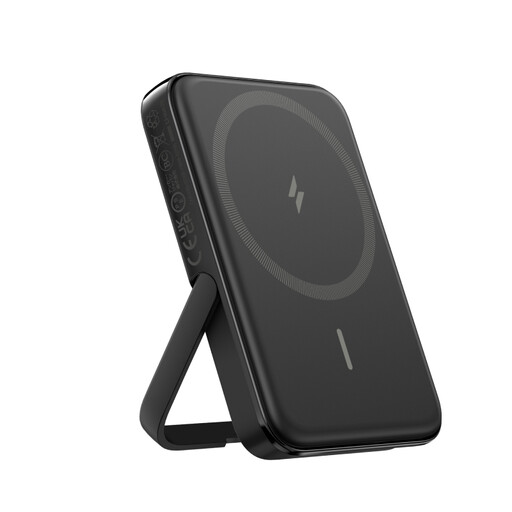
Why This Fits Their Persona: For those who travel frequently or spend long days away from home. This compact magnetic power bank snaps onto the back of a MagSafe-compatible iPhone, charging it without any cables. It fits easily in a jacket pocket or bag.
Anker's MagGo line is known for its strong magnets, which solves the pitfall of a weak connection. The phone stays securely attached, even when you're using it while charging.
Compact and lightweight (125 grams). The 5,000 mAh capacity is enough to largely recharge an iPhone. Can also charge other devices via the USB-C port.
We have compiled a complete, up-to-date list of products that fully meet these strict selection criteria and safety regulations.
Often, yes, especially with older chargers. However, the new Qi2 standard with 15W charging comes close to many standard wired chargers. For the absolute fastest speed, a powerful USB-C PD charger with a cable usually remains the winner. For many, the convenience of simply placing your phone down is the main reason to choose wireless.
Yes, in most cases. Most wireless chargers work through plastic cases up to about 3mm thick. Thick, rugged cases, metal cases, or cases with a card holder or metal ring on the back will interfere with the signal. You'll need to remove these before charging. For a MagSafe charger, a MagSafe-compatible case is required for the best magnetic adhesion.
Not if you use a quality charger. Heat is a battery's worst enemy. A well-designed, certified charger with built-in temperature control generates minimal heat and is safe for your battery. Cheap, non-certified chargers, however, can overheat and shorten your battery's lifespan in the long run. Therefore, always choose a model from a reputable brand with the proper safety features.
