
Vandaag of morgen in huis

Kwaliteit gegarandeerd

Welkomstaanbiedingen ontgrendelen: GRATIS bezorging | Tot 80% korting | Gratis 30 dagen JoyPlus-proefperiode
Download de app
A wireless Bluetooth speaker may seem easy to choose: connect your phone, press play and you’re ready to go. Yet many buyers find themselves disappointed after a few weeks by underwhelming sound, short battery life or limited connections. Terms such as “powerful bass”, “waterproof” and “long playtime” can also create a misleading impression without the right context.
So don’t focus only on wattage or appearance. Consider how you plan to use the speaker, its technical specifications and its limitations. That way, you can find a suitable portable Bluetooth speaker, portable speaker or soundbar without paying for features you won’t use.
Higher wattage does not automatically mean that a speaker will sound better in your room or garden. It mainly indicates the electrical power according to the stated product specification. The enclosure, speaker drivers, passive radiators and tuning also affect the sound.
If you’re looking for a Bluetooth speaker with powerful sound, it’s therefore worth checking the number of drivers, the type of speaker and whether stereo pairing is supported.
A waterproof Bluetooth speaker is not necessarily resistant to every type of liquid or situation. An IP67 rating generally means complete protection against dust and temporary immersion under the conditions defined by the standard. Salt water, chlorine, high-pressure jets and prolonged exposure may fall outside the intended conditions.
IPX6, on the other hand, refers to protection against powerful water jets, but says nothing about dust resistance. Always check the full IP rating and the manufacturer’s safety information.
“Up to 15 or 20 hours” is usually a maximum figure. Actual performance can vary depending on volume, equaliser settings, the Bluetooth connection, lighting and the type of music being played. For example, the Tronsmart Bang 2 is stated to offer up to 26 hours of playtime with the LED lighting switched off at 50% volume, while the stated playtime is lower with the lighting on.
A speaker with long battery life is therefore most useful when the manufacturer clearly explains the conditions under which the measurement applies.
For music, films and gaming, the following details are relevant:
A compact portable speaker is practical for cycling, picnics or camping, but a Bluetooth speaker with a subwoofer or a 2.1 soundbar makes more sense for deep bass in the living room. A soundbar with a wireless subwoofer does take up more space and generally runs on mains power.
Check the Bluetooth version, supported audio codecs and available connections. Bluetooth 5.3 or 5.4 may provide a more modern connection, but the experience also depends on the smartphone, tablet or laptop you pair with.
For home use, HDMI ARC or eARC, optical audio, AUX and USB may be more important than Bluetooth alone. This can make it easier to connect a soundbar to a television or games console. Also look for features such as multipoint, which allows two devices to remain connected at the same time.
A lightweight speaker with a carrying loop or handle is more suitable for taking on the go than a heavy model weighing several kilos. For outdoor use, also check:
RGB lighting can add atmosphere to a party speaker, but it may use additional battery power. Treat lighting as an extra feature rather than a reason to overlook sound or protection specifications.

Why it suits this profile: A compact choice for everyday use, travelling or enjoying music on a balcony. The carrying strap and 274-gram weight make it easy to take with you.
The product specification states IP67 and battery life of up to 16 hours. However, check that these figures apply under the stated usage conditions.
Bluetooth 5.3, USB-C, IP67 and stated battery life of up to 16 hours according to the product information.
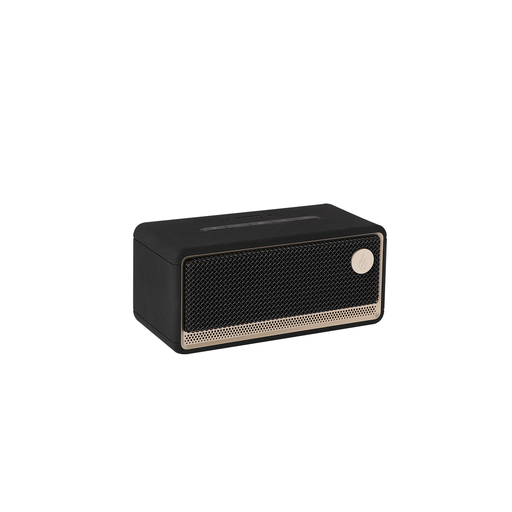
Why it suits this profile: Suitable for anyone who wants a permanent speaker for music, films or gaming combined with multiple connection options and multi-room functionality.
The choice is not based on power alone: the listing mentions Bluetooth 5.3, Wi-Fi, USB, AUX and AirPlay 2. This makes the speaker more versatile.
Stated 60 W RMS, LDAC, Wi-Fi and up to 12 hours of battery life. The wooden enclosure and app control are part of the product description.
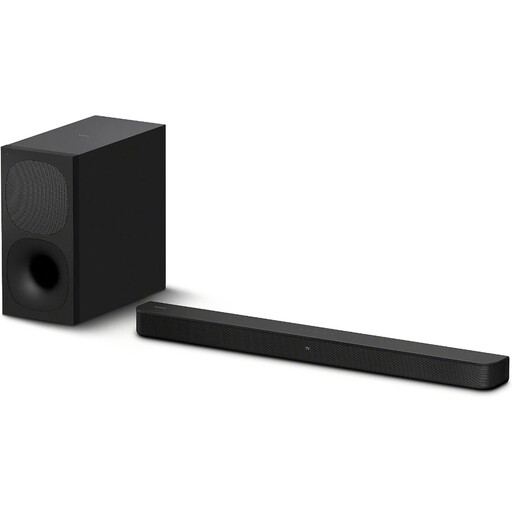
Why it suits this profile: For the living room and television, where portability is less important than connections, clear dialogue and low frequencies.
The 2.1 configuration includes a separate wireless subwoofer. HDMI ARC, optical audio and Bluetooth offer different connection options.
Stated total output of 330 W RMS, Dolby Digital, S-Force Pro Front Surround and a wireless subwoofer.
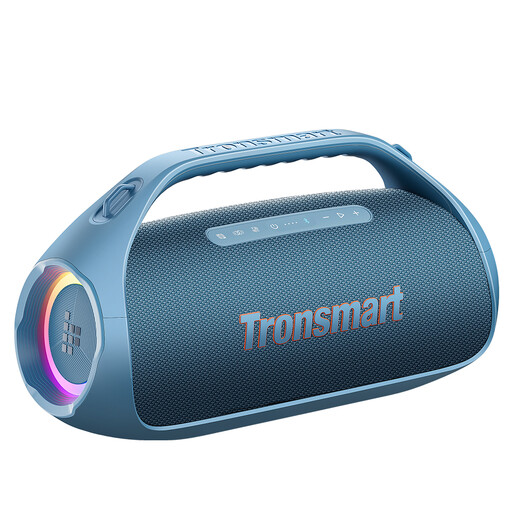
Why it suits this profile: With its handle, detachable carrying strap and stated IPX6 protection, this model is well suited to garden parties and outdoor use.
Alongside the power output, the listing states the IPX6 rating and the conditions applying to the battery-life claim. The lighting can affect playtime.
Stated 90 W output, Bluetooth 5.3, TWS pairing and up to 26 hours of playtime without LED lighting at 50% volume.
We’ve put together a complete, up-to-date list of products that fully meet these strict selection criteria and the applicable European safety regulations.
Switch on the speaker and activate pairing mode. Then open the Bluetooth settings on your phone and select the product name. Some models require Fast Pair, an app or a PIN. If the speaker does not appear in the list, check whether it is already connected to another device.
This varies by model and usage. Manufacturers usually state a maximum playtime. Volume, RGB lighting, equaliser settings and the Bluetooth codec all affect power consumption. Check the test conditions in the product specifications and choose USB-C if you want to charge the speaker easily using your existing chargers.
Yes, provided that its protection rating suits the situation. For rain or use near a swimming pool, IP67 can offer additional protection, while IPX6 mainly indicates protection against water jets. Always follow the safety instructions and avoid salt water, chlorine and immersion beyond the stated limits.
