
Vandaag of morgen in huis

Kwaliteit gegarandeerd

Welkomstaanbiedingen ontgrendelen: GRATIS bezorging | Tot 80% korting | Gratis 30 dagen JoyPlus-proefperiode
Download de app
A wireless Bluetooth speaker may seem easy to choose: connect your phone, press play and you’re ready to go. However, models vary considerably in size, sound quality, battery life, and protection against water and dust. A small speaker can be useful on a bike, while a heavier model may be better suited to a party or a permanent spot at home.
Pay particular attention to these common pitfalls:
For a bedroom, kitchen or desk, a compact portable speaker is often sufficient. As well as the power, look at the number of drivers and the design. A tweeter mainly handles high frequencies, while a woofer or passive bass radiator can contribute to lower frequencies.
A model with multiple drivers and a higher RMS output is more suitable for a living room, garden or gathering. However, pay attention to the dimensions and weight: a powerful Bluetooth speaker is not automatically practical to carry around.
For films, a soundbar with subwoofer is generally more suitable than a standalone portable Bluetooth speaker. A soundbar is designed for use with a TV and may offer connections such as HDMI eARC or optical audio. Check beforehand that your television supports the relevant connection.
Battery life is usually stated at a particular volume and sometimes with the lighting switched off. For a day at the beach, camping or cycling, a stated playback time of 12 to 20 hours is practical, but remember that conditions will affect it.
Also check:
A compact model with six hours of battery life may be perfectly suitable for short trips. For a party or a long day outdoors, a larger speaker with a higher capacity is the more logical choice.
For a Bluetooth speaker for outdoor use, the IP rating is important. The first digit indicates protection against solid particles, such as dust. The second digit relates to water.
According to the safety information for the Sony SRS-XB100, the IP67 rating applies to immersion in fresh water up to one metre deep for a maximum of 30 minutes. The manufacturer advises against exposure to salt water, chlorine and high-pressure jets. Use a waterproof Bluetooth speaker within the limits of its stated rating, and allow the connections to dry thoroughly before charging.
Bluetooth 5.3 or 5.4 can provide up-to-date connectivity, but range and stability also depend on obstacles, your phone and the surroundings. Dual-device or multipoint pairing is useful when two people want to play music without repeatedly reconnecting.
With stereo pairing, you can connect two compatible speakers. Always check that both units support the same pairing protocol. TWS or stereo pairing also does not mean that every speaker will automatically work with every brand.
A built-in microphone is useful for phone calls. For controlling the speaker while out and about, physical buttons are easier than relying solely on an app. An app, on the other hand, may offer additional equaliser settings, lighting modes or multi-room functions.

Why it suits this profile: Compact and lightweight for everyday use, travelling or a short walk. According to the product information, this model offers up to 16 hours of battery life and an adjustable carrying strap.
The IP67 rating is more specific than simply describing a product as water-resistant. The battery indicator helps reduce the risk of the battery running out unexpectedly.
Bluetooth 5.3, IP67, stated battery life of 16 hours and support for pairing with a second speaker.
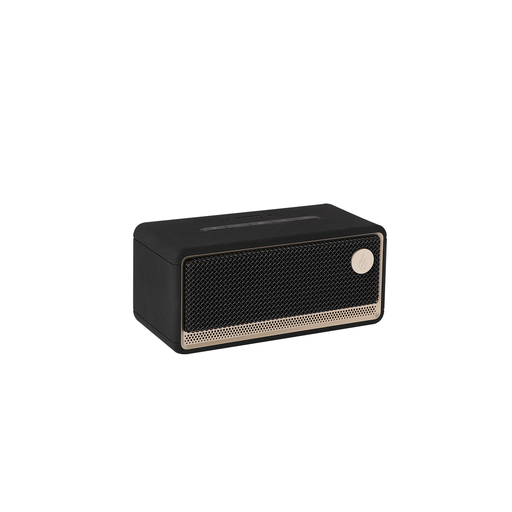
Why it suits this profile: Designed for use at home, with Bluetooth, Wi-Fi, USB and AUX. According to the product information, this model supports AirPlay 2, LDAC and multi-room use.
The range of connection options makes it less dependent on a single wireless connection. The stated 60W refers to the total output power listed.
Bluetooth 5.3, Wi-Fi on 2.4 and 5 GHz, stated battery life of 12 hours and support for multi-room.
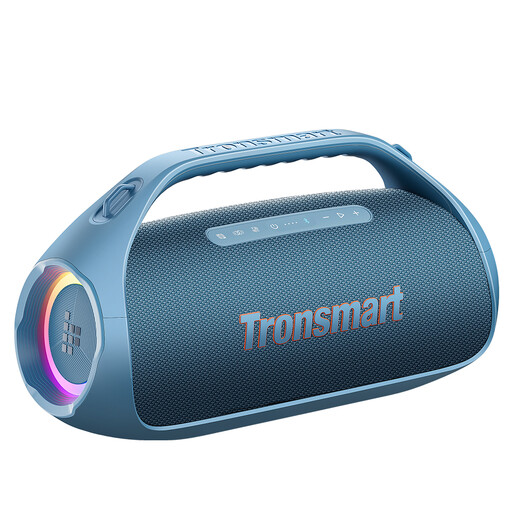
Why it suits this profile: Designed for larger gatherings and outdoor use. According to the product information, this party speaker has a stated output power of 90W, IPX6 protection and up to 26 hours of playback without lighting.
The product information separately explains how lighting and volume affect playback time. IPX6 clearly defines the water protection limit, but does not provide a stated dust rating.
Stated playback time of 26 hours under specified conditions, listed power of 90W, TWS pairing and app control.
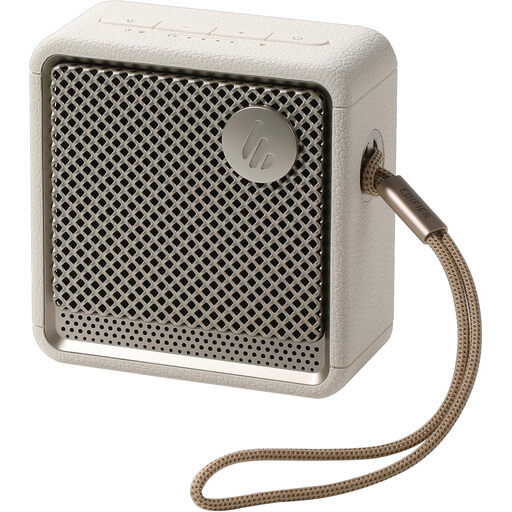
Why it suits this profile: A compact choice for cycling, walking and days out. According to the product information, this model offers up to 15 hours of battery life, Bluetooth 5.4 and IP67 protection.
The combination of an explicit IP67 rating and stated battery life provides more guidance than general outdoor claims.
6W RMS, 360-degree sound according to the product description, IP67 and stereo pairing with a second compatible speaker.
We’ve put together a complete, up-to-date list of products that fully meet these strict selection criteria and the applicable European safety regulations.
Switch on the speaker and activate pairing mode. Then open the Bluetooth settings on your smartphone, select the speaker’s name and confirm the connection. If the model does not appear in the list, briefly switch Bluetooth off and back on again, or remove an old pairing. For specific button combinations, consult the supplied manual.
That depends on the volume, lighting, temperature and functions in use. The stated battery life is usually a maximum measured under specific conditions. For everyday use, it is sensible to allow some leeway. If you need 10 hours of music, for example, choose a model whose manufacturer states more than 10 hours.
During use, a speaker draws power from its internal battery. Energy consumption mainly depends on the volume, amplifier power and lighting. Charging via USB-C is convenient, but use a suitable adapter in accordance with the manufacturer’s instructions. A Wi-Fi speaker may also remain connected to the network in standby, whereas a Bluetooth speaker is generally only active when connected to a device.
