
Vandaag of morgen in huis

Kwaliteit gegarandeerd

Welkomstaanbiedingen ontgrendelen: GRATIS bezorging | Tot 80% korting | Gratis 30 dagen JoyPlus-proefperiode
Download de app
A wireless Bluetooth speaker may seem straightforward: pair it with your smartphone and play music. However, models vary considerably in battery life, water protection and portability. A low price does not always reflect the overall user experience either.
The most common buying pitfalls:
For everyday use, a wireless speaker with long battery life is useful. Do not just look at the number of hours, but also check:
A stated battery life of 8 to 12 hours may be enough for an afternoon outdoors. For a long day without access to a power socket, models offering 16 to 20 hours are more practical. Also check whether the manufacturer says “up to” a certain number of hours. This is a maximum figure, not a fixed usage time.
For a Bluetooth speaker for outdoor use, the IP rating is a useful, verifiable starting point. The first digit refers to dust, while the second indicates water protection.
An IP67 Bluetooth speaker is suitable for situations such as rain, the beach or an accident by the swimming pool, provided you follow the instructions. For example, the Sony SRS-XB100 states that it is protected against dust and immersion in fresh water up to 1 metre deep for 30 minutes. The safety information advises against exposure to salt water, chlorine and high-pressure water.
A compact Bluetooth speaker is easy to take with you, but a smaller model generally has less room for larger drivers and powerful bass. It is therefore worth considering the combination of:
Bluetooth 5.3 or 5.4 can provide a modern, stable connection, but the ultimate experience also depends on your phone, tablet or laptop. An older smartphone can still connect when the speaker uses a newer Bluetooth version.
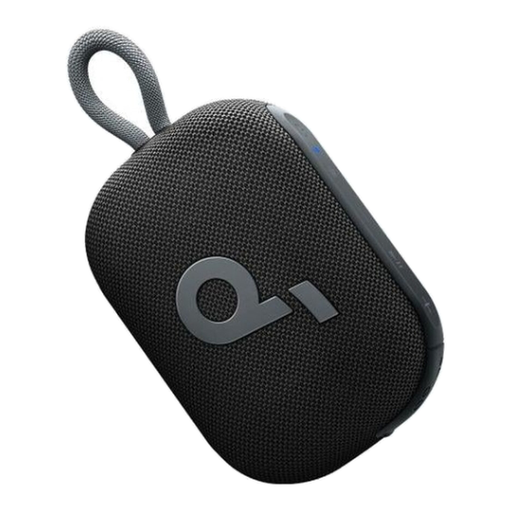
Why it suits this profile: According to the product specification, this model weighs approximately 264 grams and has an integrated carrying strap. This makes it suitable for everyday use, walks and short trips.
The product specification states up to 20 hours of playback and IP67 protection. This makes the key usage information clear in advance, although actual battery life still depends on volume and content.
Stated 20-hour battery life, IP67 water and dust protection, a floating design and TWS pairing for two speakers.

Why it suits this profile: The ES60 is designed for use at home, at parties and in larger listening spaces. Its stated 34 W RMS output and dual tweeters make it a good choice for anyone looking for more sound headroom than a mini speaker can provide.
The power is clearly specified as 34 W RMS and the enclosure has IP66 protection. This allows you to compare the model accurately without interpreting IP66 as protection against immersion.
34 W RMS, Bluetooth 5.4, connection to two Bluetooth devices at the same time, stereo pairing and USB-C alongside Bluetooth.
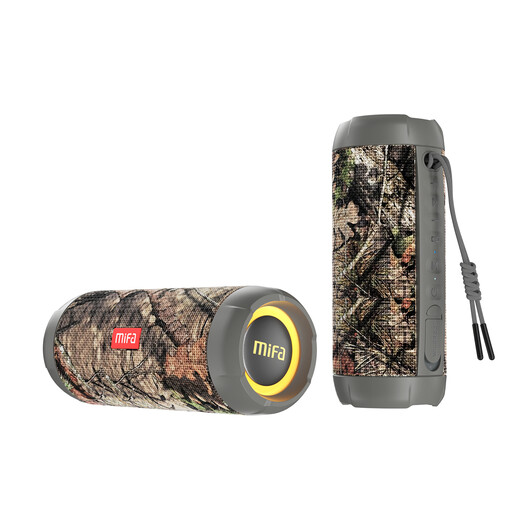
Why it suits this profile: For days at the beach, camping and outdoor use, this model combines a 30 W audio system with several playback options and a 5000 mAh battery.
The specifications list IP67, up to 12 hours of playback and support for Bluetooth, microSD and on-device controls separately. This means you can also use the speaker when wireless streaming is not practical.
Stated 30 W audio output, IP67, dual-device connection, microSD support and battery life of up to 12 hours.
Use this quick checklist:
We have put together a complete, up-to-date list of products that fully meet these strict selection criteria and the applicable European safety regulations.
Switch on the speaker and activate pairing mode. Then open the Bluetooth settings on your smartphone and select the speaker’s name. After the first pairing, many models will connect automatically the next time. Keep the speaker close to your phone while pairing.
This depends on the volume, Bluetooth connection, lighting and features such as phone calls. A model with a stated battery life of 12 to 20 hours may play for less time in practice at high volume. Fully charge the speaker before using it for the first time and use a suitable USB charger.
Not automatically. Check the exact IP rating and the manual. IP67 generally refers to temporary immersion in fresh water under specified conditions. Salt water, chlorine and high-pressure water jets may fall outside the stated protection.
