
Vandaag of morgen in huis

Kwaliteit gegarandeerd

Welkomstaanbiedingen ontgrendelen: GRATIS bezorging | Tot 80% korting | Gratis 30 dagen JoyPlus-proefperiode
Download de app
A wireless Bluetooth speaker seems easy to choose: connect your smartphone, press play and you’re ready to go. In practice, though, some models can disappoint. A speaker might look powerful on paper thanks to a high wattage, but be awkwardly large to carry around every day. And “waterproof” doesn’t automatically mean you can use it in the pool without restrictions.
This buying guide will help you work out which specifications matter, which marketing claims to question and which type of portable Bluetooth speaker suits the way you’ll use it.
Higher power can contribute to higher volume, but it isn’t the only factor that determines how music sounds. The number of speakers, the enclosure, the tuning and the positioning all play a part, too. A compact 5-watt speaker might suit a bedroom or a picnic, while a larger model could be a better choice for a garden party.
Also look at the difference between RMS power and peak power. RMS is a more useful point of comparison for continuous sound. However, manufacturers don’t always use the same measurement method, so wattage figures aren’t directly comparable across brands.
An IP67 Bluetooth speaker is classified as fully protected against dust and suitable for temporary immersion under specified conditions. That doesn’t mean it can automatically be used underwater for long periods, exposed to high-pressure jets, or used in salt water or a swimming pool.
A model with IPX7 is protected against water, but the X indicates that no dust-protection rating has been specified. Also check that the USB port is properly sealed before using an outdoor Bluetooth speaker in the rain or near water.
A speaker with long battery life will usually reach its stated playback time only under specific conditions. Volume, bass, lighting, the Bluetooth connection and the audio content all affect power consumption. For example, the Tronsmart T7 is listed as offering up to 12 hours without lighting and up to 4 hours with lighting. So a Bluetooth speaker with lights may play for noticeably less time when all the effects are switched on.
Bluetooth 5.3 or 5.4 indicates a recent connection standard, but check which codecs are supported, too. The Sony SRS-XB100, for example, supports AAC and SBC. That’s enough for everyday listening on most smartphones and tablets.
A physical connection can be handy for computers, older devices or listening without a wireless connection. Alongside Bluetooth 5.3, the Edifier G1500 has a USB input and a 3.5mm AUX connection. This makes it more of a fixed desktop speaker system than a truly portable speaker.
A compact speaker weighing around 250 to 700 grams is easier to take to the park, campsite or beach. According to its product specifications, the Sony SRS-XB100 weighs 274 grams and has a carrying strap. The Sony ULT FIELD 5 weighs 3.3 kilograms. You can still move it around, but it’s less suited to bike bags or a long walk.
Think about where you’ll usually keep your wireless speaker. For a desk or bedroom, size and connections are often more important than maximum weather resistance. For travel, weight, a handle, a carrying strap and battery life are the key considerations.
Check the full IP code rather than relying on words such as “outdoor” or “waterproof”. IP66 protects against dust and powerful water jets. IP67 also provides protection against temporary immersion, within the conditions of the classification. The IP rating tells you nothing about sound quality, battery life or resistance to drops.
After using your speaker in a damp environment, check the charging port and let the casing dry before charging it. Always follow the brand’s instructions.
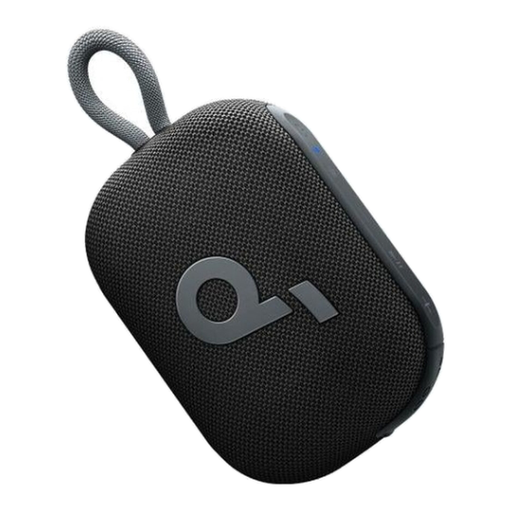
Why it suits this type of user: This model combines a compact size with stated playback time of up to 20 hours. According to the product information, it’s suitable for smartphones, tablets, laptops and TVs.
The IP67 rating makes its stated level of protection clearer than the term “waterproof” alone. Bear in mind, though, that volume and usage conditions affect battery life.
263.65 grams, an integrated carrying loop, IP67 and up to 20 hours of battery life according to the product information. Two speakers can be paired via TWS.
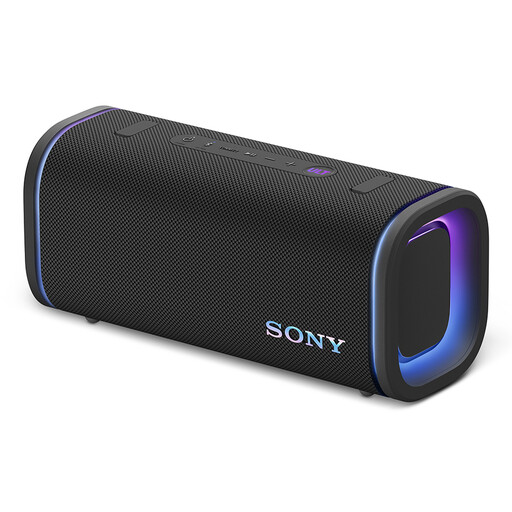
Why it suits this type of user: This larger model is designed for people who want more volume, bass and features at home and outdoors. According to Sony, the speaker has ULT sound modes, lighting and app control.
The product specifications list 27 watts RMS, so you don’t have to rely solely on an unspecified peak power figure. The IP67 code is more specific than a general claim about outdoor use.
Stated battery life of up to 25 hours, IP67, a 3.5mm audio input, USB-C and phone charging via the speaker. Weight: 3.3 kilograms.
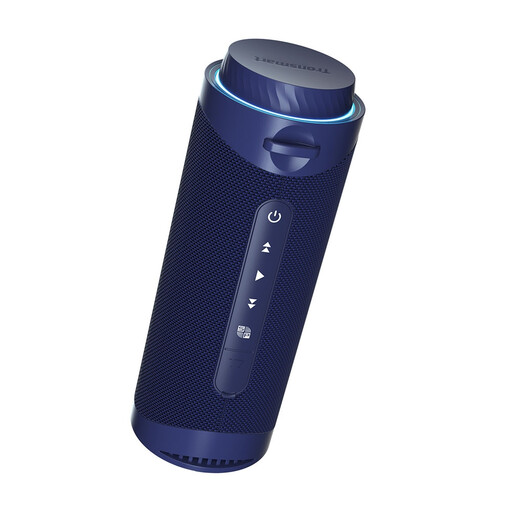
Why it suits this type of user: This model is aimed at parties, evenings in the garden and outdoor use where lighting and higher output are desirable.
The product information lists battery life separately for use with and without lighting. That makes it easier to estimate power consumption realistically.
30 watts of output, Bluetooth 5.3, IPX7, a microSD card reader, microphone and TWS pairing. Up to 12 hours without lighting, according to the product information.
We’ve put together a complete, up-to-date list of products that meet these strict selection criteria and the applicable European safety requirements.
Switch on the speaker and activate pairing mode. Then open the Bluetooth settings on your smartphone and select the speaker’s name. Many models will reconnect automatically next time. Keep the devices close together while pairing and check that the speaker isn’t already connected to another device.
Its lifespan depends on charging cycles, volume, temperature and storage. A model that is often allowed to run completely flat or is stored somewhere warm for long periods may lose capacity more quickly. Charge the speaker with a suitable USB cable, keep it dry and follow the manufacturer’s instructions.
A portable speaker uses relatively little power while playing; most power is used during charging. Lighting, high volume and extra features increase battery consumption. With normal use, you mainly need to think about how often you’ll recharge it, rather than a separate ongoing energy cost like you’d have with a speaker that’s constantly plugged into the mains.
