
Vandaag of morgen in huis

Kwaliteit gegarandeerd

Welkomstaanbiedingen ontgrendelen: GRATIS bezorging | Tot 80% korting | Gratis 30 dagen JoyPlus-proefperiode
Download de app
A wireless Bluetooth headset may seem straightforward to choose at first glance. However, models vary significantly in comfort, battery life, sound quality and call performance. A low price can be tempting, but a poor fit, limited connectivity or disappointing noise cancellation can mean you use the product less often than expected.
This buying guide will help you assess marketing claims in practical terms. Whether you are looking for over-ear headphones for long train journeys, wireless earbuds for working out, Bluetooth headphones with ANC for the office or audio equipment for your home, start by considering the specifications that matter for your situation.
Manufacturers often quote the maximum playback time, but this figure may depend on volume, codec, Bluetooth connection and whether ANC is being used. Active noise cancellation generally requires additional power. So check whether the quoted long battery life applies with ANC switched on or off.
It is also important to check the charging time, connector type and fast-charging capability. A short charge can be particularly useful when you are out and about.
Noise-cancelling headphones can reduce ambient sound, but they will not make every voice, bicycle bell or sudden peak completely inaudible. ANC is often most effective against constant low-frequency sounds, such as a train engine or aircraft noise.
Also look for a transparency mode. This lets you hear your surroundings without removing the headphones. It is useful when commuting, walking or working in a shared space.
Bluetooth 5.3, Bluetooth 5.4 or Bluetooth 6.0 can offer benefits in terms of connectivity and power consumption, but the overall experience also depends on your phone, laptop or television. Also check codecs such as AAC, SBC or LDAC, multipoint and any wired connections.
A higher Bluetooth version does not automatically mean better sound quality. The speaker drivers, tuning and compatibility also play a part.
Over-ear headphones surround the ear and can already block out some ambient sound passively. This type is suitable for long listening sessions, travelling and working from home, but is usually larger and warmer around the ears.
An on-ear model rests on the ear and is often lighter and easier to carry. In-ear earbuds are compact and, with a good fit, remain relatively secure during exercise. For wireless earbuds, check which ear tips are included and whether a water-resistance rating is specified.
Compare the battery life of the headphones themselves with the total battery life including the charging case. With wireless earbuds, the difference can be substantial. Also look for:
A quoted playback time is a product specification, not a guarantee for every usage scenario. High volume and features such as ANC can reduce operating time.
For exercise and outdoor use, an IP rating is more useful than a general term such as “waterproof”. IPX5, for example, means protection against water jets under the relevant test conditions; it does not automatically mean that a device can be submerged. Always check the exact product information and usage warnings.
For a Bluetooth speaker, IP67 or IPX7 represents a different classification from that used for headphones. A speaker with such a rating may be suitable for use around water, but follow the manufacturer’s instructions and ensure that the charging port is properly closed.
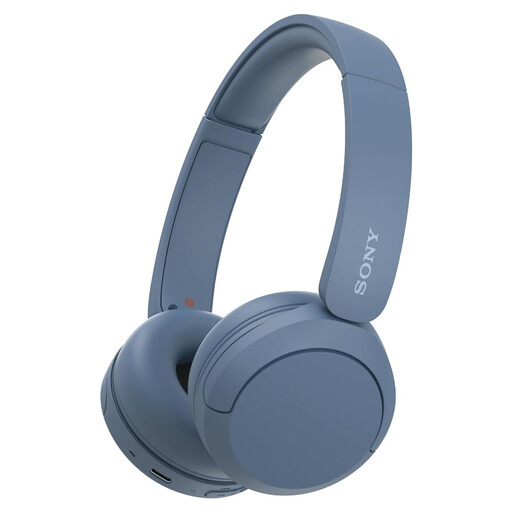
Why it suits this profile: This lightweight on-ear model is designed for everyday listening, calls and use with a phone or laptop. The quoted battery life is up to 50 hours, while multipoint lets you switch between two devices.
The product information provides specific details about Bluetooth, multipoint, weight and battery use. However, bear in mind that this model is not water-resistant.
147 grams, USB-C, microphone and multipoint connectivity. Also available in other colours.
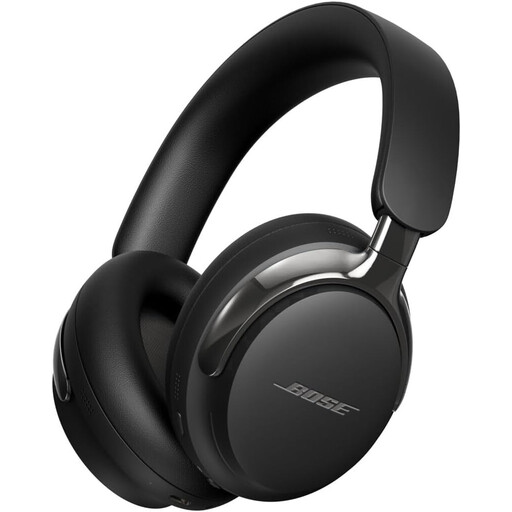
Why it suits this profile: Ideal if you are looking for over-ear headphones with ANC, spatial audio and both wireless and wired connectivity.
The product page lists ANC, Cinema Mode, Bluetooth 5.4 and a detachable cable. This means you are not entirely dependent on wireless use.
Bluetooth 5.4, 3.5mm and USB-C connections, a range of 9.14 metres and a minimum of two years’ statutory EU warranty.
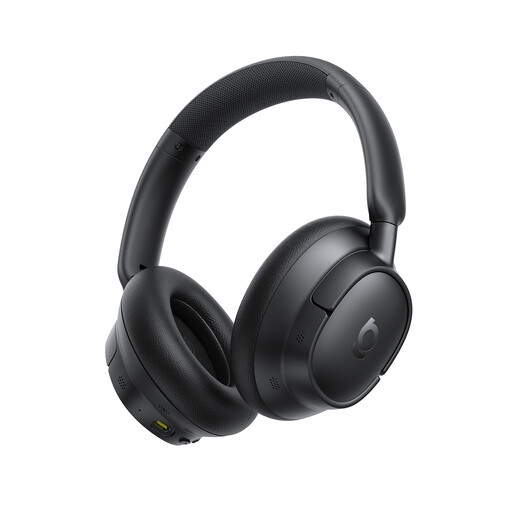
Why it suits this profile: For travelling, working from home and long listening sessions, ANC, LDAC, Hi-Res audio and long battery life are all useful features.
According to the product description, playback time is specified as 80 hours without ANC and 55 hours with ANC. This makes the usage conditions clearer than a single maximum figure.
Hybrid ANC of up to the manufacturer’s stated value of -45 dB, LDAC support, five microphones and USB-C fast charging.
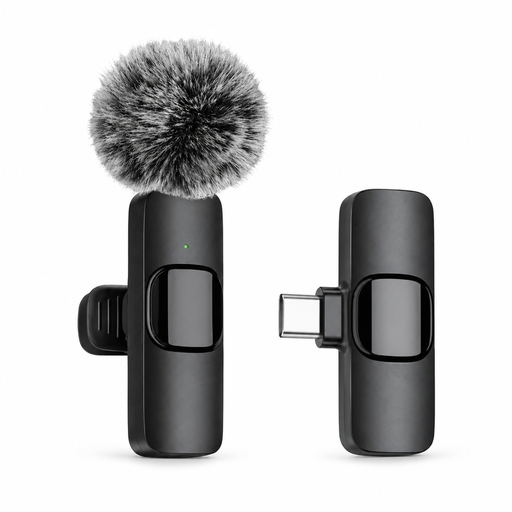
Why it suits this profile: This is not a pair of headphones, but a compact wireless lavalier microphone for livestreams, interviews, video calls and recordings with a Type-C interface.
The specifications state a battery life of 3 to 6 hours and a Type-C connection. Check beforehand that your camera, computer or phone supports this interface.
Compact design, 78 grams and suitable for a wide range of recording and conversation scenarios.
For exercise or commuting, wireless earbuds may be more convenient than an over-ear model. The MINISO MS106 lists IPX5, multipoint and total battery life of up to 55 hours, among other features. The Acer OHR548 uses Bluetooth 5.4 and comes with a Type-C charging case. For both models, check the fit and charging specifications before ordering.
For outdoor use, a Bluetooth speaker is more practical than headphones. The Mifa WildRod lists Bluetooth 5.3, IP67 dust protection, IPX7 water resistance, a 30W audio system and up to 12 hours of playback. For television and gaming, the Ultimea Aura S4T, Poseidon M4T and Poseidon D80 Boom offer options with HDMI ARC or eARC, a subwoofer and surround channels. Do check how much space the additional speakers require and which cables are needed.
We have compiled a complete, up-to-date list of products that fully meet these strict selection criteria and the applicable European safety regulations.
Switch on Bluetooth on your phone, turn on the headphones and activate pairing mode. Select the product name from the Bluetooth list. If the device has been paired before, this often happens automatically. Consult the manual if the headphones do not appear or if multiple devices are connected.
Their lifespan depends on charging habits, storage, moisture, temperature and mechanical stress. The built-in battery will lose capacity over time. Headphones with replaceable ear pads, sturdy hinges and USB-C may remain practical to use for longer. Store the device in a dry place and do not charge it in a damp environment.
Power consumption is generally limited. Most of the energy is used by the built-in battery, rather than directly by your phone. Features such as ANC, high volume and a constant connection can drain the battery more quickly. Use a suitable charger and follow the manufacturer’s safety instructions.
