
Vandaag of morgen in huis

Kwaliteit gegarandeerd

Welkomstaanbiedingen ontgrendelen: GRATIS bezorging | Tot 80% korting | Gratis 30 dagen JoyPlus-proefperiode
Download de app
Wireless Bluetooth earbuds are great for music, calls, travel and exercise. However, many models look stronger on paper than they are in practice. A long battery life, for example, might only apply when used with the charging case, and a high IP rating doesn’t automatically mean you can swim with them.
As a Joybuy Product Recommendation Officer, I’ve filtered the key product specifications of popular models. This way, you can see which features are relevant for your needs and avoid paying for functions you don’t actually require.
The IP code consists of two digits. The first digit refers to protection against solid particles, the second to water. A rating like IPX4, for example, means splash resistance, but says nothing about dust protection. IP55 also offers limited dust protection. Neither rating makes a product suitable for submersion.
For swimming, only models that explicitly state water resistance for that purpose are worth considering. Always check the instructions too. According to the product information from Mojawa, the Run Plus Bone Conduction Headphones are designed for use in, among other places, swimming pools and fresh water. After swimming, they should be rinsed with clean water and dried completely before charging.
Manufacturers usually state the maximum playback time under specific conditions. Noise cancellation, high volumes, phone calls and a poor Bluetooth connection can all affect battery life. So pay attention to the difference between:
The Soundcore Liberty 4 Pro, for instance, claims up to 10 hours of continuous audio and comes with a charging case and USB-C connection. The Sony WF-C510 offers up to 22 hours with the charging case. These are useful points of comparison, but not a guarantee for every situation.
Active noise cancellation, often referred to as ANC, uses microphones and electronic processing to reduce ambient noise. How well it works depends on the fit, the environment and the frequency. Low, constant sounds like an aircraft engine are generally handled differently from voices or sudden traffic noises.
Open-ear models and bone conduction headphones, on the other hand, let ambient sound in. This can be practical when walking or cycling, but they don’t block out sound as effectively as in-ear earbuds with ANC. Don’t use noise cancellation when you need to hear traffic or warning signals clearly.
True wireless earbuds are completely cordless and usually sit in the ear canal. Choose a model that comes with multiple sizes of ear tips, such as the Soundcore Liberty 4 Pro, Bose QuietComfort Ultra Earbuds and Sennheiser MOMENTUM True Wireless 4. A good fit helps keep the earbuds stable and can improve sound quality.
An open-ear headphone rests next to the ear. The Soundcore AeroClip uses a clip-on design, while the AeroFit 2 has an open-ear shape. These models can be suitable for daily use when you want to stay aware of your surroundings.
A bone conduction headphone is usually worn in front of or next to the ear and transmits sound through vibrations. The Mojawa Run Plus, according to the product details, has 32 GB of built-in storage, so you can play music during certain activities without needing a phone connection. Always check the manual for how to use the storage function and swim mode.
Sports earbuds often get a general description like “suitable for an active lifestyle”. That’s no substitute for a concrete IP rating. Here are some examples from the product data:
Bear in mind that salt water and chlorine require extra care. Always dry magnetic charging contacts before connecting a cable.
Bluetooth 5.3, 5.4 or a newer version number can contribute to an efficient and stable connection, but the actual experience also depends on your phone and the environment. For earbuds for calls and music, the number of microphones, wind protection and microphone placement are also relevant.
The Liberty 4 Pro, according to the product information, has six microphones. The Soundcore AeroClip features four beamforming microphones and a wind-blocking design. These are verifiable product specifications; the actual call quality can vary depending on the situation.
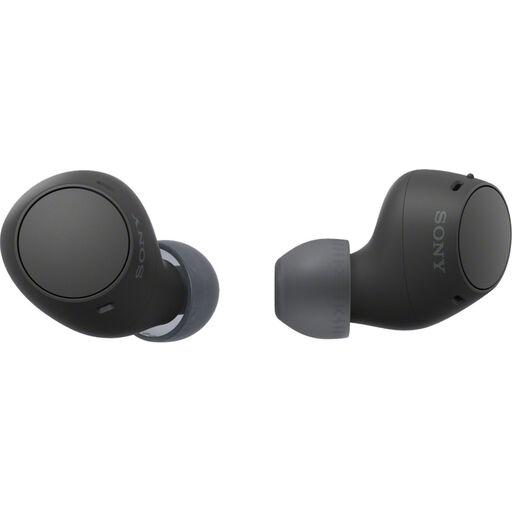
Why this fits the profile: This in-ear model combines Bluetooth 5.3, multipoint and a charging case with a stated total battery life of 22 hours. That makes it practical for music, commuting and phone calls.
The battery life, IPX4 rating and multipoint function are all clearly stated. This makes it easier to judge what the model can and cannot do.
Bluetooth 5.3, multipoint, USB-C charging case and a weight of 4.6g per earbud according to the product data.
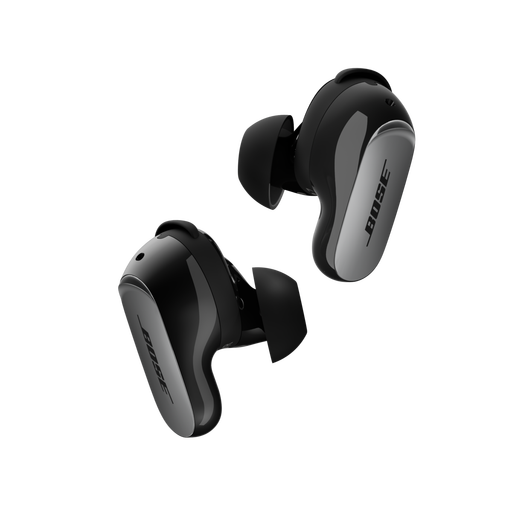
Why this fits the profile: The product information mentions Bluetooth 5.3, multipoint, active noise cancellation and an Aware mode. That suits travel, office work and listening to music in changing environments.
The 6-hour playback time per charge and IPX4 rating are listed separately. This means battery life is not confused with water resistance.
ANC, Aware mode, CustomTune according to the product description, wireless charging and three sizes of ear tips.
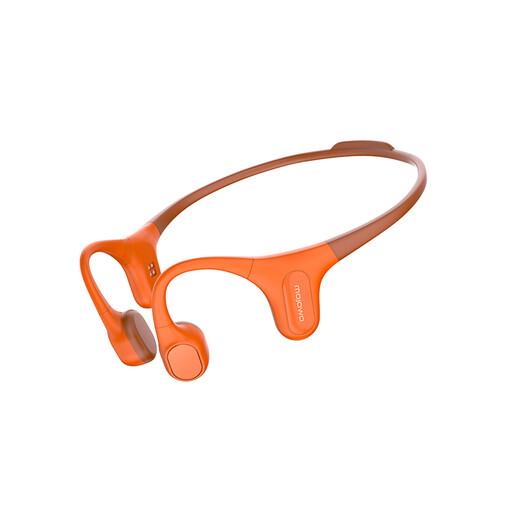
Why this fits the profile: This open-ear model is aimed at running, cycling, training and swimming. According to the product data, it has IP68 water resistance and 32 GB of built-in MP3 storage.
The swim function and storage are more clearly separated from Bluetooth use. Rinse the product after salt water and only charge it when it is completely dry.
Bone conduction design, IP68 rating and 32 GB storage according to the product information.
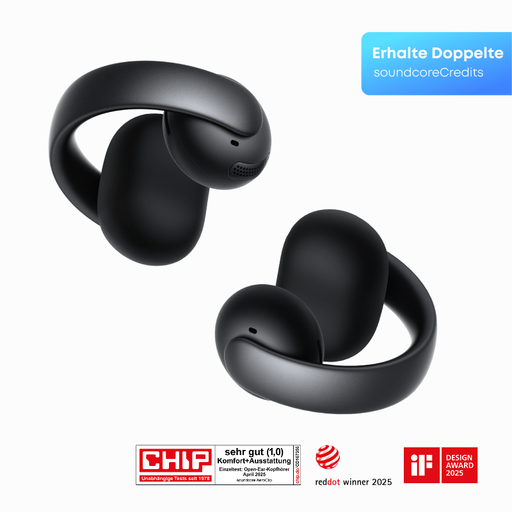
Why this fits the profile: The open-ear clip-on design is aimed at walking, commuting, sport and long-term wear without blocking the ear canals.
The open-ear design makes it clear that this is not an alternative for maximum sound isolation. The choice therefore better matches situations where ambient sound is desired.
Bluetooth 5.4, four microphones, touch controls and a stated playback time of 8 hours.
We’ve put together a full, up-to-date list of products that fully meet these strict selection criteria and comply with current European safety regulations.
First, charge the earbuds and put them into pairing mode. Then open the Bluetooth settings on your Android phone or iPhone and select the product name. On some models, the initial pairing is done through an app. After connecting, check that both earbuds produce sound and that the microphone is working correctly.
The battery life per charge varies by model and features. In the product data for the models discussed, this ranges from around 6 to 10 hours per charge, while charging cases extend the total time. The overall lifespan of the device depends on factors such as charge cycles, storage, moisture and temperature. Store earbuds in a dry place and do not charge them when the contact points are wet.
For running, open-ear headphones, bone conduction models and sports earbuds with a secure fit are options to compare. For swimming, a standard IPX4 or IP55 rating is not sufficient. Check for an explicit swim function, the IP rating and the manufacturer’s instructions. Also pay attention to local traffic rules: do not wear earbuds if they reduce your awareness of traffic or your surroundings.
