
Vandaag of morgen in huis

Kwaliteit gegarandeerd

Welkomstaanbiedingen ontgrendelen: GRATIS bezorging | Tot 80% korting | Gratis 30 dagen JoyPlus-proefperiode
Download de app
Wireless Bluetooth earbuds are useful for listening to music, making calls, travelling, exercising and working from home. However, many models appear better on paper than they are in practice. For example, a long battery life may only apply when the charging case is included. And a label such as “noise cancelling” does not automatically indicate how effectively background noise is reduced.
The right choice therefore starts not with a marketing term, but with how you intend to use the earbuds and the specifications you can verify.
Brands often state the battery life of the earbuds and charging case combined. This is useful information, but it is not the same as the usage time per charge. Check both figures:
A model with a generous total capacity is particularly useful for commuting and travelling. For everyday use, a shorter playback time per charge may also be sufficient.
The letters and numbers in an IP rating indicate the type of moisture or dust against which a product is protected according to the stated classification. IPX4, for example, is intended to protect against splashing water, while IPX5 indicates protection against water jets. Neither rating automatically means that you can submerge the earbuds.
Always check the product description and safety instructions. A model designed for running in light rain is not necessarily suitable for swimming. The earbuds and connectors must also be dry when charging.
There is a difference between:
According to manufacturers’ own product information, features such as ANC, AI noise cancellation or multiple microphones may support the calling or listening experience. The actual effect depends on the fit, surroundings, phone and software. Do not use headphones while cycling or in situations where you need to remain fully aware of traffic sounds.
In-ear TWS earbuds usually provide a better seal and are compact. Additional silicone ear tips in different sizes help you adjust the fit. An ear hook or clip-on design can be more practical for exercise, as the earbuds are less likely to move out of place.
Open-ear earbuds and bone conduction headphones leave your ears unobstructed. This can be comfortable when walking, running or working in an office, but the sound may feel less isolated in a busy environment. Also check whether the model has a secure ear hook or neckband.
Bluetooth 5.3 and Bluetooth 5.4 are modern connection standards. They can contribute to a stable connection and efficient energy use, but a higher version number does not automatically guarantee better sound. Also check:
A Bluetooth headset with multipoint is worth considering if you switch between working on a laptop and using your phone.
The number of microphones can be relevant for calls, but on its own says little about the eventual clarity of speech. Driver diameter is also not a direct guarantee of quality. In addition, check the supported audio codecs, such as SBC or AAC, along with the features available in the companion app.
If you mainly listen to podcasts and make phone calls, your priorities will be different from those of someone who listens to bass-heavy music or plays games. So do not choose solely on the basis of a large number in the product title.
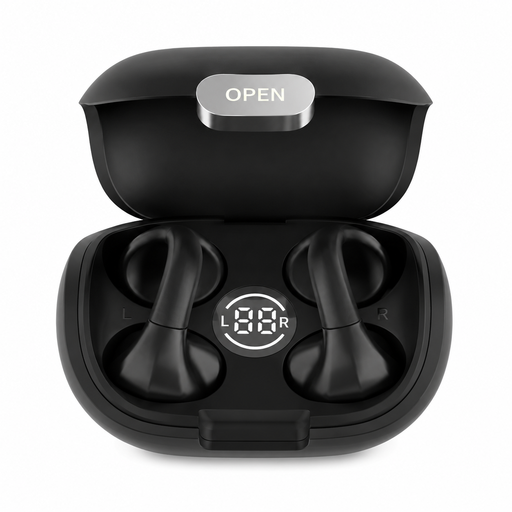
Why it suits this profile: This clip-on model is designed for everyday use, travelling and fitness. The stated playback time is around 5 to 7 hours, and Bluetooth 5.4 provides a wireless connection with compatible devices.
The specifications state a specific playback time and battery capacity for both the earbuds and case. This allows you to estimate the practical usage time more realistically.
Bluetooth 5.4, touch controls, an ear-hook design and a digital display on the charging case, according to the product information.
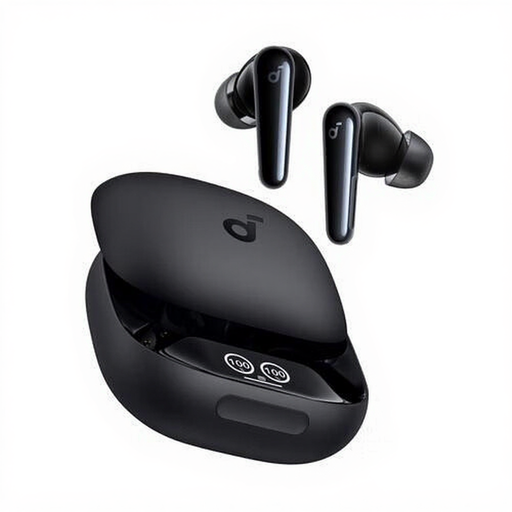
Why it suits this profile: These in-ear TWS earbuds are designed for calls, music, exercise and everyday use. According to the stated product specifications, they combine touch controls with a charging case and six microphones.
The product information states 10 hours of continuous audio, additional ear tips and IPX5 protection. However, check that the fit and moisture protection are suitable for your intended use.
Dynamic drivers, six microphones, USB Type-C, touch controls and an IPX5 rating, according to the product specifications.
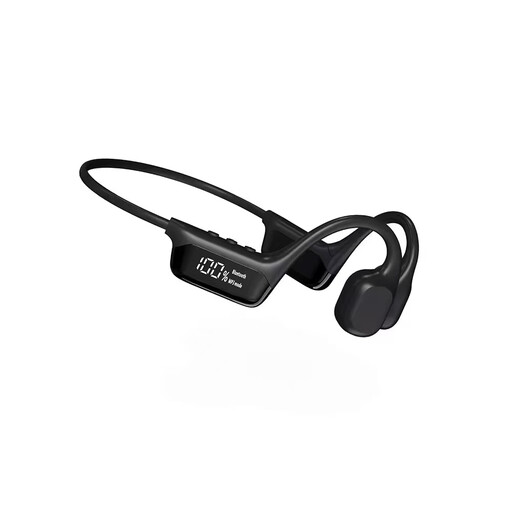
Why it suits this profile: The open-ear and bone conduction design is intended for swimming, running, cycling and office work. The product information states Bluetooth 5.3, a battery life of 8 hours and a swimming mode.
The stated use scenarios and warnings make it clear that you need to use the correct mode for swimming and keep the charging port dry.
Open-ear design, Bluetooth 5.3, multipoint functionality and a stated swimming mode, according to the product description.
We have put together a complete, up-to-date list of products that fully meet these strict selection criteria and the applicable European safety regulations.
Charge the earbuds first and put them into pairing mode according to the instructions. Then open your phone’s Bluetooth settings and select the product name. If it does not work, remove any previous pairing and try again. Also check that the earbuds are not already connected to another device.
Battery capacity decreases over time. Practical service life depends on charging cycles, temperature, usage and storage. Keep the earbuds in their case, avoid extreme heat and use a suitable USB Type-C charger. The stated playback time is an indication; volume and features such as ANC can affect the result.
Apart from the purchase price, you usually do not pay a subscription. The main ongoing considerations are electricity, replacing the ear tips if necessary and, eventually, fitting a new battery or buying a new model. Charging via USB Type-C uses relatively little power, but always use a suitable adapter and never charge a damaged or unusually hot battery.
